
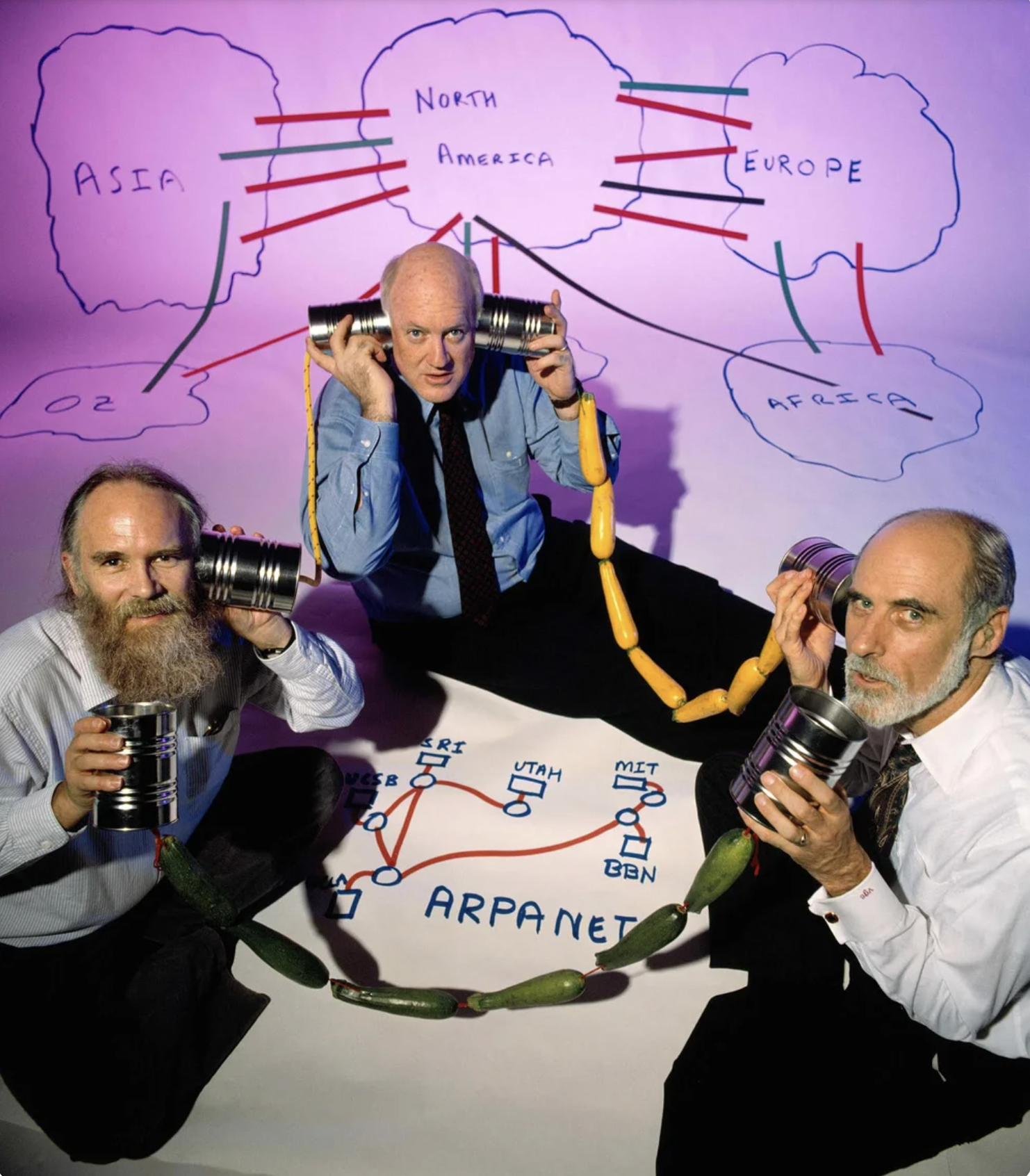
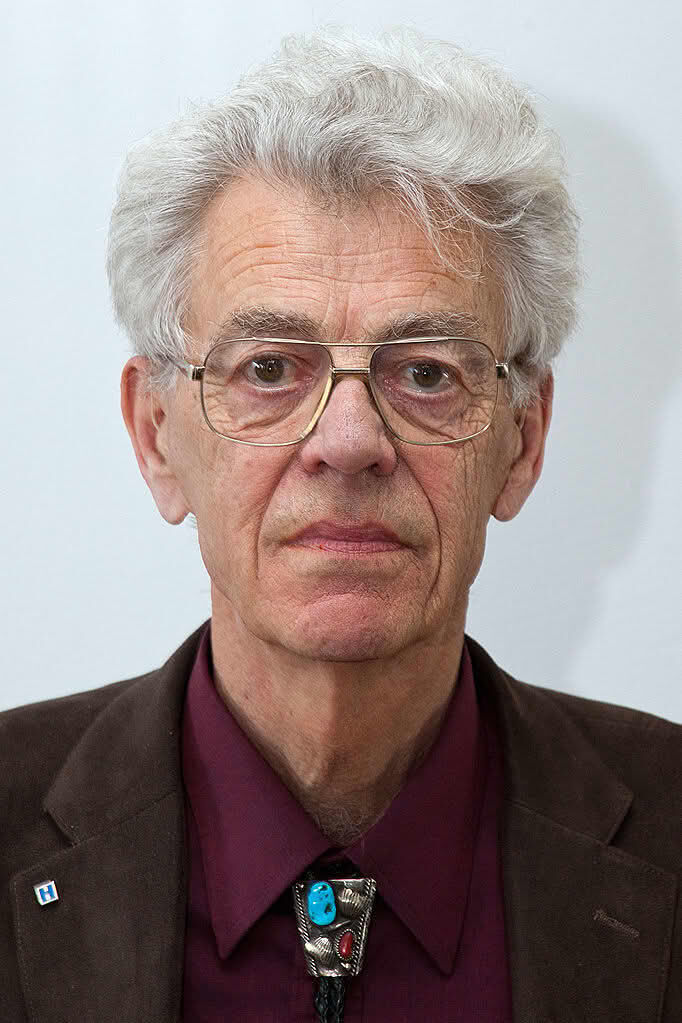
In 1973 Pål Spilling, Yngvar Lundh and Dag Belsnes took part in the development of the TCP/IP protocol and established with Vint Cerf and his team the first connection to the Internet (Arpanet) at Kjeller.
Visit us on Tuesday 24. June 2025 and Thursday 26. June 2025 at 17:00h
we walk from the booth "Norway and the

Internet" to the "UiO building at Kjeller" about 2.5 km to walk.
Please register at: https://nettskjema.no/a/norway-internet
Upload and see the photos: https://drive.google.com/drive/folders/1I1cL2mZWjj71hu6R_I1FItLZR_pRmV4s
1974 Hans M Fjøsne and his team established Intelsat GEO satellite connections to the oil installations in the North Sea for phone, telex and data communications at 64 kbps. This was the first domestic satellite system in western Europe. In the period 1974-84 Oddfinn Osen and Odd Gutteberg and their teams performed experiments with phone and TV distribution to Spitzbergen (Svalbard). In 1979 Svalbard was officially connected to the terrestrial public telephone network, and regular TV services started in 1986.
1986 The Research Department of the Norwegian Telecom (TF) had significant contributions to the development of the European GSM (2G) system, with Finn Trosby (SMS), Jan Audestad (network mobility), Jon Emil Natvig (speech processing) as lead researchers. The radio modem demonstrating narrowband TDMA was developed by Torleiv Maseng and Odd Trandem at Sintef.
1993 Rolf Nordhagen established UNINETT and Nordunet (NREN), the first University network to adopt the WWW standards after they got released from CERN. Steinar Kjærnsrød, Gisle Aas, and Gisle Hannemyr established the first commercial network Oslonett, with the first Web page going live in 1993, followed by the first Olympic games, the Lillehammer Winter Olympics in 1994, being presented on the Internet.
1994 Jon v Tetzchner and Geir Ivarsøy, researchers at Televerkets Forskningsinstitutt (TF), developed the first Web browser for mobile phones, the Opera browser, which is still the leading browser in Africa.
Jørn Braa established the Health information System Platform (HISP) through a collaboration between South Africa and Norway, now being used in more than 130 countries world-wide.
1999 Ingvar Henne from Nera Networks established the World Record in a High-Capacity Radiolink (SDH) in Kyrgistan, achieving 155 Mbps over 60 km.
2005 Inmarsat launched their BGAN (Broadband Global Area Network), and Nera SatCom was first on the market with their land portable satellite terminal WorldPro 1000.
2014 Vidar Sannerhaugen (Kjeller Innovasjon) and Stian Løvold (UNIK) established the Basic Internet Foundation, establishing solutions for underserved areas and underserved people. The needs were based on the connection of Lisala in the North of DRC, performed in 2012 by Guy Kamanda and Josef Noll.
2019 Nikolai Astrup was part of the United Nations High-Level Panel on Digital Cooperation and contributed to “The Age of Digital Interdependence”. Report and Recommendations by the High-Level Panel, recommending a.o.
(i) Affordable Access to digital networks,
(ii) Digital Public Goods Alliance (DPGA), co-headed by Liv Marte Nordhaug Kristiansen,
(iii) Digital governmental services as the GovStack.global initiative, and
(iv) connecting all schools GIGA.global
2019 Josef Noll and the team from the Basic Internet Foundation (BIF) established the connectivity solution to connect the unconnected. They achieved connectivity the Maasai village Selela, 22 km away from a base station, and in Izazi, behind a mountain rim in the Iringa region. In 2023, BIF and local NGOs reached more than 200.000 children in 250 schools in Tanzania and Kenya.
2021 Svein-Erik Hamran from FFI and UiO operate the ground-penetrating radar RIMFAX on the Mars robot Perseverance. The development started in 2013, and operation is ongoing.
2022 Telenor closed the fixed telephony network as the first country in the world. All telecommunication is now happening over the Internet or mobile networks.
2025 IEEE, GSMA and DG Connect from EU will join us at IGF for the Launch Event of “Affordable Access for Education, Health and Empowerment” (AA4EDU), with Vodacom Tanzania as launch partner.
Join us on
- Tuesday (walk to the birth of the Internet - link to register),
- Thursday (#66 Open Forum Ecosystem for Digital Cooperation, and Walk to the birth of the Internet),
- Friday (#223 Launch Event AA4EU)
Sources of pictures
[1] https://blog.google/inside-google/googlers/vint-cerf-accessibility-cello-and-noisy-hearing-aids
[2]