Project description
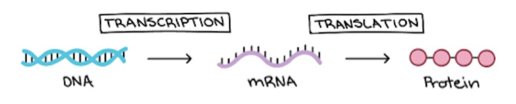
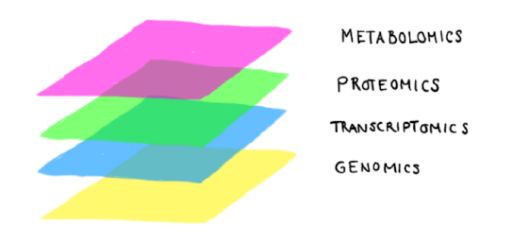
In the post-genome era, it has become increasingly clear to researchers in molecular medicine that the biological understanding of the development of several conditions (e.g., cancer, multiple sclerosis, sepsis, ...) can be enormously enhanced by exploiting –omics information. Omics data include genomic, transcriptomic, proteomic, and metabolomic information. Since transcription is the process that leads to the DNA encoding mRNA molecules, which in turn determine protein expression (the drivers of disease evolution), researchers often focus on gene expression data for detecting genes that affect and govern biological mechanisms the most.
The human genome usually includes around 15K-20K gene expression values, however it is biologically reasonable to assume that only a subset of non-noisy features contributes to the data structures. Most heuristic approaches thus preselect a reasonable amount of genes to be used in statistical analysis, and such a priori ad hoc variable selection is still a very frequent approach, despite the evident drawbacks and lack of reproducibility. We instead propose to perform model-based Bayesian clustering genome-wide, so that the variable selection step is included in the analysis.
We have already proposed a Bayesian variable selection approach for rank-based unsupervised transcriptomic analysis (Eliseussen et al., 2022), which proves to work effectively in detecting disease-related genes. However, a clustering step has to be embedded in the method, as it is necessary to handle disease heterogeneity (e.g., cancer subtypes) in biomarker discovery.
The goal of the thesis project is thus twofold: first, combining a previous work on the same rank-based model for performing clustering (Vitelli et al., 2018) with the current variable selection approach (Eliseussen et al., 2022), so to develop a novel Bayesian rank-based clustering method also handling variable selection. Secondly, implementing such novel approach in an R package, possibly enhancing the current implementation in the BayesMallows package (Sørensen et al., 2020). Further extensions that are amenable of consideration, in case of interested students, include: (1) handling several –omics layers that can jointly inform both the clustering and the variable selection steps, and (2) performing clustering via a DP-mixture, so that the number of groups can be automatically inferred.
Good experience with R software for statistical computing, and knowledge of Bayesian statistics, will be both beneficial. Some previous experience with MCMC-type of algorithms will be useful, but more important is the motivation to learn more about Bayesian computing and transcriptomic data. The student will also become familiar with statistical software development (version control – GitHub, unit testing, and documentation).
References
Eliseussen, E., Fleischer, T., & Vitelli, V. (2022). Rank-based Bayesian variable selection for genome-wide transcriptomic analyses. Statistics in Medicine, 41(23), 4532-4553.
Sørensen, Ø., Crispino, M., Liu, Q., and Vitelli, V. (2020). The R Journal. 12(1), 324-342.
Vitelli, V., Sørensen, Ø., Crispino, M., Frigessi, A., & Arjas, E. (2018). Probabilistic preference learning with the Mallows rank model. Journal of Machine Learning Research, 18(158), 1-49.