Abstract
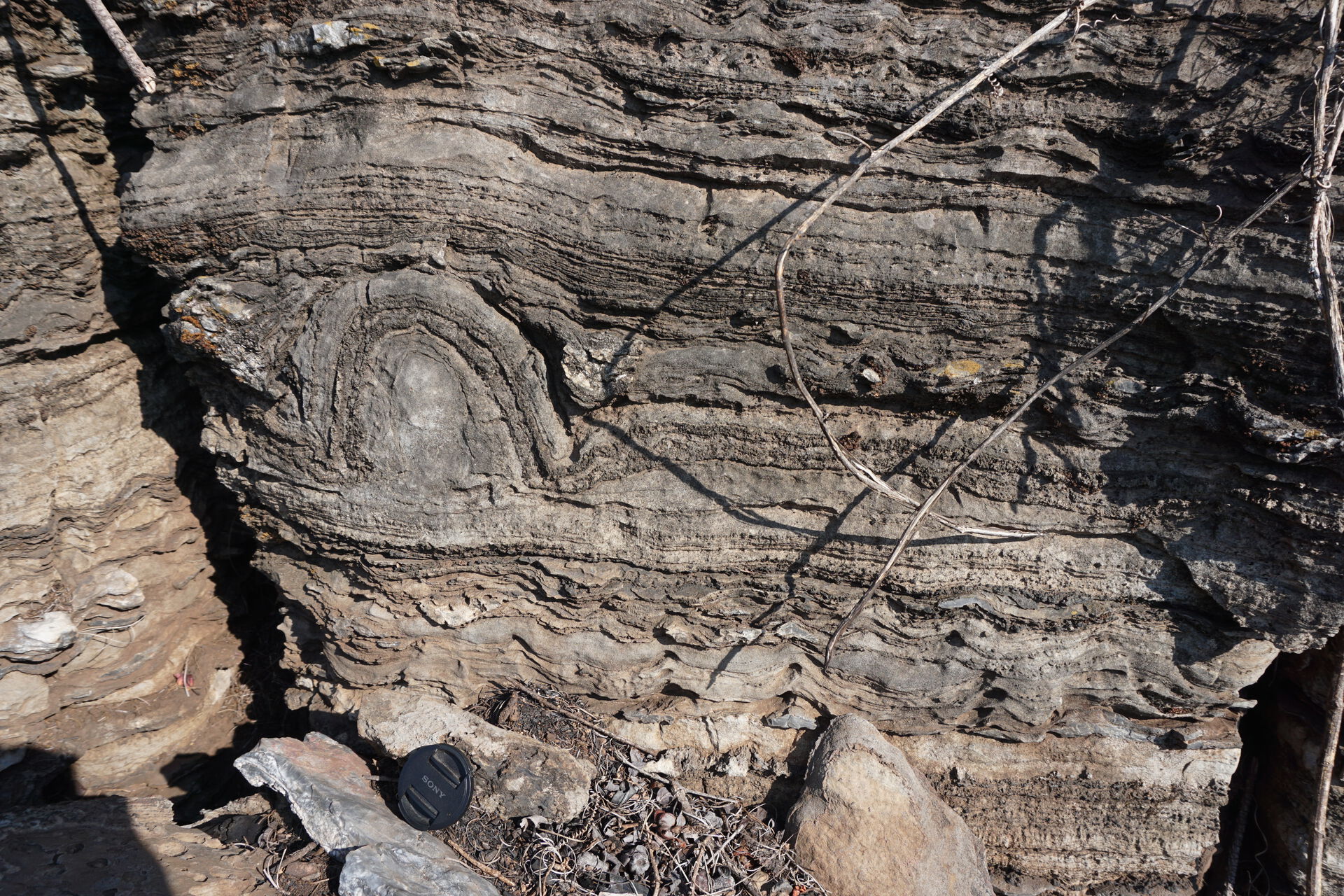
Archean microbialites are among the earliest records of microbial life on Earth. Nevertheless, their biological origins sometimes remain difficult to ascertain and constitute a long lasting challenge in Earth Sciences. Over the course of billions years, these ancient sedimentary structures have been successfully altered by, diagenesis, metamorphism and tectonic deformation, preserving only cryptic biosignatures in the form of subtle morpho-textural, chemical, isotopic or mineralogical traces– that require rigorous multidisciplinary analyses.
In this lecture, I will review iconic microbialites bearing Archean terrains such as the Greenland's Isua Supracrustal Belt (3.7 Ga), the Western Australia's Strelley Pool Chert (3.4 Ga), the Moodies sandstone (3.2 Ga), the Tumbiana Formation (2.7 Ga) and the Malmani-Campbellrand plateform (2.6 Ga). Each case study will contributes to various aspect of the debate surrounding biogenicity. I will also discuss what may be definitive signal of microbial activity, and what ambiguities persist and thoroughly review arguments pro and con biological origins at various scale, from stromatolitic laminations to carbon, nitrogen sulfur and Fe isotope compositions.
Finally, I will suggest guideline for disentangling primary biosignatures from subsequent overprints notably using state-of-the-art methodologies for depositional environment reconstruction, bulk geochemical analyses and micro- to nano-scale imaging and spectroscopy.