
Harsh Mathur works on solar magnetic-field diagnostics and advanced inversion techniques at RoCS.
The main question I am trying to answer is: How can we reliably infer the 3D structure of solar magnetic fields from the light we observe?
Harsh explains how the magnetic fields drive much of the Sun’s activity – from sunspots and solar flares to the solar wind and space-weather events that can affect Earth. But these magnetic fields cannot be measured directly. Instead, they must be inferred from polarised light using complex radiative-transfer modelling.
His project aims to develop tools that make this inference more accurate and physically realistic.
My research focuses on understanding magnetic fields in the Sun’s chromosphere, which is one of the most complex and least understood layers of the solar atmosphere.
From instruments to advanced modelling
Before coming to Oslo, Harsh completed his PhD in Astronomical Instrumentation at the Indian Institute of Astrophysics in Bengaluru, where he studied how to measure magnetic fields in the Sun’s chromosphere using spectropolarimetric observations. Prior to that, he obtained a Master of Technology in astronomical instrumentation from the University of Calcutta.
My academic background combines observational solar physics, radiative transfer modelling, and increasingly, machine learning methods.
He has previously worked on: spectropolarimetric observations of the Sun, chromospheric magnetic-field diagnostics, non-LTE radiative transfer modelling, instrument design and solar data analysis.
– These topics are closely connected to my current project. The main difference is that now I am focusing more strongly on 3D modelling and machine learning, while earlier my work was more observation-driven and focused on interpreting specific datasets.
The current project builds directly on his PhD, but expands it into a more computational and interdisciplinary direction.
PRABHA – a new way to read the Sun’s light
A key part of Harsh’s work is the project PRABHA, which aims to improve how scientists interpret the polarised light coming from the Sun.
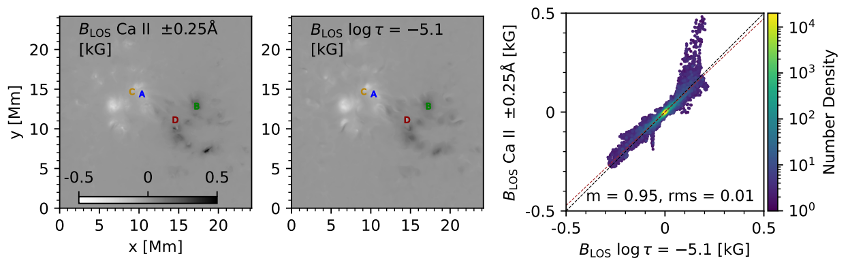
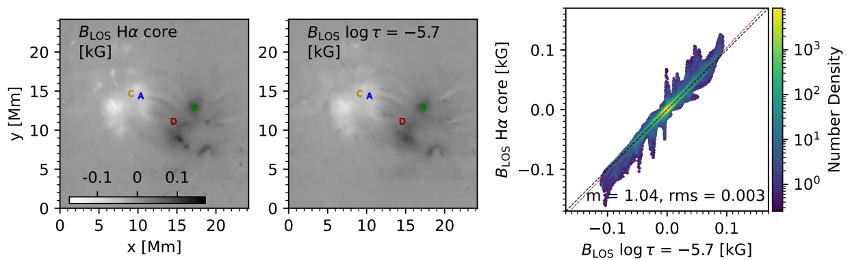
– My project, PRABHA, combines simulations, observations, and machine learning. I am developing a new inversion code that will:
- use realistic 3D simulations of the solar atmosphere
- model non-LTE radiative transfer
- integrate neural networks as fast forward solvers
- test the method on real solar observations
In short, it is a mix of theory, numerical modelling, and observational validation. The goal is to bridge the gap between modern solar telescopes and the tools needed to interpret their data.
Modern solar telescopes produce large, high-resolution datasets. Extracting the full physical information from these observations requires methods that are both computationally efficient and firmly grounded in physics. PRABHA is designed to meet this need by combining detailed radiative-transfer calculations with machine-learning techniques.
Ultimately, Harsh hopes that the resulting inversion framework will be robust and user-friendly enough to be adopted widely by the solar-physics community.
Why RoCS and Oslo?
– I came to Oslo because RoCS is one of the world’s leading centres in solar physics, especially in areas related to radiative transfer modelling, numerical simulations, and chromospheric diagnostics.
The research environment at ITA and RoCS offers:
- strong expertise in solar simulations and inversions
- access to high-performance computing
- collaborations with major solar observatories
This makes ITA and RoCS an ideal place to develop a complex project like PRABHA, concludes Harsh.
On a personal level, the move to Oslo was also motivated by the opportunity to work in an international environment and to experience a new research culture.
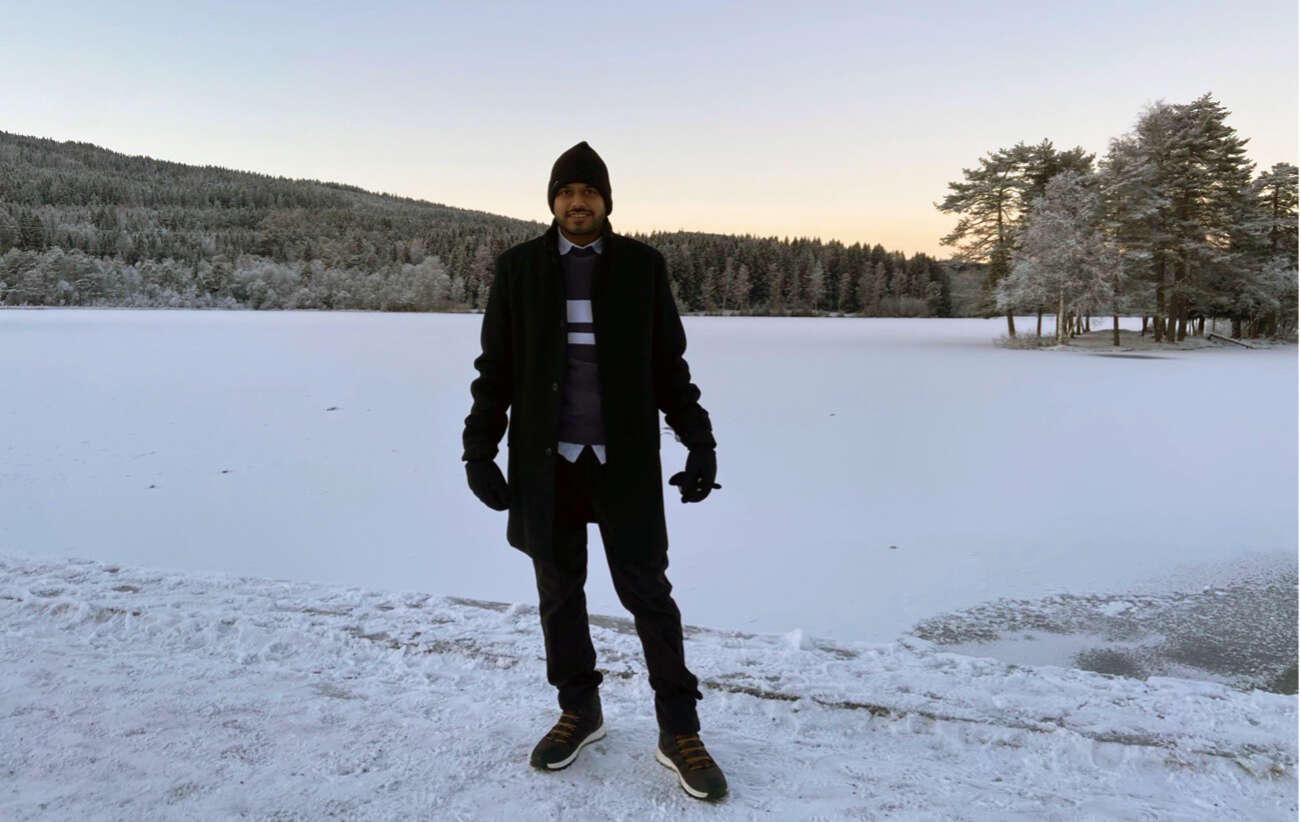
ITA and Oslo so far
My experience at ITA has been very positive. The scientific environment is collaborative and supportive, and there is a strong culture of sharing ideas and tools.
He appreciates the low threshold for scientific discussion and the openness of colleagues to share code, data, and experience. This makes it easier to start new projects and explore new ideas.
– Living in Oslo has also been a great experience. I enjoy the balance between work and life, the nature, and the peaceful environment. Coming from a large city in India, the closeness to forests and fjords has been especially refreshing.
Looking ahead
– What does he hope to gain from his time at ITA and in Norway?
– I hope that this experience will allow me to:
- develop a new inversion framework that can be used by the solar-physics community
- strengthen my expertise in machine learning and large-scale modelling
- build long-term international collaborations
- grow into a more independent researcher
He also hopes to contribute actively to RoCS through scientific publications, collaborations across research groups, and outreach activities that communicate solar physics to a broader audience.
Through the PRABHA project and his work on solar magnetic fields, Harsh aims to provide better tools to understand one of the most dynamic and challenging regions of the solar atmosphere – the chromosphere.