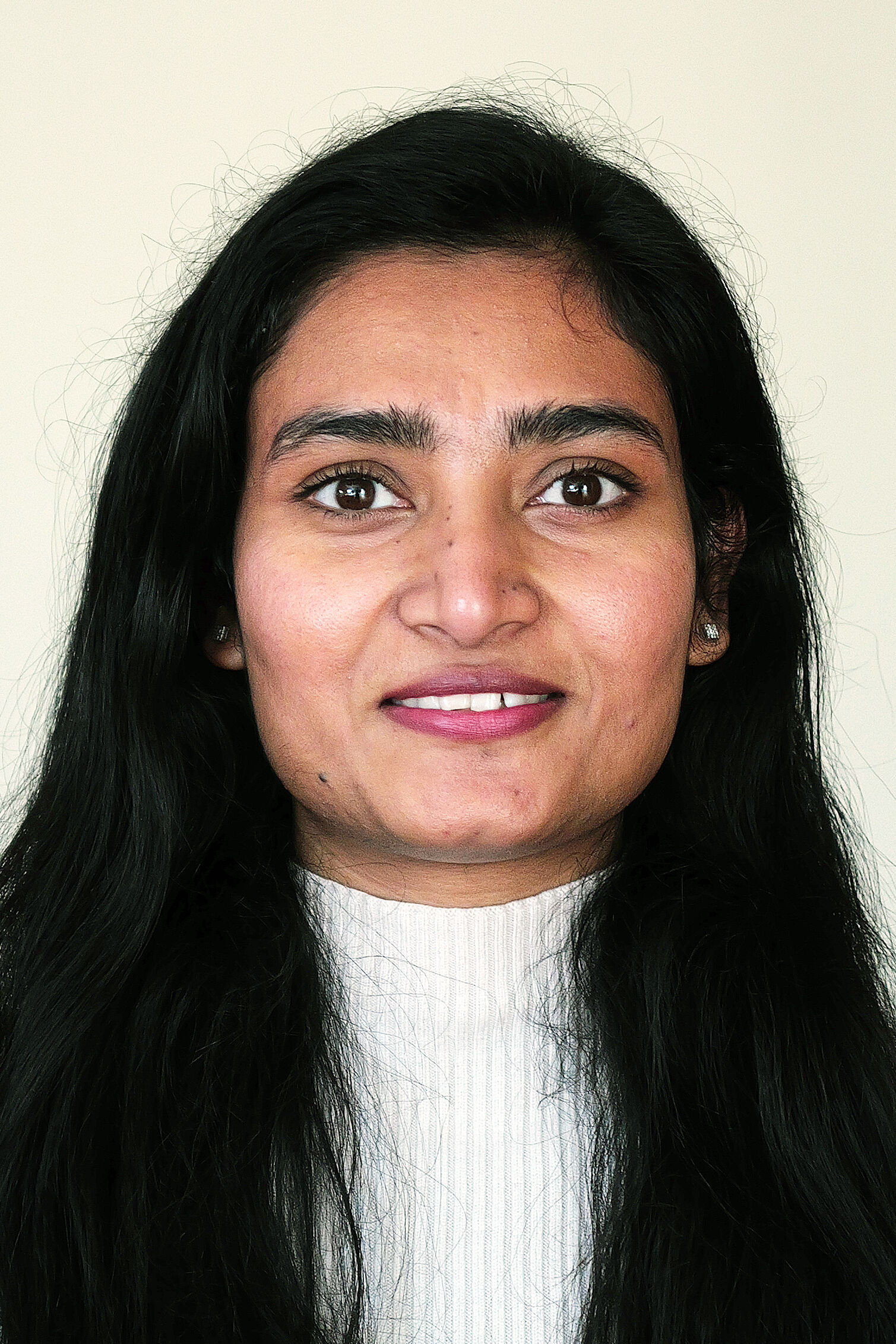
Tracing solar eruptions
She brings a strong observational background in solar activity and a deep interest in connecting small- and large-scale solar processes to space weather.
Pooja completed her bachelor’s and master’s degrees in Kurukshetra, Haryana, and earned her PhD in Nainital, a picturesque city near the Himalayas.
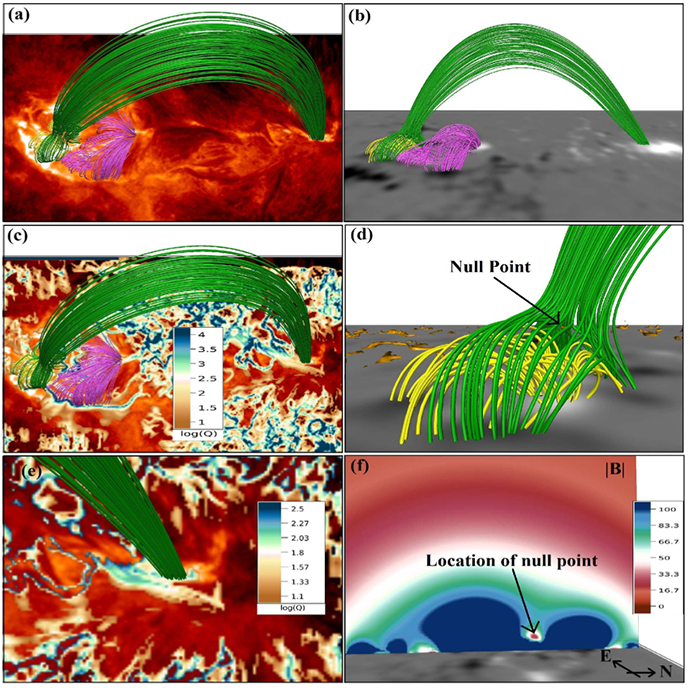
During her doctoral work, she investigated a broad range of solar phenomena—solar flares, filament eruptions, coronal mass ejections (CMEs), and extreme-ultraviolet waves—focusing on their effects on coronal dynamics. She also studied long-term chromospheric features, such as plages and magnetic networks, that reflect the Sun’s surface magnetic field.
I will continue exploring eruptive solar activity, now combining high-resolution imaging and spectroscopy with advanced magnetic-field modeling.
Her project will make extensive use of coordinated observations from both space-borne and ground-based instruments, including SDO, IRIS, Solar Orbiter, STEREO, and especially the Swedish Solar Telescope (SST).
Research goals and methods
Pooja’s main aim is to identify the physical mechanisms that trigger solar eruptions and to trace how these eruptions propagate through the solar atmosphere and eventually influence space weather near Earth. She will also work to quantify the strength and configuration of the coronal magnetic field, a critical factor in controlling eruptive behaviour.
Her approach is primarily observational and data-driven, complemented by modelling. She will analyse a suite of eruptive events—flares, filament eruptions and associated CMEs—using multi-instrument, multi-viewpoint datasets.
To estimate coronal magnetic structure, she will develop and apply extrapolation techniques from SST magnetograms, using both potential field source surface (PFSS) and non-linear force-free field (NLFFF) methods, alongside coronal seismology where applicable. In addition, Pooja will investigate space-weather consequences by studying solar radio bursts, interplanetary CMEs and geomagnetic responses.
The right environment
Pooja was drawn to Oslo by RoCS’s strong research environment and its access to high-quality ground-based facilities.
Working with SST data offers an excellent opportunity to deepen my observational research on eruptions.
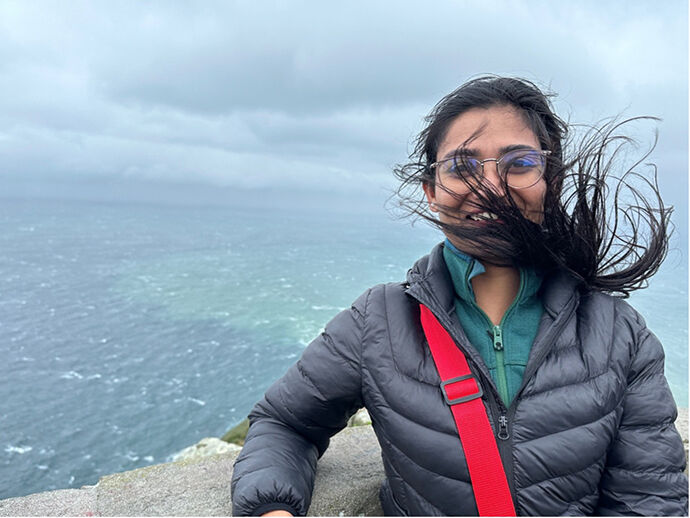
Beyond the science, Norway’s natural phenomena—particularly the aurora, a striking manifestation of space weather—were an added attraction.
Settling into ITA and life in Oslo
Her experience at ITA so far has been very positive. Pooja finds the RoCS environment welcoming and collaborative, with a flat structure that encourages discussions between early-career researchers and senior scientists.
People here are approachable and supportive, which makes it easy to get advice and start new collaborations.
Living in Oslo has also been enjoyable: she appreciates the city’s organisation, safety and easy access to services, which helped her settle in quickly.
Expectations
Scientifically, Pooja expects her time at RoCS to strengthen her ability to integrate observations across solar layers and to combine high-resolution ground-based data with space-borne observations and magnetic-field modelling.
She hopes the collaborative, interdisciplinary environment will help refine her research questions and support her development as an independent researcher.
Personally, she looks forward to developing international collaborations and experiencing more of Norway’s nature and research culture.
We are excited to have Pooja at RoCS and look forward to her contributions to understanding solar eruptions and their space-weather impacts.
Welcome to RoCS, Pooja!