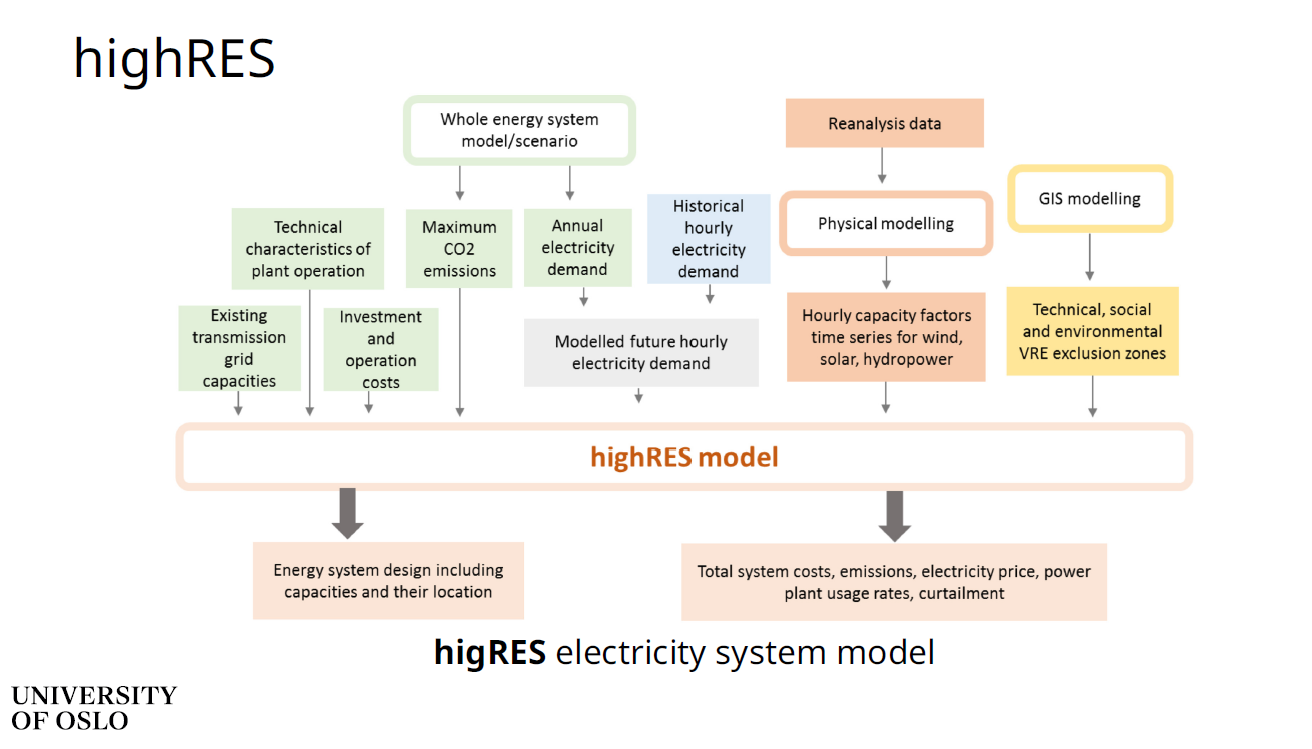
Modeling future power systems
- Energy system modeling is a method that uses computer models to
explore pathways for transitioning to low-carbon power systems. - Mathematical representation of power generation, power lines and
other aspects of power system. - Navigating an uncertain future and help decision making.
- Techno-economic viability of new technology installations, i.e., hydrogen
storage and Nuclear.
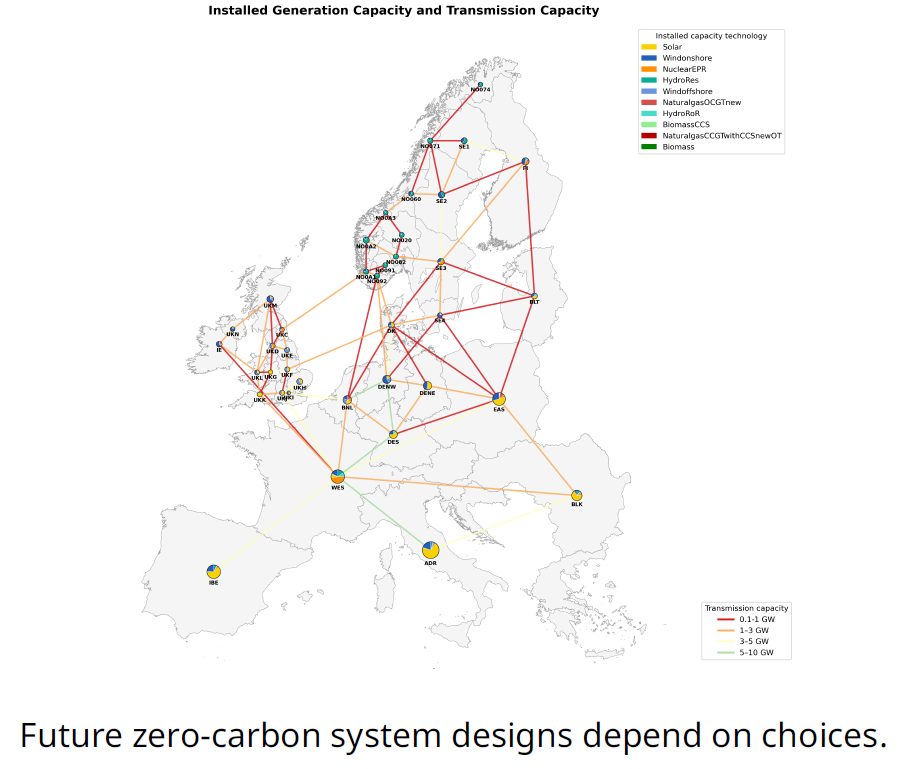
Objective
To conduct a modeling analysis focused on Norway to explore the role of
nuclear technology or hydrogen storage in a net-zero 2050 power system.
Possible questions that thesis could explore:
- How might nuclear (hydrogen) contribute to the Norways’ future power
system from a techno-economic perspective? - What are the potential trade-offs for Norways’ 2050 energy mix, with
the special focus on nuclear/hydrogen? - What are techno-economic pros and cons of nuclear/hydrogen energy
at the national level, considering increased electrification? - What is the sensitivity of new solar/wind installations in relation to
nuclear/hydrogen technologies?
Prerequisites
- Basic familiarity and interest with GAMS, Python, optimization, data
analysis, and energy system modeling - Related Uio Courses (but not mandatory):
- TEK5410 Energy Markets and Regulation - Modelling and Analysis,
- TEK5420 Norway’s Energy Transitions: Policy Directions and Challenges,
- TEK5350 Energy Markets and Regulation
- TEK9340 – Energy Systems Analysis: Modelling, Methods and Scenarios
This is the suggested framework for thesis with the possibility of discussing
and adjusting based on the students’ interests.
Relevant literature
Lopera Huertas, M. (2024). Drivers and barriers for the introduction of nuclear power to Norway (Master’s thesis).
Mohamad Ali, M. H., Svendsen, T. B., & Alfsvåg, L. I. (2023). The green shift and nuclear energy–an economic, environmental, and societal-readiness perspective for rural districts in Norway (Master’s thesis, Nord universitet).
Price, J., Keppo, I., & Dodds, P. E. (2023). The role of new nuclear power in the UK’s net-zero emissions energy system. Energy, 262, 125450.