We have an exciting scientific programme, with 5 invited talks and more than 50 contributed talks, a poster session and a short course on modern methods for analysing survival and time-to-event data. In addition, an excellent social programme. You can download the Programme using the following link:
Academic Programme
Please find here below the conference schedule, which can also be downloaded here as a pdf document:
| Sun. 28.06 | Mon. 29.06 | Tue. 30.06 | Wed. 01.07 | Thu. 02.07 | Fri. 03.07 |
| 8:15–8:45 Registration | 8:15–8:45 Registration | 8:15–8:45 Registration | 8:15–8:45 Registration | 8:15–8:45 Registration | |
SHORT COURSE 09:00 - 09:15 09:15 - 10:00 Introduction, counting process, intensity processes, and martingales 10:00 - 10:15 Break with snacks 10:15 - 11:00 The Nelson-Aalen and Kaplan-Meier estimators 11:00 - 11:15 Break 11:15 - 12:00 Regression models for time-to-event data: Cox regression and Aalen’s additive regression model 12:00 - 12:45 Lunch 12:45 - 13:30 Tutorial 13:30 - 13:45 Break 13:45 - 14:30 Unobserved heterogeneity (frailty) in survival analysis; frailty models for recurrent and clustered data 14:30 - 14:45 Break with snacks 14:45 - 15:30 First hitting time models and threshold regression, including boosting 15:30 - 15:45 Break 15:45 - 16:30 Cox regression with neural networks | 8:45–10:25
| 8:45–10:25 | 8:45–10:25 | 8:45–10:25 | 8:45–10:25 |
| 10:25 – 11:00 BREAK | 10:25 – 11:00 BREAK | 10:25 – 11:00 BREAK | 10:25 – 11:00 BREAK | 10:25 – 11:20 BREAK | |
11:00–12:00 Invited Session Speaker: | 11:00–12:00 Invited Session Speaker: | 11:00–12:00 Speaker: Susanne Ditlevsen | 11:00–12:00 Invited Session Speaker: Małgorzata Bogdan | 11:00–12:40 Speaker: | |
12:00–13:00 | 12:00–13:00 | 12:00–13:00 | 12:00–13:00 SMS assembly + presentation IWSM2027 (Bilbao) Chair: Helga Wagner | ||
| 12:40 - 13:00 CLOSING Chair: Riccardo De Bin | |||||
| 13:00 – 14:20 LUNCH | 13:00 – 14:20 LUNCH | 13:00 – 14:20 LUNCH | 13:00 – 14:20 LUNCH | 13:00 – 14:20 LUNCH | |
14:20–16:00 | 14:20–16:00 | Excursions | 14:20–16:00 | ||
| 16:00 – 16:35 BREAK | 16:00 – 16:35 BREAK | 16:00 – 16:35 BREAK | |||
16:35–17:55 Contributed | 16:35–19:15 Poster session | 16:35–17:55 Contributed | |||
| 19:00 Informal gathering | 18:00–22:00 Welcome Reception | 19:15 20:00 |
Invited Speakers
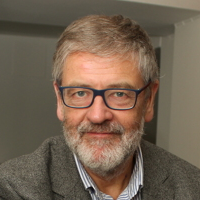 Nils L. Hjort, University of Oslo
Web page: https://www.mn.uio.no/.../nils/
Title: Counting the Uncounted: How Many Were Killed in Guatemala, 1978-1996?
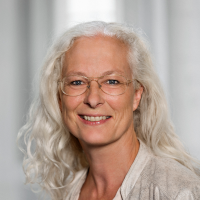 Susanne Ditlevsen, University of Copenhagen
Web page: https://web.math.ku.dk/~susanne/
Title: Estimating tipping points in climate
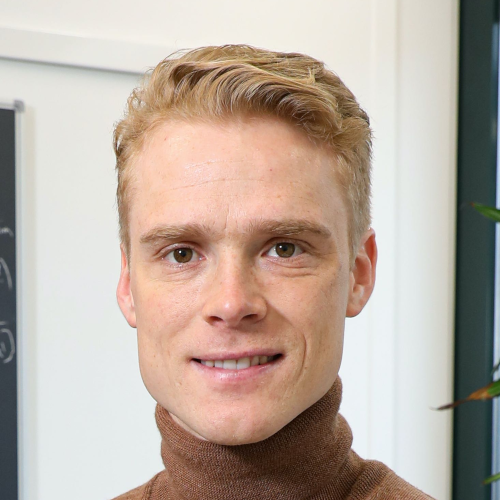 Mats J. Stensrud, École Polytechnique Fédérale de Lausanne
Web page: https://www.epfl.ch/.../prof-mats-julius-stensrud/
Title: Optimal Treatment Strategies with Policy-Relevant Guarantees
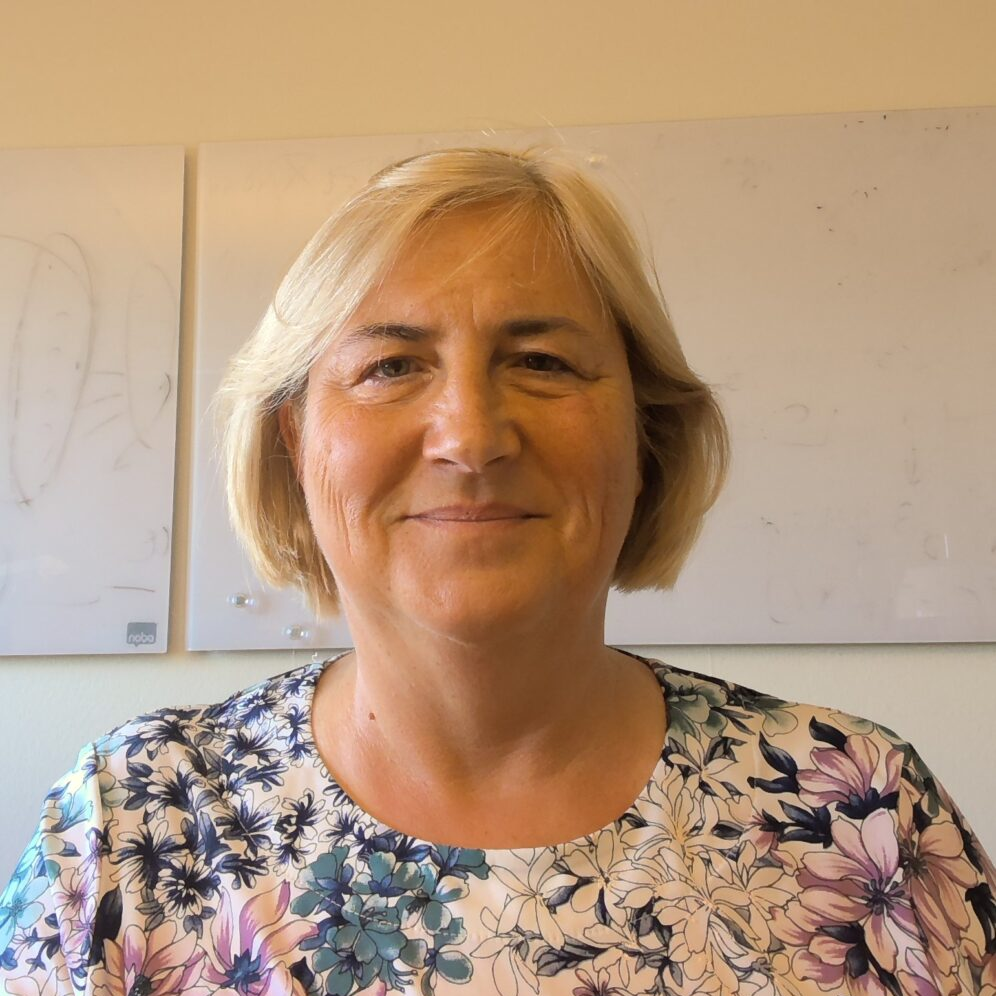 Małgorzata Bogdan, University of Wrocław
Web page: http://www.math.uni.wroc.pl/~mbogdan/
Title: Identifying Low-Dimensional Patterns Using Convex Non-Differentiable Regularizers
 Göran Kauermann, Ludwig Maximilian University of Munich
Web page: https://www..../kauermann/index.html
Title: 30 years of P(enalized) Splines
Short Course
The Short Course will take place on Sunday 28th June 2026 prior to the main IWSM conference. It must be added to your conference registration (for an additional fee).
Title
Modern methods for analysing survival and time-to-event data
Overview
The course gives a broad introduction to the most important concepts and methods for analysing survival data and other types of time-to-event data. Some recent developments of will also be considered.
The methods covered in the course have applications, e.g., in epidemiology, clinical medicine, customer churn, demography, insurance, and technical reliability.
In the tutorial the students will analyse survival and time-to-event data using R, and the students should bring their own laptops with the last version of R and RStudio installed. Some R packages will also be needed, and the participants will be informed about this before the start of the course.
Prerequisites
Master’s level knowledge of statistics. No background in survival and time-to-event analysis is required.
Lecturers
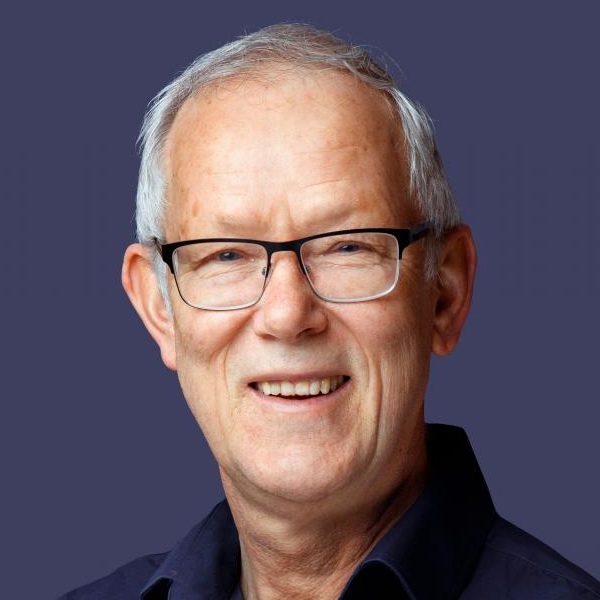 Ørnulf Borgan, Professor Emeritus, Department of Mathematics, University of Oslo
Web page: https://www.mn.uio.no/.../borgan/
Clara Bertinelli Salucci, Postdoctoral Fellow, Department of Mathematics, University of Oslo
Web page: https://www.mn.uio.no/.../clarabe/
Preliminary program
| Time | Topic |
| 09:00 - 09:15 | Registration |
| 09:15 - 10:00 | Introduction, counting process, intensity processes, and martingales (Ørnulf) |
| 10:00 - 10:15 | Break with snacks |
| 10:15 - 11:00 | The Nelson-Aalen and Kaplan-Meier estimators (Ørnulf) |
| 11:00 - 11:15 | Break |
| 11:15 - 12:00 | Regression models for time-to-event data: Cox regression and Aalen’s additive regression model (Clara) |
| 12:00 - 12:45 | Lunch |
| 12:45 - 13:30 | Tutorial (Ørnulf & Clara) - Exercise_1 - Exercise_2 |
| 13:30 - 13:45 | Break |
| 13:45 - 14:30 | Unobserved heterogeneity (frailty) in survival analysis; frailty models for recurrent and clustered data. (Ørnulf) |
| 14:30 - 14:45 | Break with snacks |
| 14:45 - 15:30 | First hitting time models and threshold regression, including boosting (Clara) |
| 15:30 - 15:45 | Break |
| 15:45 - 16:30 | Cox regression with neural networks (Ørnulf) |
Literature
Aalen O.O., Borgan Ø., and Gjessing H.K. (2008). Survival and Event History Analysis: A Process Point of View. Springer-Verlag, New York.
Bertinelli Salucci C., Bakdi A., Glad I.K., Lindqvist B.H., Vanem E., and De Bin R. (2025). Lifetime analysis with monotonic degradation: a boosted first hitting time model based on a homogeneous gamma process. Lifetime Data Analysis, 31: 300-339
Kvamme H., Borgan Ø., and Scheel, I. (2019). Time-to-event prediction with neural networks and Cox regression. Journal of Machine Learning Research, 20: 1-30.
Social Programme
Our social programme is made up of the following events:
an Informal Gathering at Mastermind Bar on Sunday 28th of June;
We will meet at Mastermind Bar (Schweigaards gate 17) at 19:00. Join us for an aperitif if you have dinner late, or for a beer after dinner if you eat early. The bar does not serve food, but you are allowed to bring your own. If you would also like to eat there, just order or pick up some food nearby (Barcode Street Food is just one bridge away) and bring it with you.
Drinks and food are not included in the conference fee.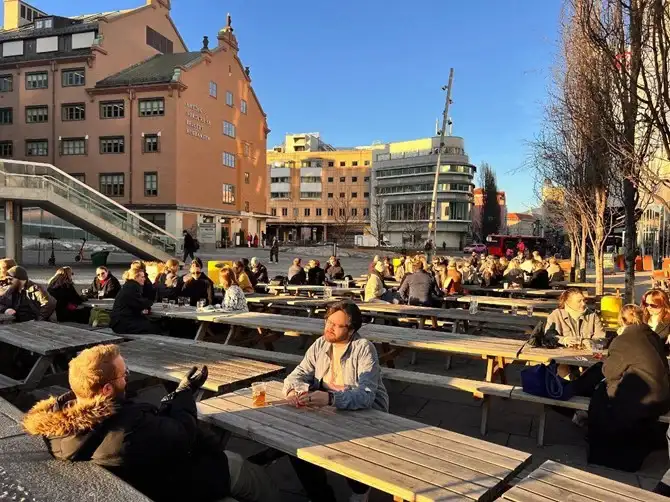
the Welcome Reception at the Toppsenter (Oslo Science Park) on Monday 29th of June;
The Welcome Reception will take place at the Toppsenter of the Oslo Science Park, which is located very close (2 minutes walking) to the Ole-Johan Dahl's hus, the main conference venue. Food and drinks will be provided.
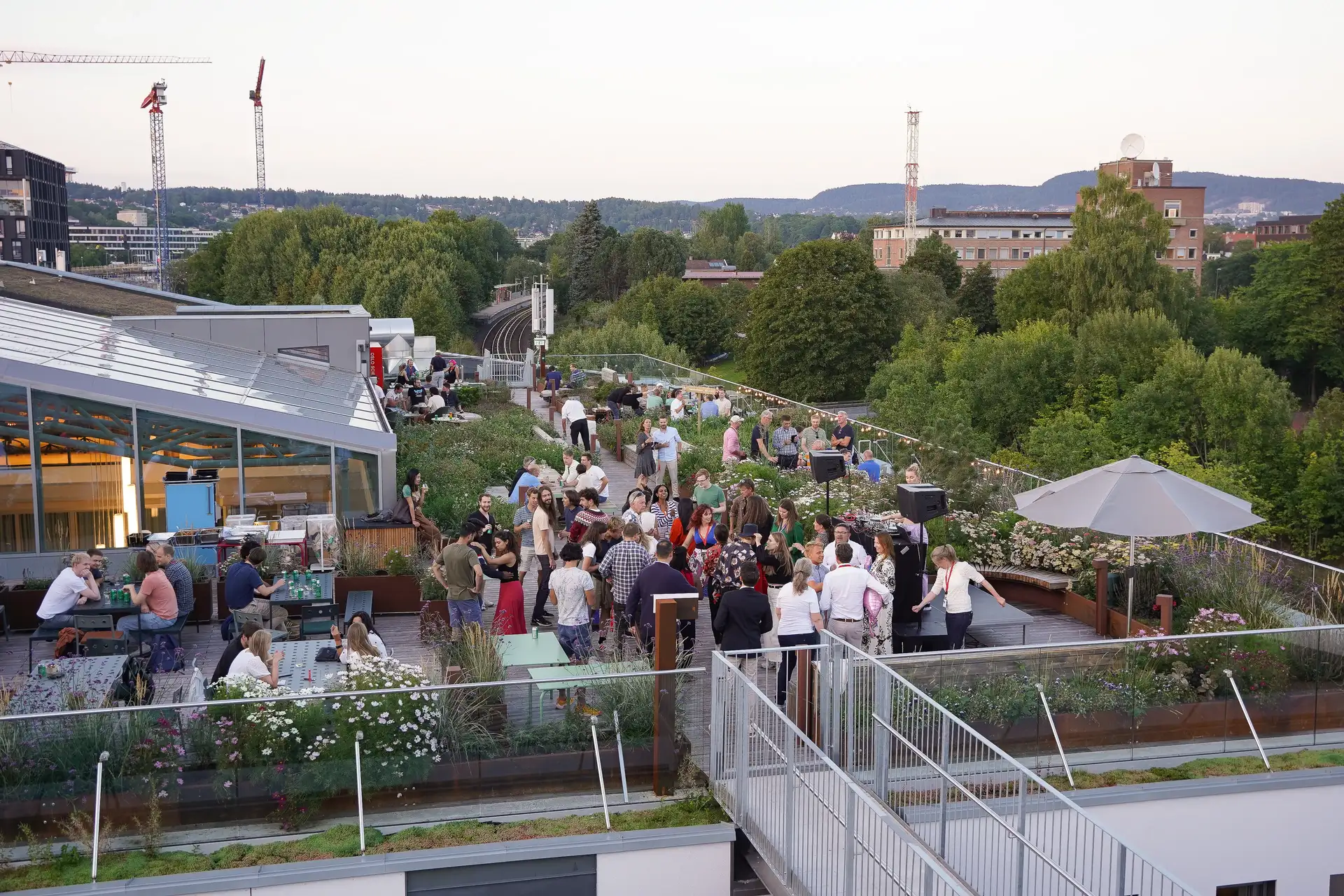
Toppsenter at the Oslo Science Park, where the welcome reception will take place. the Poster Reception at the Ole Johan Dahls on Tuesday 30th of June:
The Poster Reception will take place in the Ole-Johan Dahl's hus, which is the main conference venue. Food and drinks will be provided. Delegates will present posters and network with each other in a friendly setting.
- the Excursions on Wednesday 1st of July:
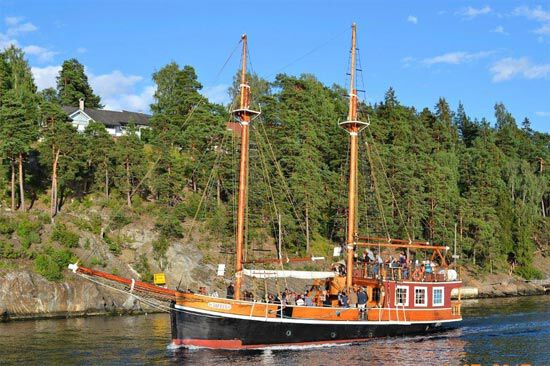
Excursion 1: A cruise on board the traditional wooden sailing ship Christiania passing through a maze of green islands. Sit back and enjoy the scenery and beautiful islands, while savouring the flavour of the shrimp buffet "Fjord style". Oslo, with its superb location, offers unique photo opportunities on and around its fjord which stretches almost into the city centre. Discover the scenery from a traditional wooden boat, fully restored to its former glory.You’ll sail past numerous islands, including Hovedøya and the Dyna Lighthouse, through narrow inlets and into sheltered bays where you can capture the capital on camera from different angles.The boat passes close to the peninsula of Bygdøy, housing many interesting museums as well as beaches such as Huk. See the Maritime Museum with its veteran sailing ships moored outside, and the impressive Fram Museum, housing the polar ship of the same name.During your cruise, a local Norwegian shrimp buffet will be served (eat as much as you want!) | Excursion 2: Guided excursion to Holmenkollen: Holmenkollen is the hill you see on the north western side of Oslo. It takes 20-30 minutes to get here from the city centre – the view from the subway on the way up the hill is worth the trip alone! Holmenkollen National Ski Arena lets you explore different aspects of Norwegian ski culture and enjoy the fabulous views from the jump tower. Holmenkollen also has a few smaller attractions, among them the Holmenkollen Chapel and the Kragstøtten sculpture, which are worth visiting when in the area. |

the Conference Dinner at Voksenåsen Kultursenter on Thursday 2nd of July:
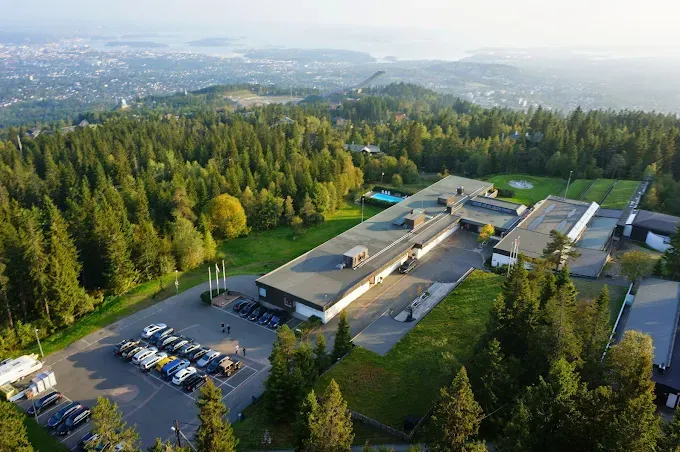
The conference dinner will take place at the Voksenåsen Kultursenter, which can be reached by metro. It includes a three-course menu and an apéritif—alcoholic or non-alcoholic. Other beverages (except water) are charged separately.
MENU:
Beetroot Carpaccio,
Horse Radish Cream, Pickled Pumpkin, Crispy Seeds, Balsamico Sirup and Fresh Salad
(contains: Mustard, egg and milk)- Honey and Garlic Glaced Filet of Trout,
Green Pea Pure, White Wine Sauce, Baked Potatoes, Herb Oil and Pickled Red Onion
(Contains: fish, sulfitt, selery) vegetarian: Prasley and Chickpea “Steak”
- Creme Brûlèe Passion Fruit Sorbet
(contains: milk & egg)
Allergies and special dietary requirements mentioned in the registration form will be handled by the restaurant
Note: The Excursion and Conference Dinner must be added to your main conference registration (for an additional fee).
Presentation (Oral and Poster) Guidelines
- Oral presentations: The duration of each contributed talk will be no more than 15 minutes, followed by 5 minutes for questions and changeover to the next speaker, i.e., there is a 20-minute slot that will run as a 15min+5min format.
Poster presentations: Posters should be prepared in an A0 portrait format, i.e., height = 118.9cm and width = 84.1cm. Landscape posters will not fit on our boards.
Committees
| Scientific Committee | Organising Committee |
|---|---|
| Riccardo De Bin (chair, Univ. of Oslo) | Riccardo De Bin (chair, Univ. of Oslo) |
| Aliaksandr Hubin (co-chair, NMBU) | Clara Bertinelli Salucci (co-chair, Univ. of Oslo) |
| Irantzu Barrio Beraza (SPA) | Hilde Vinje (NMBU) |
| Kevin Burke (IRL) | Ida Scheel (University of Oslo) |
| Jo Eidsvik (NOR) | Hedvig Reiersrud (University of Oslo) |
| Jochen Einbeck (GBR) | Aliaksandr Hubin (NMBU) |
| Jacob Hjelmborg (DAN) | Hugo Hammer (OsloMET) |
| Giles Hooker (USA) | Anne Marie George (Univ. of Oslo) |
| Nadja Klein (GER) | Solveig Engebretsen (NR) |
| Jan T. Kvaløy (NOR) | Francesco Di Ruscio (FHI) |
| Kenan M. Matawie (AUS) | William Denault (Oslo Univ. Hospital) |
| Idemauro A. R. de Lara (BRA) | Valeria Vitelli (Univ. of Oslo) |
| Dae-Jin Lee (SPA) | Kevin Burke (University of Limerick) |
| Vito Muggeo (ITA) | I. Barrio Beraza |
| Maryam T. Nasrabadi (NOR) | Marco Speciale (Univ. of Palermo) |
| Ilaria Prosdocimi (ITA) | Berit Øksnes (University of Oslo) |
| Maria X. Rodriguez Alvarez (SPA) | |
| Bård Støve (NOR) | |
| Massimo Ventrucci (ITA) | |
| Helga Wagner (AUT) |