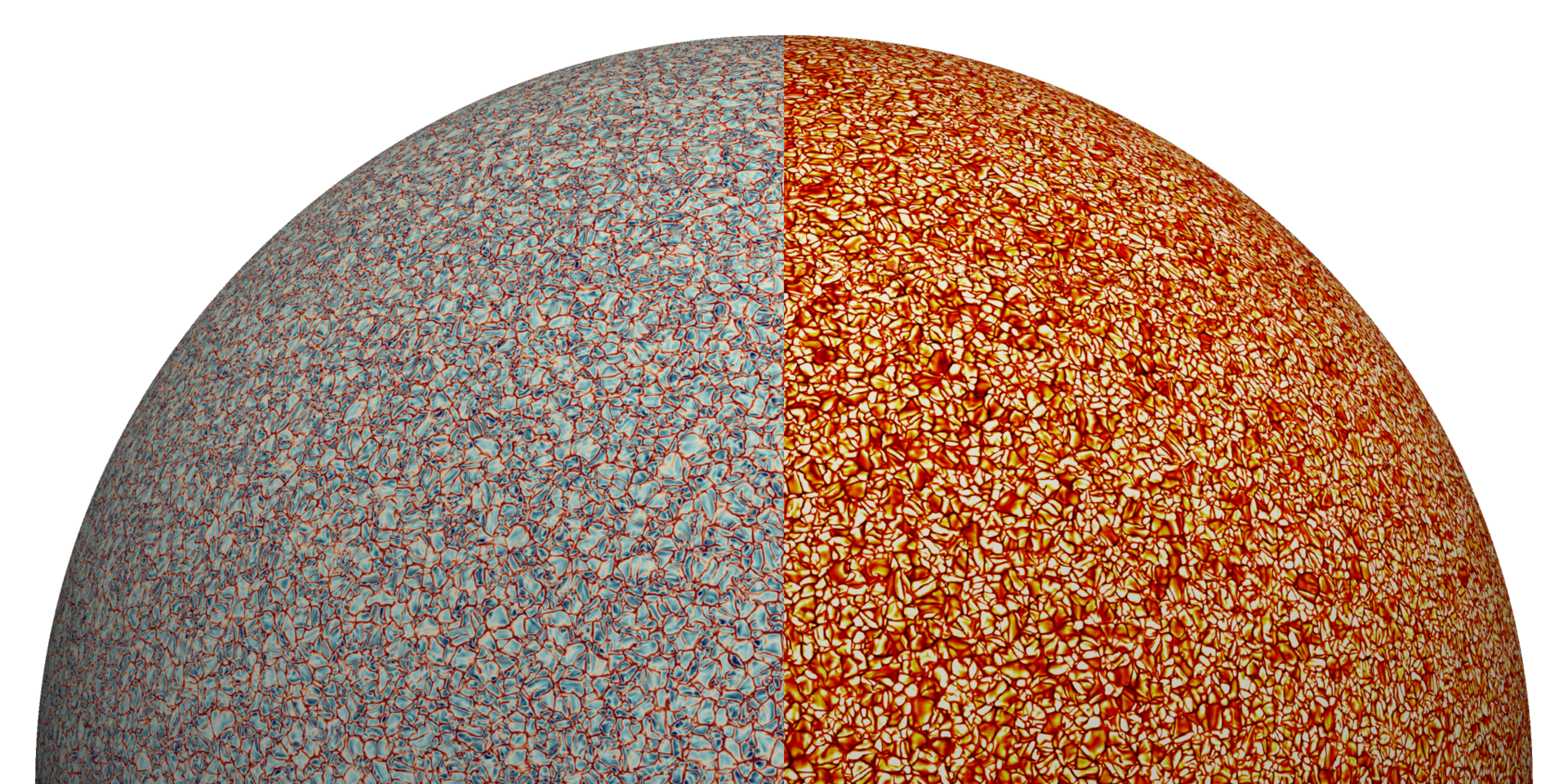

The Sunʼs interior is churning with convective motions (hot plasma rising and cooler plasma sinking), yet simulations of this solar convection have long failed to match what is inferred from observations of the Sunʼs interior. This discrepancy, known as the “convective conundrum,” is a major unsolved problem in solar physics. ReCon2 aims to solve this puzzle by using cutting-edge simulations that include all the key physics missing in earlier models. By incorporating realistic surface cooling, compressible fluid dynamics, and magnetic fields into ultra-high-resolution models, ReCon2 will test whether a more faithful “full-physics” simulation can reproduce the Sunʼs true internal flows. This approach tackles critical challenges – such as capturing turbulent flow across vast scales and validating the simulation against helioseismic observations – to ensure the model truly reflects solar reality. If successful, ReCon2 will demonstrate that the convection mismatch was not due to missing some unknown physics, but rather the lack of realism in previous models, thereby finally resolving this solar physics mystery for good.
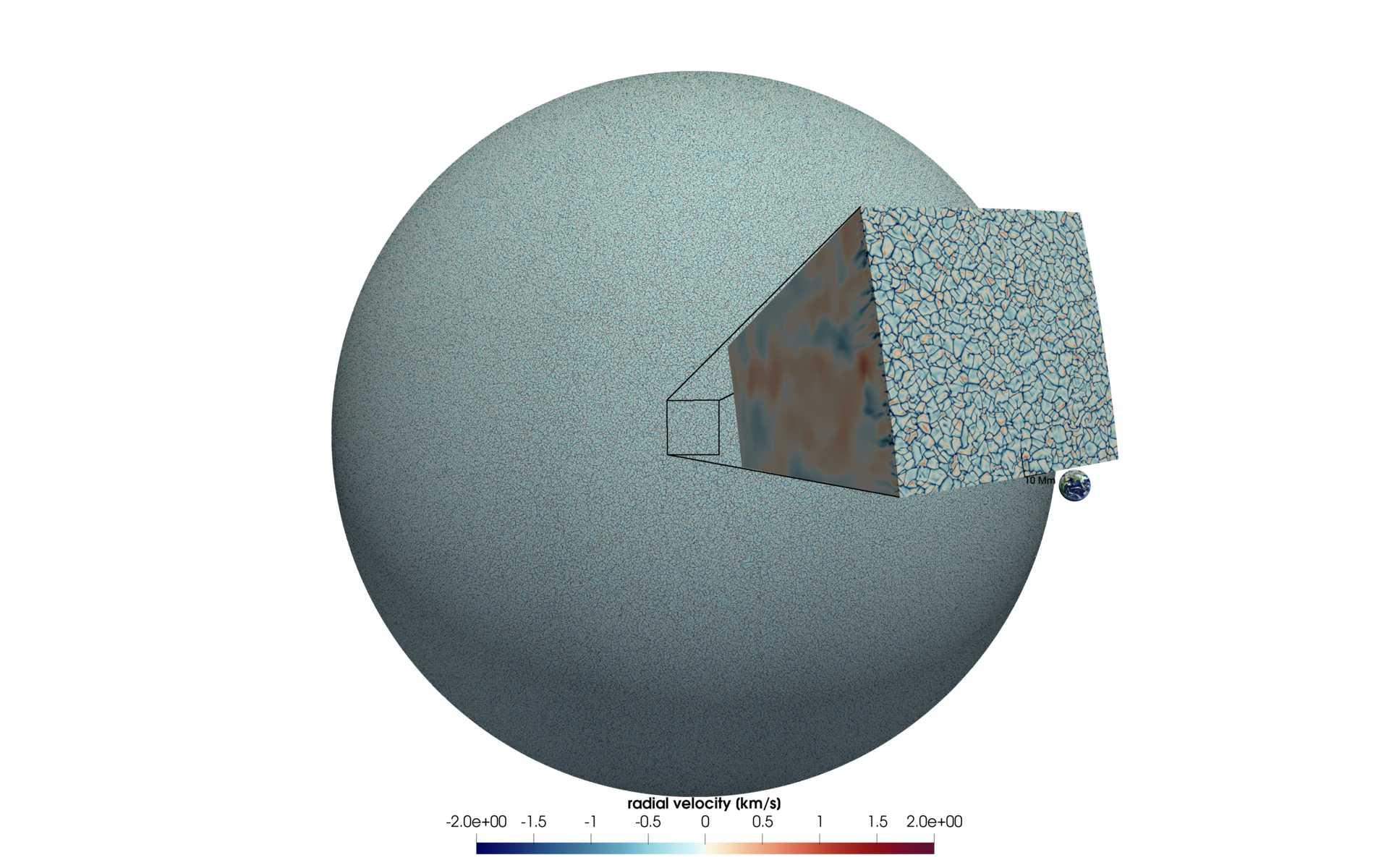
ReCon2 combines three tightly connected strands:

- Local, ultra-high-resolution simulations (AMR) from the deep interior up to the surface, including realistic surface-cooling-driven convection and magnetic fields, to test whether convective velocities and patterns match solar constraints.
- Global “full-Sun” validation by analysing an existing global convection-zone simulation and comparing depth-dependent flow profiles with helioseismic constraints.
- Robustness tests against numerical “knobs” by assessing sensitivity to artificial parameter choices such as the Prandtl number (the ratio of viscous to thermal diffusion), to show when results become independent of tuning.
If ReCon2 resolves the conundrum, it will remove a major uncertainty in solar interior modelling and provide strong evidence that realistic simulations can reproduce solar convection without ad-hoc parameter tuning. This would set new benchmarks for simulation realism and directly benefit convection theory, solar dynamo modelling, and helioseismic interpretation. The approach and openly shared outputs will also help the broader stellar community model other stars with higher fidelity.