The detection of gravitational waves in 2015 by the LIGO-Virgo-KAGRA collaboration has ushered the advent of gravitational wave astronomy and opened a new window with which to explore the early Universe. Multiple extensions of the Standard Model of particle physics predict the existence of phase transitions occurring in the early Universe, leading to an imprint in the stochastic background of gravitational waves.
Depending on when the transition occurs, this imprint will be in the expected range of the Laser Interferometer Space Antenna (LISA).
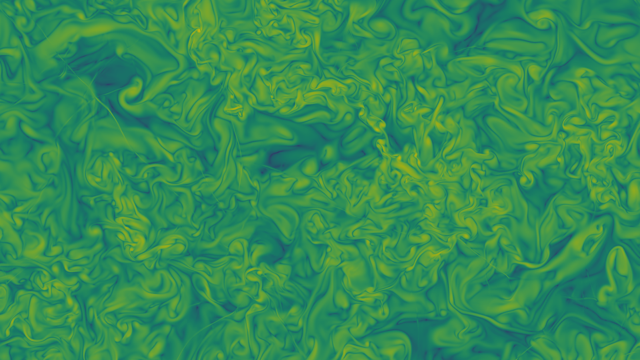
In this talk I will explore the gravitational wave production of strong first order phase transitions, seeking to understand the role of Standard Model fluid properties and their impact on the expected signal. To do so, I will use large scale simulations of two transitions: one preceded by a detonation, another by a deflagration.
To conclude, I will then study the evolution of vortical and compressional modes, how they are intrinsically related and what their respective impacts are on the expected gravitational wave background signal.