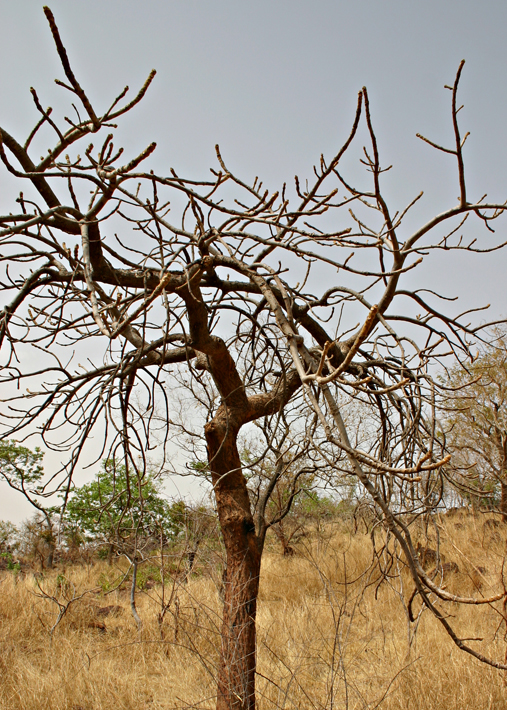
L. velutina is a shrub or tree 15 m high of the wooded savanna from Senegal to Ghana. The leaves are very fluffy, pubescent (hairy) on top and with dense tomenta on the lower surface. Lannea species are native to Tropical Africa. Some Lannea species yield timber that is used locally; others are employed for a variety of purposes in indigenous medicine. The roots and bark are recorded to be used against diarrhoea and for treatment of rachitic children and strained muscles. In the Ivory Coast the bark is used for treatment of diarrhoea, oedema, paralysis, epilepsy, and insanity. In Mali L. velutina is used in treatments for chest pain, gastric ulcer, wounds, skin diseases, respiratory tract diseases and fever. The bark is rich in proanthocyanidines witch may explain its anti-diarrhoeal activity.
Lannea velutina A. Rich [ANACARDIACEAE]
Local name: Bakoro m'pégu
Synonyms: Calesiam velutinum, Odina velutina
Published Feb. 11, 2011
Published Feb. 11, 2011 10:19 AM
- Last modified June 20, 2013 4:23 PM