
The PhD defence and trial lecture will be streamed. The chair of the defence will moderate the disputation.
Ex auditorio questions: the chair of the defence will invite the audience physically present in the auditorium to ask ex auditorio questions.
→ Live streaming of trial lecture and disputation
→ Request for thesis copy (available until the disputation starts)
Trial lecture
Time and place: January 22, 2026; 10:15 AM, -
Store Fysiske auditorium (V343) - Fysikkbygningen
Title: "From color center to quantum networks"
Main research findings
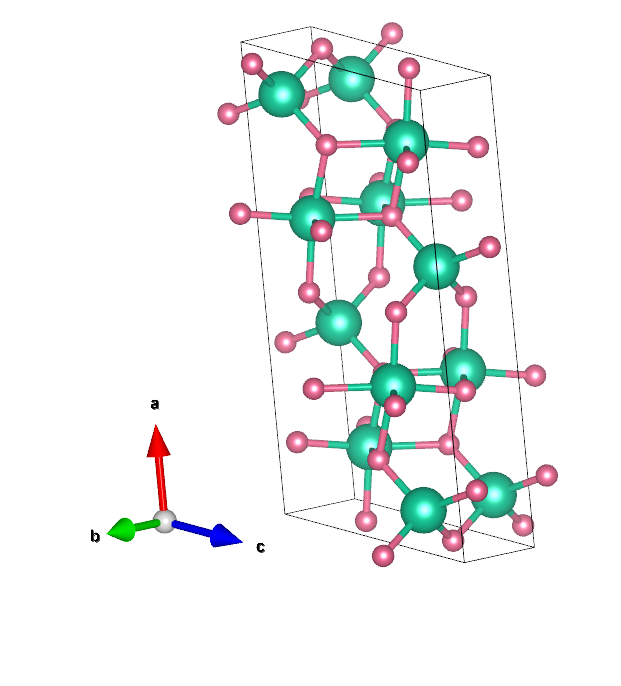
Gallium oxide is a semiconducting oxide with promising traits for power electronic applications. Power electronic devices are used in many electrical switching processes, for example between AC and DC, and high and low voltages. There are power electronic devices in a lot of everyday electronic equipment, from mobile phone chargers to electric vehicles, etc. Using gallium oxide in power devices can potentially reduce loss in switching processes, resulting in more efficient power consumption. Before devices based on gallium oxide can be realized, the fundamental properties of the material must be understood.
Gallium oxide is a crystalline material, which means that the atoms are arranged in a period lattice. The crystal structure is not perfect, it will contain structural imperfections called point defects. Some point defects can be detrimental to device performance while others are useful. Actively introducing point defects by replacing host atoms with impurity atoms is an essential part of the manufacturing of semiconductor devices. How these impurities interact with host atoms and how they diffuse is of utmost importance when devices are fabricated. This thesis has investigated how the impurities zinc, germanium, and iron diffuse in gallium oxide. The results give a detailed insight into the interplay between point defects in the diffusion processes.
Hovedfunn (Norwegian)
Galliumoksid er eit halvleiande materiale med lovande eigenskapar for bruk i kraftelektronikk. Kraftelektronikkomponentar vert brukt i mange elektriske brytarar, til dømes mellom likestraum og vekselstraum og høge og låge spenningar. Det finst kraftelektronikk i mykje kvardagsleg elektrisk utstyr, frå mobilladarar til elektriske bilar osb. Ved å bruka galliumoksid i kraftkomponentar kan ein redusera energitapet, noko som vil resultera i eit meir energieffektivt kraftforbruk. Før komponentar basert på galliumoksid kan lagast, må ein forstå dei grunnleggjande eigenskapane ved materialet.
Galliumoksid er eit krystallinsk materiale, noko som betyr at atoma er ordna i eit periodisk gitter. Krystallstrukturen er ikkje perfekt, der vil finnast strukturelle feil som me kallar for punktdefektar. Nokre punktdefektar er øydeleggande for funksjonen til komponentane medan andre er svært nyttige. Å aktivt introdusera defektar ved å byta ut vertsatoma med ureinheiter er ein viktig del av å laga halvleiarkomponentar. Korleis desse defektane interagerer med vertsatoma og korleis dei diffunderer er ytst viktig når komponentar skal verta laga. Denne avhandlinga har undersøkt korleis ureinheitene sink, germanium og jern diffunderer i galliumoksid. Resultata gjev ei detaljert innsikt i samspelet mellom punktdefektar i diffusjonsprosessane.
Adjudication Committee
- Dr. Oliver Bierwagen, Paul Drude Institute for Solid State Electronics, Germany
- Dr. Yaonan Hou, Swansea University, UK
- Professor Heidi Sandaker, University of Oslo, Norway
Supervisors
- Dr. Klaus Magnus Johansen, Centre for Materials Science and Nanotechnology (SMN), University of Oslo, Norway
- Professor Lasse Vines, Centre for Materials Science and Nanotechnology (SMN), University of Oslo, Norway
- Dr. Ymir Kalmann Frodason, Centre for Materials Science and Nanotechnology (SMN), University of Oslo, Norway
Chair of defence
Associate Professor Helge Balk, Department of Physics, University of Oslo, Norway
Candidate contact information
E-mail: ylvahommedal@gmail.com
Phone: 47865275
Contact information to Department: Line Trosterud Resvold