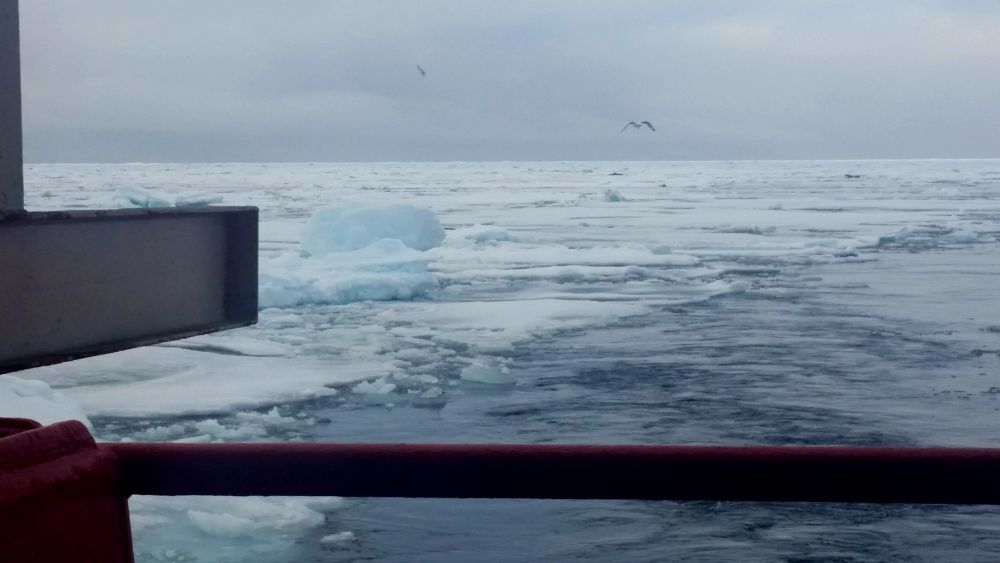
Since preindustrial times, rising greenhouse gas levels have caused the Arctic to warm faster than the rest of the world, a process known as Arctic amplification. This rapid warming is driving major environmental shifts, including ice sheet melt and ocean warming, which may influence methane emissions from natural geological sources such as seafloor gas hydrates. Yet the scale and significance of these natural methane releases remain poorly understood, particularly around Greenland, one of the least explored regions of the Arctic Ocean.
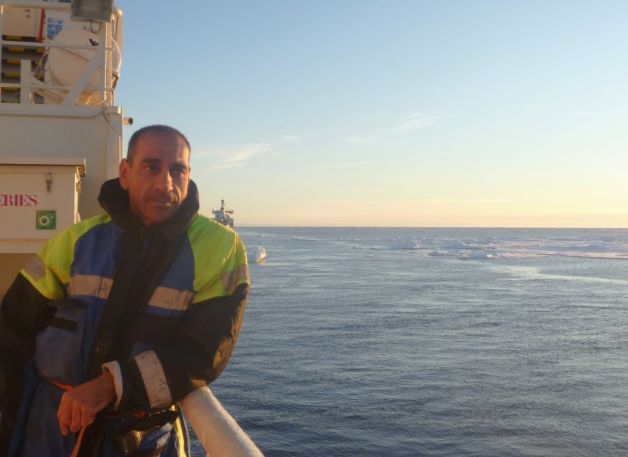
A new study published in Communications Earth & Environment, has now brought attention to this issue. The international research team—featuring several Norwegian scientists, including Adriano Mazzini from the Dept. of Geosciences—documents active releases of oil and methane from the seafloor off northeastern Greenland.
Led by Christoph Böttner, Aarhus University, the multidisciplinary team presents clear evidence of gas hydrates on the northeastern Greenland continental shelf and shows that these deposits are now being exposed to a warming Arctic Ocean. Such hydrocarbon seepage can influence marine ecosystems and play a role in shaping the Arctic carbon cycle.
The study is among the first to systematically chart oil and gas leaks in this remote region. Because northeastern Greenland has remained largely unexplored, the discovery provides a rare opportunity to observe how natural hydrocarbon emissions occur and how they may contribute to ongoing environmental changes in the Arctic.
Read more about this:
Hidden Arctic leaks: Natural seepage of oil and gas uncovered off Northeast Greenland, phys.org, 12.11.2025
Natural Hydrocarbon Seepage Discovered Off Northeast Greenland, ScienMag, 12.11.2025
The research is also mentioned in this news article:
Geologist Explains Greenland's Resource Wealth, Mirage News, 9.1.2026