
Naturen is Norway’s oldest popular science journal. It covers biology, meteorology, oceanography, geology, medicine, and several other disciplines. Together with the University of Bergen, it annually awards the Fægris Memorial Prize (Fægriprisen); 2025 will mark the prize’s seventh year.
The prize honours the best articles in Naturen and aims to promote clear written communication of scientific research. There are two awards: a main prize of NOK 10,000 and a student prize of NOK 5,000.
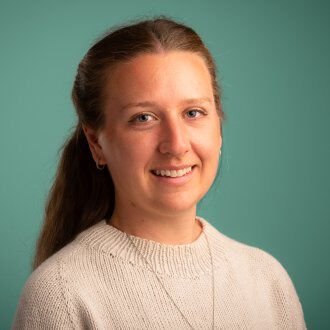
This year’s student prize goes to Jacqueline Kay Knutson, a PhD candidate at the Department of Geosciences and affiliated with the CBA — Centre for Biogeochemistry in the Anthropocene. Her primary position is at the Norwegian Institute for Water Research (NIVA).
She wins the prize for her popular-science article (only in Norwegian): Når permafrosten forsvinner: irreversibel landskapsendring.
A changing landscape in the north
In announcing the student prize, the jury wrote in its 8 December press release that Knutson describes a highly topical landscape change driven by current climate change — namely the loss of permafrost and palsas — and how this process releases greenhouse gases. Knutson writes unusually well, with a melancholy and beautiful undertone. The illustrations in the article are also strong and help draw the reader into the story.
Read the winning article free online until 5 January 2026: Når permafrosten forsvinner: irreversibel landskapsendring
Congratulations from colleagues at the Department of Geosciences and the CBA!
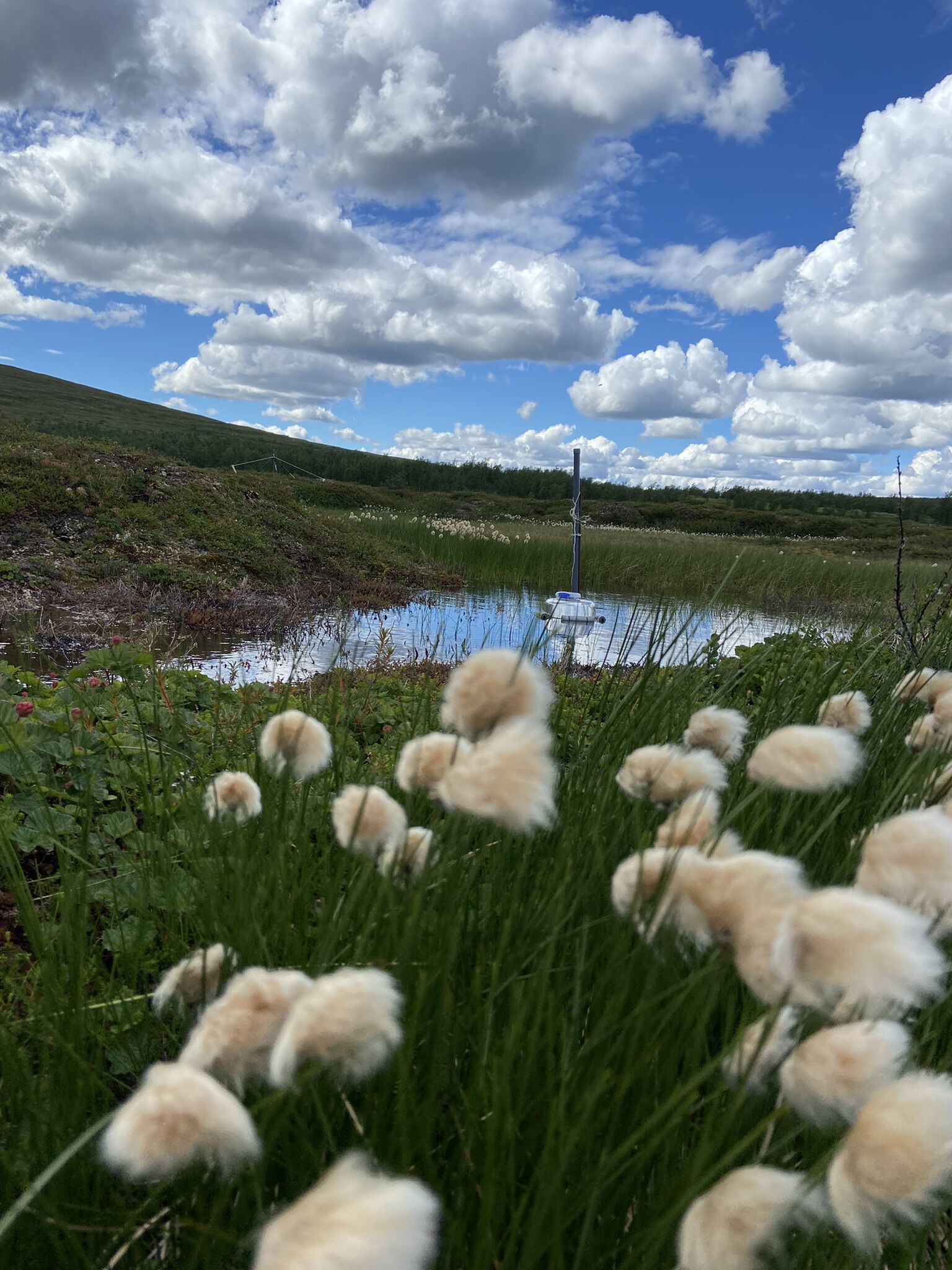
The background to Jacqueline’s research and her popular‑science article is that climate change is affecting northern regions more than the rest of the world. In particular, the polar regions, including northern Norway, are warming faster than other parts of the globe.
She writes about the permafrost landscape she encounters: “Working in the field at the Iškoras peat bog is a very special experience, where nature’s raw beauty meets an inevitable sense of loss.”
Jacqueline Kay Knutson is a doctoral research fellow at the Section for Hydrology and Geography (GeoHyd), Department of Geosciences, University of Oslo. Her research focuses on the transport and processing of organic matter in northern ecosystems under climate change. Knutson is an active participant in the CBA — Centre for Biogeochemistry in the Anthropocene.
Reference for the article:
Knutson, Jacqueline K. 2025. Når permafrosten forsvinner: irreversibel landskapsendring. Naturen, no 4/2025 (vol 149). Idunn.no/Universitetsforlaget, https://doi.org/10.18261/naturen.149.4.3
About the Fægriprisen
The journal Naturen, in collaboration with the University of Bergen (UiB), awards the Fægri Memorial Prize for popular‑science communication in Naturen. The prize is named after Knut Fægri Sr. and was established in 2019, 110 years after Fægri’s birth in 1909. Fægri Sr. was a professor of botany and paleoecology at UiB and is regarded as one of Norway’s foremost botanists of all time.
Read more about the Fægri Prize and previous winners on Wikipedia.