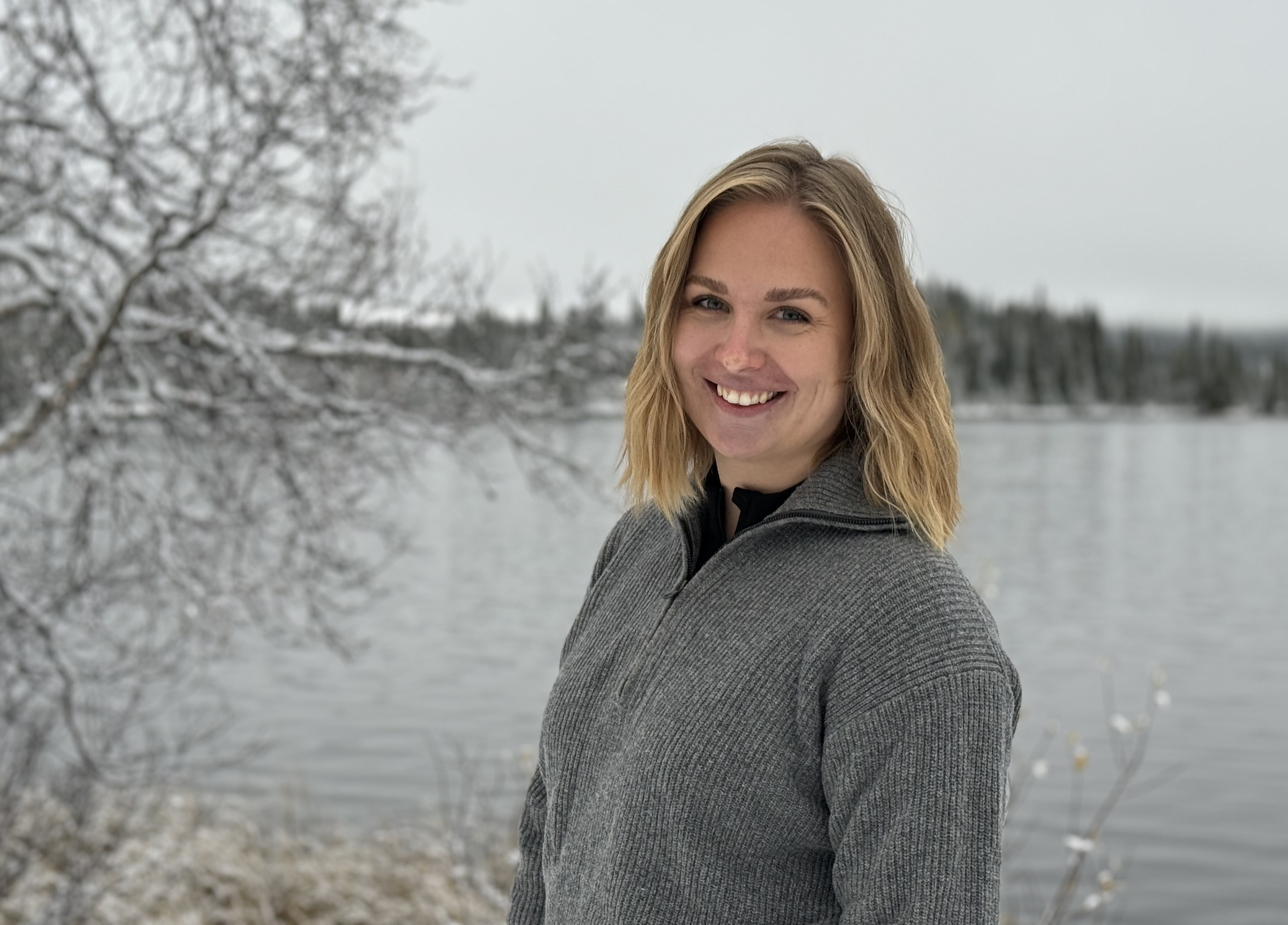
The PhD defence and trial lecture will be held in Auditoriums in The Geology Building. In some cases, it will be possible to attend the trial lecture and dissertation digitally, in that case a link to Zoom will be posted.
Join via Zoom (webinar)
Note two different links: The trial lecture | The disputation (the webinar will end after the thesis presentation.)
Trial lecture
Monday 26 May, 15:15-16:00, Aud 2, The Geology Building:
Atmospheric boundary layers in different climatic zones
Conferral summary (in Norwegian)
Avgjørende for pålitelige værvarslinger og klimaprognoser er en realistisk modellering av det stabile lagdelte atmosfæriske grenselaget (SBL) i luften, spesielt i polare strøk. Til tross for at det er viktig, har dagens numeriske værvarslings- og klimamodeller problemer med å representere SBL-regimer og overgangene mellom dem. I sitt doktorgradsarbeid og numeriske studie tar Amandine Kaiser for seg disse utfordringene ved å undersøke faktorene som driver SBL-regimeoverganger. Studien foreslår måter for å forbedre representasjonen av dem i modeller, noe som kan gi nye strategier for å føre SBL-modellering framover.
Main research findings
Popular scientific article about Kaiser’s dissertation:
Exploring Stable Atmospheric Boundary Layer Regimes: A Stochastic Perspective
Accurately modeling the stably stratified atmospheric boundary layer (SBL) is crucial for reliable weather forecasts and climate projections, particularly in polar regions. Despite its importance, current numerical weather prediction and climate models have issues with the representation of SBL regimes and transitions between them, leading to errors such as excessive mixing or runaway cooling in the stable regime.
This thesis and doctoral work by Amandine Kaiser address these challenges by investigating the factors driving SBL regime transitions and proposing ways to improve their representation in numerical models. Results show that small-scale transient phenomena play a key role in driving regime transitions and can be effectively incorporated through perturbed tendencies or stochastic parameterizations. Furthermore, an analysis of observational data reveals that the noise structure in the temperature inversion strength varies between SBL regimes, highlighting the need for regime-dependent stochastic approaches. In conclusion, this research provides new strategies for advancing SBL modeling.
Photo and other information:
Press photo: Amandine Kaiser, portrait; 2000px. Photo: Private