
The PhD defence and trial lecture will be held in Auditorium 1 in The Geology Building. In some cases, it will be possible to attend the trial lecture and dissertation digitally, in that case a link to Zoom will be posted.
Trial lecture
Friday 29 August, 10:15-11:00, Aud 1, The Geology Building:
Mantle melting at subduction zones - an overview
Conferral summary (in Norwegian)
Kimberlitt er en magmatisk gangbergart som kan ta med seg rent karbon (diamanter) opp til jordoverflaten. Kimberlittmagma bryter ut raskt ved utbrudd, og Ana Anzulović bruker datasimulering for å avdekke de forskjellige rollene til karbondioksid (CO₂) og vann har ved utbrudd. Studien viser at en høy konsentrasjon av CO₂ er den viktigste drivkraften som får magmaen til å stige raskt opp til jordoverflaten. Samtidig gjør vann at smelten blir svært mobil, noe som forklarer hvordan disse smeltemassene kan bevege seg så raskt fra jordens øvre mantel.
Main research findings
Popular scientific article about Anzulović’s dissertation:
Volatile control on kimberlite melt structure, density, and viscosity: Atomistic study with implications for kimberlite volcanism

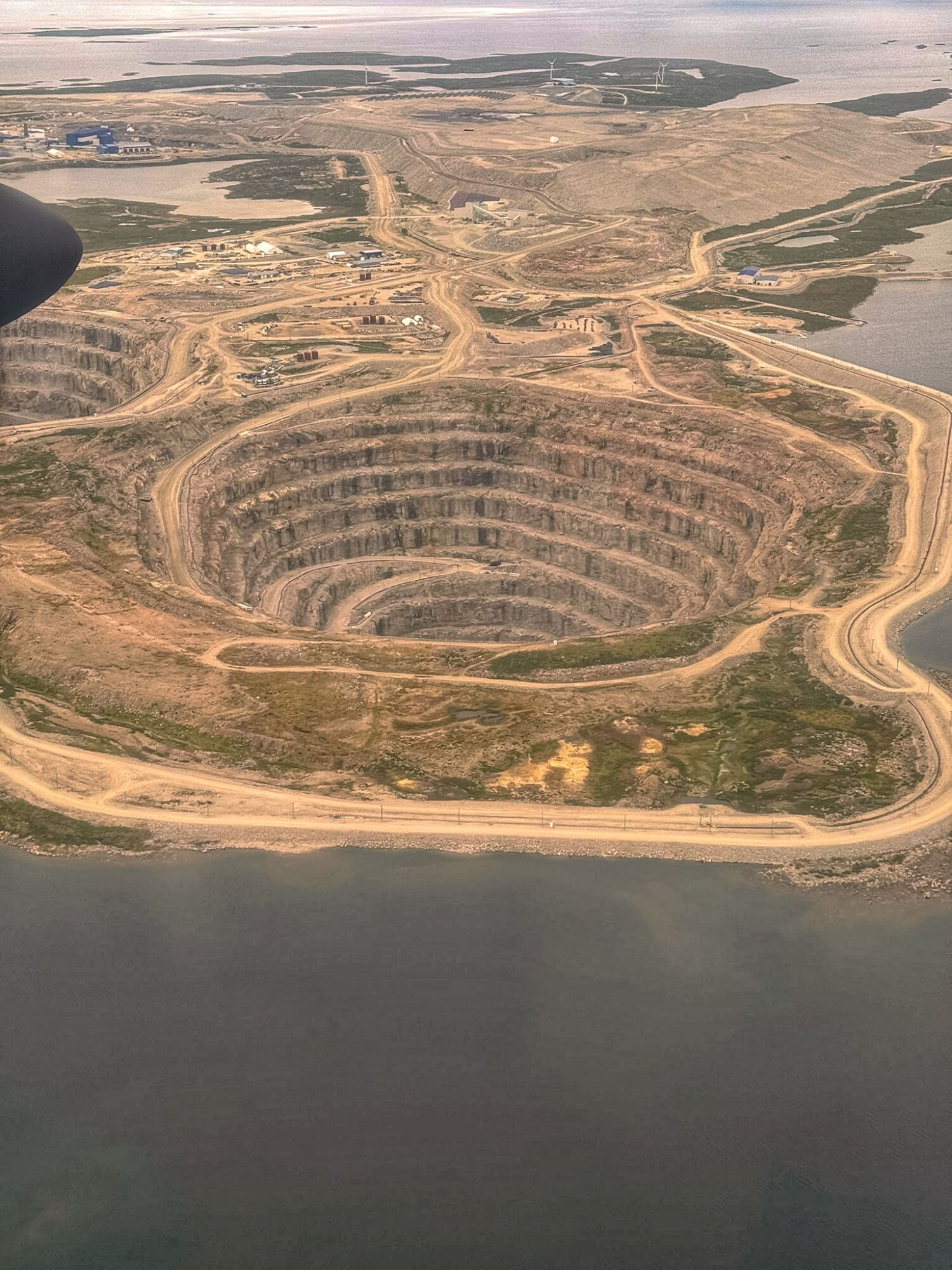
The way a magma erupts is largely controlled by its volatile content, primarily carbon dioxide (CO₂) and water. This is particularly true for volatile-rich kimberlite magmas, which originate deep in the upper mantle beneath thick, cool continental lithosphere. Kimberlites are known for their rapid ascent and ability to transport mantle fragments to the surface; these characteristics make them the natural transport mechanism and primary host rocks of diamonds. As kimberlite magmas no longer erupt, our understanding of their volcanism relies on studying the altered rocks explosively emplaced in carrot-shaped volcanic pipes.
To investigate the drivers of kimberlite volcanism, Ana Anzulović has developed an atomistic model of a kimberlite melt. The findings in the doctoral thesis work indicate that the deciding factor for a successful eruption is magma’s CO₂ content; at least 8.2 wt% is required for the melt to reach the surface.
Simulting melt chemistry shows that carbon plays a dual role. At high pressure, it polymerizes the melt structure, but at lower pressure, it exsolves from the melt, driving vaporization. Both carbon and water lower the melt's density and viscosity, but water has a particularly strong depolymerizing effect, making the melt highly mobile.
Photo and other information:
Press photo: Ana Anzulović, portrait; 1000px. Photo: Private

Other photo material: Photo with description and credit as specified in the article above, size 1000px.