The PhD defence and trial lecture will be held in Auditorium 1 in The Geology Building. In some cases, it will be possible to attend the trial lecture and dissertation digitally, in that case a link to Zoom will be posted.
Trial lecture
Friday 20 March, 10:15-11:00, Aud 1, The Geology Building:
Slope Instability in the 21st Century: Impacts of Climate Change and Advances in AI-Based Prediction
Conferral summary (in Norwegian)
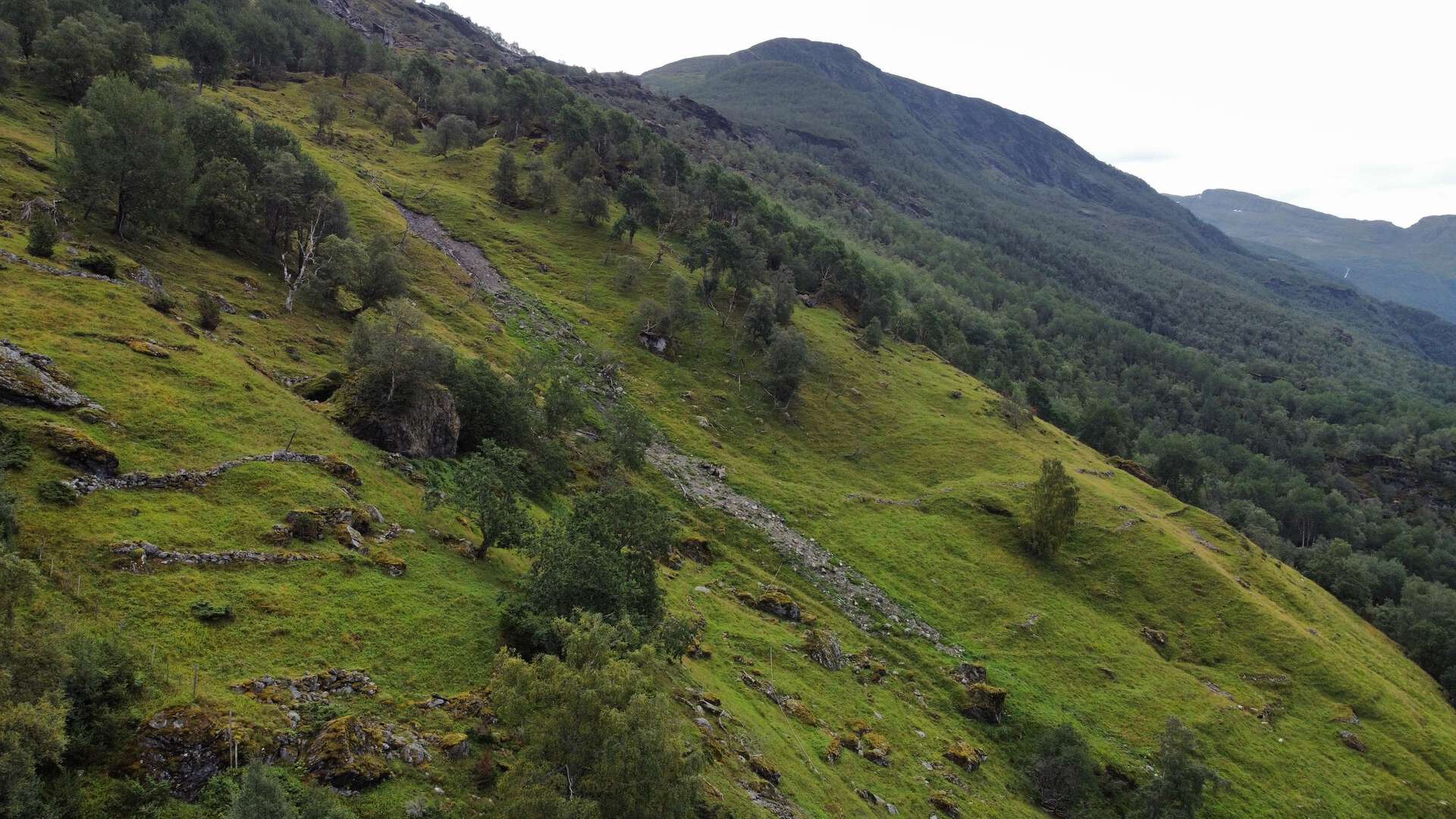
I bratt terreng kan økt nedbørintensitet og gjengroing av jordbruksareal øke risikoen for nedbørsutløste jordskred. I sin doktorgradsavhandling har Amanda DiBiagio kombinert feltmålinger og modellering av skråningsstabilitet for en fjellside i Flåmsdalen i Aurland kommune. Studien viser at løvskog kan gi økt skråningsstabilitet gjennom rotforsterkning, samt ved å dempe hvor raskt jorda svekkes i regnvær. Skogens beskyttende effekt er liten i ung skog og tydelig først når skogen blir moden. Avhandlingen introduserer også en Skogsfaktor, et enkelt forholdstall som viser hvor mye skog øker stabiliteten sammenlignet med en tilsvarende skråning i åpent landskap.
Main research findings
Popular scientific article about Johansen Di Biagio’s dissertation:
When, and by how much, does forest reduce landslide risk in Norway?
Rainfall-induced shallow landslides are likely to become more frequent in Norway as intense rainfall increases, while abandonment of agricultural land allows deciduous forest to expand into steep terrain. This co-evolution raises a practical question for Norwegian slopes: when, and by how much, does forest reduce landslide risk? The protective role of forest is widely assumed, but planners rarely have numbers they can use. In her PhD work, DiBiagio provides such numbers by combining field monitoring with slope stability modelling in Aurland municipality in Western Norway, and translating forest effects into design friendly metrics.
The thesis shows that birch roots can significantly strengthen the soil, but the benefit depends on forest development. Mature forests with large trees and high tree density provide substantially more support than young forests. Management matters: pollarding slows growth and reduces reinforcement, and is not recommended where slope protection is an objective. Hydrological monitoring shows that forests help maintain stabilizing soil suction during rainfall, keeping slope stability higher than in comparable unforested slopes.
To make these effects usable in practice, the thesis by DiBiagio introduces the Forest Factor, a simple ratio comparing stability in forested and unforested slopes. Seasonal values are derived to support hazard assessment, land use planning and climate adaptation in Norway and for similar mountain regions.
Photo and other information:
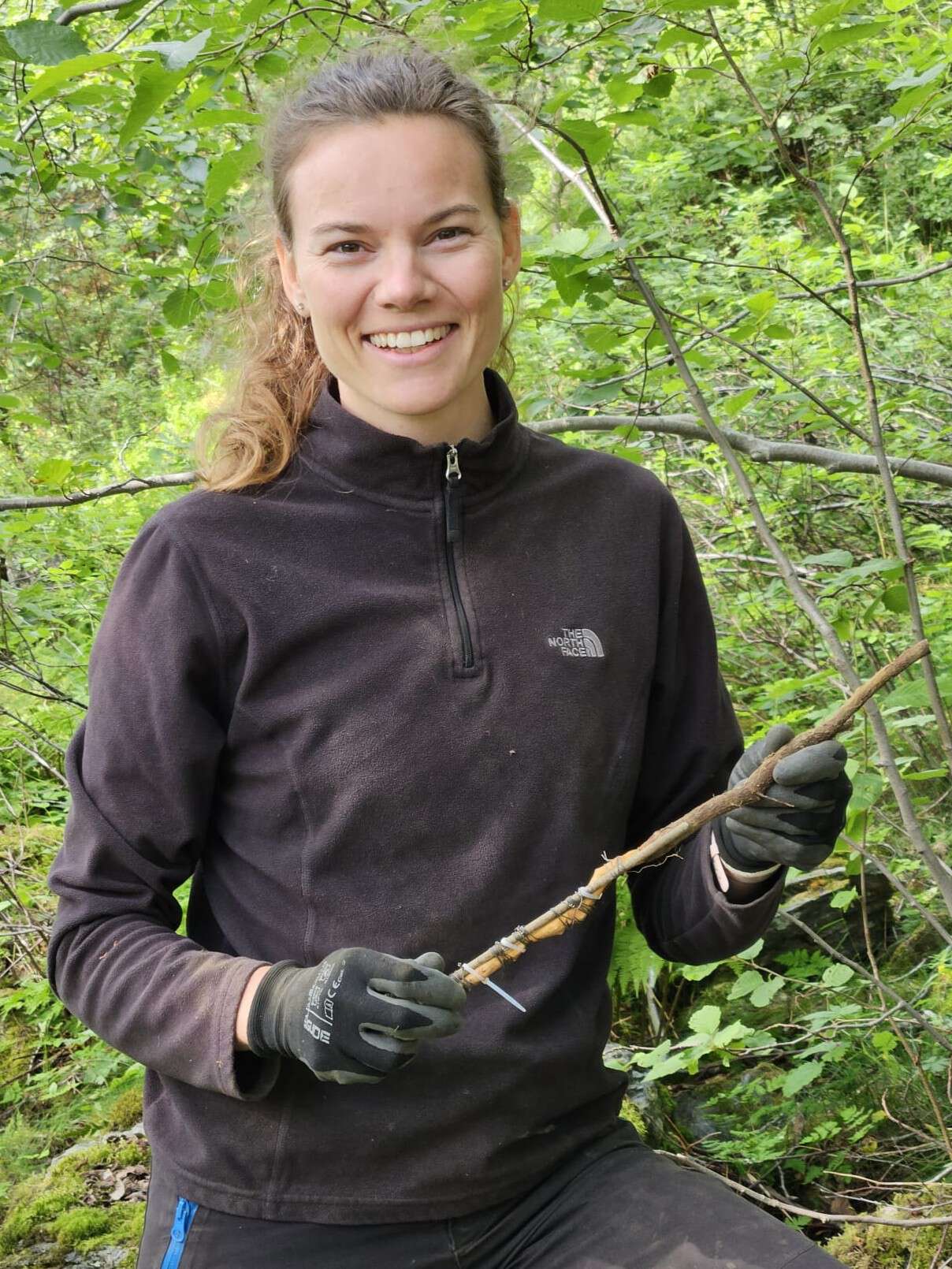
Press photo: Amanda Johansen Di Biagio, portrait; 1000px. Photo: Private
Other photo material: Photo with description and credit as specified in the article above, size 1000px.