How Long Does the Mantle Remember? Investigating Seismic Anisotropy in Subduction Zones
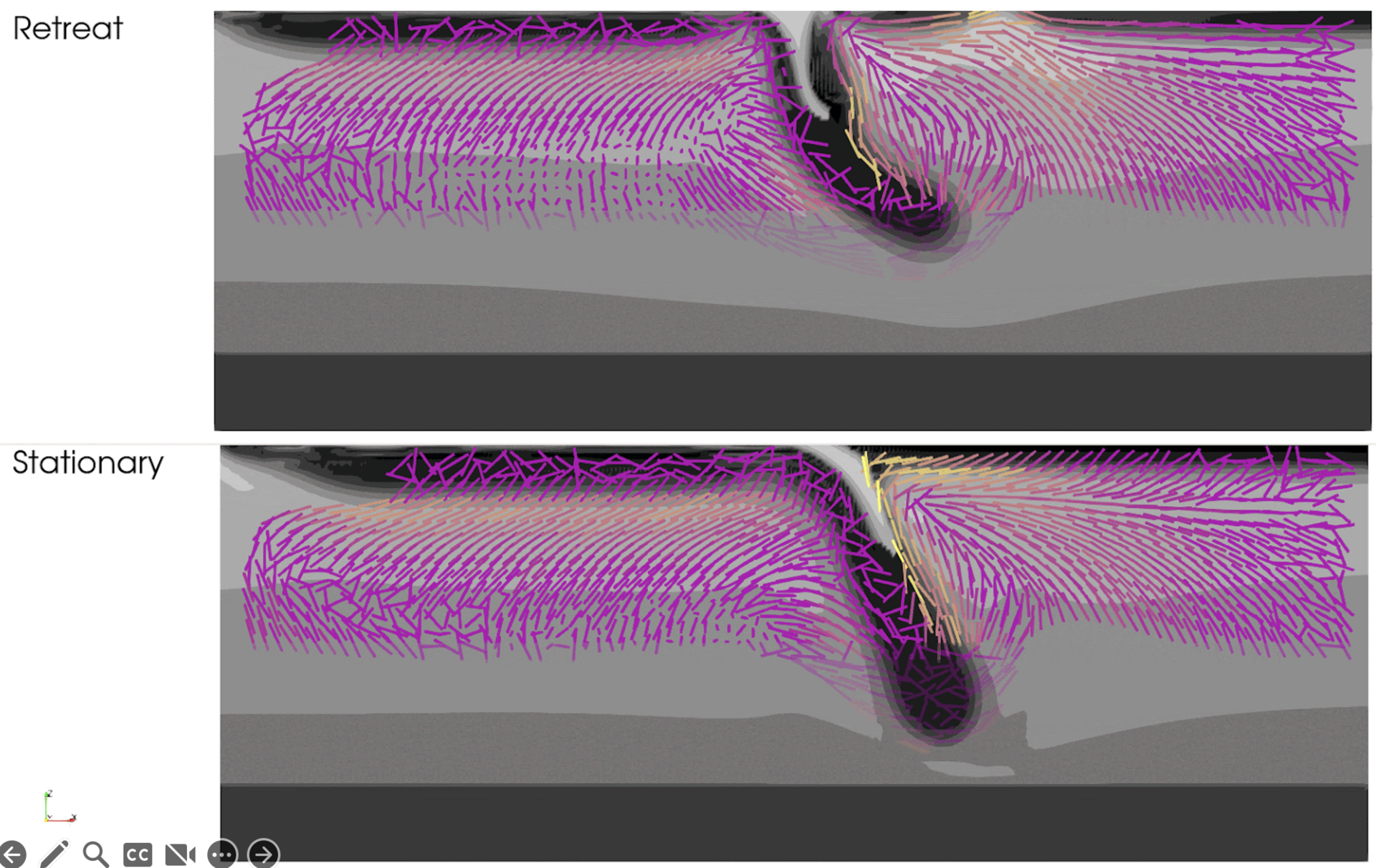
Seismic anisotropy, the directional dependence of seismic wave speeds, is one of the most important tools for studying mantle flow beneath tectonic plates. In the upper mantle, deformation causes minerals such as olivine to align in preferred orientations, creating a texture that can be detected using seismic observations. Because this texture develops gradually, it may preserve a record of past deformation rather than reflecting only present-day mantle flow.
This Master's project will investigate how strongly seismic anisotropy in subduction zones depends on deformation history. Subduction zones are among the most dynamic regions on Earth, where changing slab geometry, convergence rates, and mantle flow patterns generate complex and time-dependent deformation. As a result, seismic anisotropy may contain a "memory" of past tectonic processes, complicating the interpretation of seismic observations.
Using numerical models of mantle flow and texture development, the project will systematically explore how far back in time deformation history must be considered to accurately predict present-day seismic anisotropy. By comparing models with different lengths of deformation history, the student will quantify when anisotropy reflects current mantle flow and when it is controlled by older tectonic events.
The results will improve our understanding of the link between mantle dynamics and seismic observations, helping geoscientists interpret seismic data in subduction zones more reliably. More broadly, the project will contribute to our understanding of plate tectonics, mantle circulation, and the processes that shape some of Earth's most active tectonic environments.