Why study the Eoarchaean?
As we strive to refine our understanding of early Earth crust formation processes during the Hadean, detrital zircon records offer invaluable insights into our planet's early geological processes (Drabon et al., 2022). However, magmatic zircon repository—a crucial source of information about Earth's formative years—are relatively rare. Our knowledge of the Eoarchaean remains limited (Bolhar et al., 2017), despite its significance in understanding the planet’s early history apart from the rare Hadean record.
Notably, δ18O measurements in Hadean zircons have revealed elevated values, indicating interaction with liquid water (e.g., Harrison, 2024). This suggests the existence of a hydrosphere capable of promoting crustal melting, remelting, and recycling, hinting at tectonic regimes where water was instrumental—a scenario potentially akin to modern subduction zones (e.g., Harrison, 2024).
However, our exploration of early crust formation during the Eoarchaean is still in its infancy. Investigating such periods is essential for evaluating processes such as the stagnant lid tectonic regime suggested by recent studies (cf. Tarduno et al., 2023) and understanding the emergence of microbial life around 3.8 Ga (Rosing et al., 1999), which could illuminate the conditions under which life first and/or early habitability appeared on Earth.
Controversies around early Earth tectonics
Several studies suggest that Hadean zircons reveal conditions indicative of early plate tectonics, potentially involving proto-subduction events (Harrison, 2024). Their diverse isotopic and elemental compositions reflect varied tectonic regimes, including vertical plume tectonics and early horizontal processes (Bedard et al., 2018). These zircons likely crystallized from granitic melts in settings akin to modern continental arcs (Drabon et al., 2022). Our research focuses on Eoarchaean zircons from the North Atlantic, Singhbhum and Bastar cratons as key indicators of early Earth processes (cf. Sreenivas et al., 2019, Ranjan et al. 2020, Jodder unpubl. data).
By analyzing these ancient zircons, we aim to gain insights into the tectonic activities and geochemical environments of the Hadean to Eoarchaean eons, enhancing our understanding of Earth's geological evolution during its formative periods.
Questions to be addressed
The main question of whether or not early crust formation processes began during the Eoarchean is intriguing. Some studies advocate for the onset of early plate tectonics around early Archaean, supported by bulk Ti and Si isotope systematics (Greber et al., 2017; Andre et al., 2019).
While the Eoarchaean rock record and mineral tracers like zircons are preserved in cratons such as Kaapvaal, Zimbabwe, North Atlantic, Bastar and Singhbhum, high resolution in-situ geochemical studies focusing on δ18O, Δ′17O, and δ31Si isotopes in zircon from these localities are still lacking.
State-of-the-art isotope measurements can provide valuable insights into early Earth processes, potentially indicating underplating of mafic hydrated rocks, involvement of sedimentary rocks, ancient hydrothermal processes or the impact of ancient meteoric water. Such information would offer significant clues about the tectonic regimes and processes involved in crust formation during the Eoarchean.
Methods
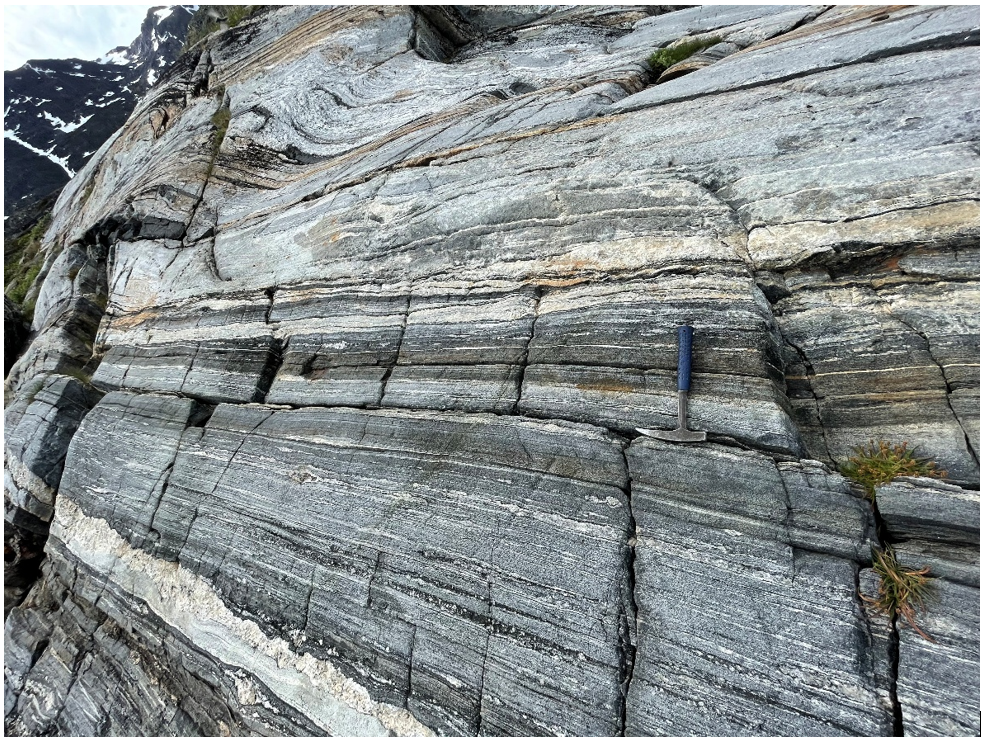
Samples have been already processed for mineral separation. The next step would be to characterize the zircons using SEM CL-BSE imaging. Following this, SwissSIMS (i.e. Swiss Ion Probe Facility) has been booked for in-situ δ18O, and δ31Si measurements in 2026. While Δ′17O study will be conducted at the Georg-August-Universität Göttingen with Prof. Andreas Pack and Dr Fabian Zahnow.
References
- André, L., Abraham, K., Hofmann, A., Monin, L., Kleinhanns, I. C., & Foley, S. (2019). Early continental crust generated by reworking of basalts variably silicified by seawater. Nature Geoscience, 12(9), 769-773.
- Bédard, J. H. (2018). Stagnant lids and mantle overturns: Implications for Archaean tectonics, magmagenesis, crustal growth, mantle evolution, and the start of plate tectonics. Geoscience Frontiers, 9(1), 19-49.
- Bolhar, R., Hofmann, A., Kemp, A. I., Whitehouse, M. J., Wind, S., & Kamber, B. S. (2017). Juvenile crust formation in the Zimbabwe Craton deduced from the O-Hf isotopic record of 3.8–3.1 Ga detrital zircons. Geochimica et Cosmochimica Acta, 215, 432-446.
- Greber, N. D., Dauphas, N., Bekker, A., Ptáček, M. P., Bindeman, I. N., & Hofmann, A. (2017). Titanium isotopic evidence for felsic crust and plate tectonics 3.5 billion years ago. Science, 357(6357), 1271-1274.
- Harrison, T. M. (2024). We don't know when plate tectonics began. Journal of the Geological Society, 181(4), jgs2023-212.
- Drabon, N., Byerly, B. L., Byerly, G. R., Wooden, J. L., Keller, C. B., & Lowe, D. R. (2021). Heterogeneous Hadean crust with ambient mantle affinity recorded in detrital zircons of the Green Sandstone Bed, South Africa. Proceedings of the National Academy of Sciences, 118(8), e2004370118.
- Nutman, A. P., Bennett, V. C., Friend, C. R., & Van Kranendonk, M. (2019). The Eoarchean legacy of Isua (Greenland) worth preserving for future generations. Earth-Science Reviews, 198, 102923.
- Rosing, M. T. (1999). 13C-depleted carbon microparticles in> 3700-Ma sea-floor sedimentary rocks from West Greenland. Science, 283(5402), 674-676.
- Ranjan, S., Upadhyay, D., Pruseth, K. L., & Nanda, J. K. (2020). Detrital zircon evidence for change in geodynamic regime of continental crust formation 3.7–3.6 billion years ago. Earth and Planetary Science Letters, 538, 116206.
- Sreenivas, B., Dey, S., Rao, Y. B., Kumar, T. V., Babu, E. V. S. S. K., & Williams, I. S. (2019). A new cache of Eoarchaean detrital zircons from the Singhbhum craton, eastern India and constraints on early Earth geodynamics. Geoscience Frontiers, 10(4), 1359-1370.
- Tarduno, J. A., Cottrell, R. D., Bono, R. K., Rayner, N., Davis, W. J., Zhou, T., ... & Mitra, G. (2023). Hadaean to Palaeoarchaean stagnant-lid tectonics revealed by zircon magnetism. Nature, 618(7965), 531-536.