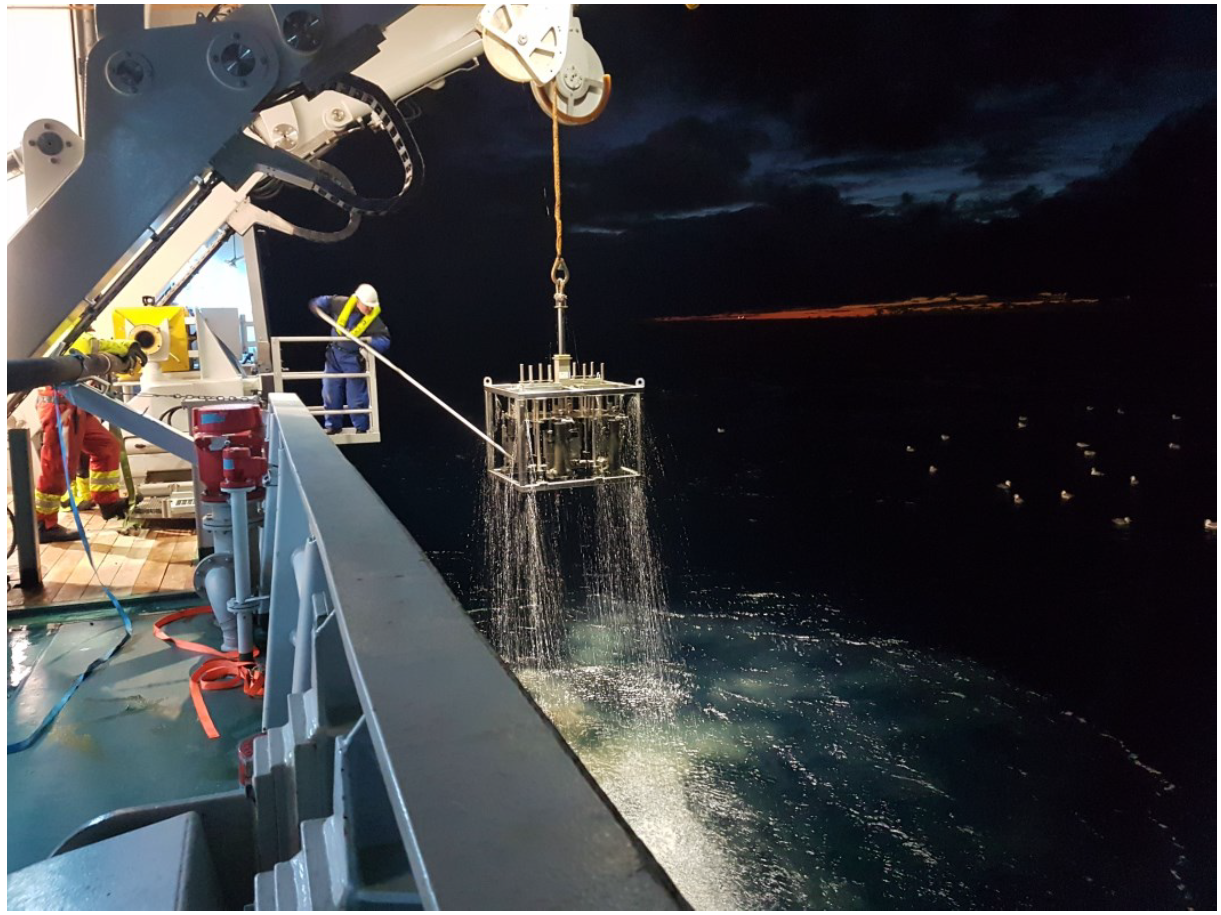
In the Barents Sea, competing influences between cold Arctic Water and warm Atlantic Water significantly affect sea ice distribution. Warming in recent decades is likely to change ecosystem functioning and biodiversity patterns in this region. Still, knowledge of these northern regions, and how their biogeochemical processes change and affect biodiversity, remains limited.
We are looking for a Master's student with an interest in marine geology, geochemistry, and micropaleontology to investigate how the northern Barents Sea has changed over the past centuries. The MSc topic will include interdisciplinary studies of Arctic marine physical, chemical, biological, and palaeoecological processes to investigate possible environmental changes in the northern Barents Sea. In particular, how physical and chemical characteristics of sediment and water column may affect benthic foraminiferal communities.
Aim of the project
The aim of the study is to reconstruct centennial variations in the intensity of Atlantic Water inflow and changes in the sea ice extent in contrasting sites (north and south AW influence). Geochemical parameters (e.g., TOC, TN, stable C- and N-isotopes) as well as living and fossil benthic foraminifera in dated sediment cores, plus sediment accumulation rates of sediments deposited during the past few hundred years, will be analysed. Over the last decade, boreal organisms have expanded northward in the Barents Sea and elsewhere in the Arctic Ocean, while Arctic species have been pushed northwards and potentially out of their suitable habitats. Consequently, an additional aim will be to investigate if any of the living foraminifera assemblages include recently immigrated species. The sediment cores for the MSc study are already available, but the student might have the opportunity to join other cruises in southern Norwegian fjords.