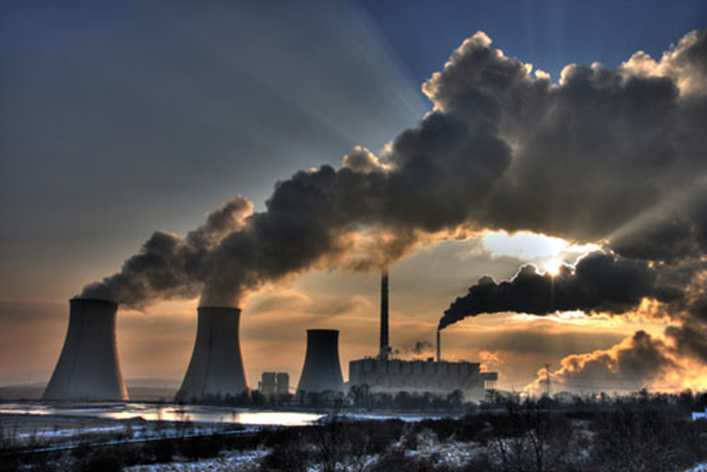
In this master project the student should do model sensitivity studies for nuclear accidents at the ground and/or nuclear detonations above the ground focusing on how to model atmospheric diffusion.
Atmospheric wind transport and turbulent diffusion are key processes for the dispersion of any pollutants in the atmosphere including radioactive particles.
Still, present dispersion modelling faces challenges in describing the turbulent diffusion, in particular how to link to the meteorological conditions and the grid size (the length between the calculation points in the model mesh).
The student should learn and work with the following:
- Study how other models calculate turbulent diffusion both in Eulerian and Lagrangian modelling frameworks focusing on how grid size and meteorology are handled and compare with the present formulations in the SNAP Lagrangian model
- Test new formulations of atmospheric diffusion in the SNAP model and carry out model sensitivity studies for surface nuclear accidents and/or above-surface nuclear detonations.
- Analyse and evaluate the model runs
Thesis key tools:
SNAP Lagrangian (maybe EMEP Eulerian) preparedness model (s) at MET. Nuclear bomb test data sets (from 50’ties and 60’ties).
Recommended background:
Bachelor in meteorology (or any comparable subject), basic mathematical, physical, and computational skills, and knowledge of Python and Linux.