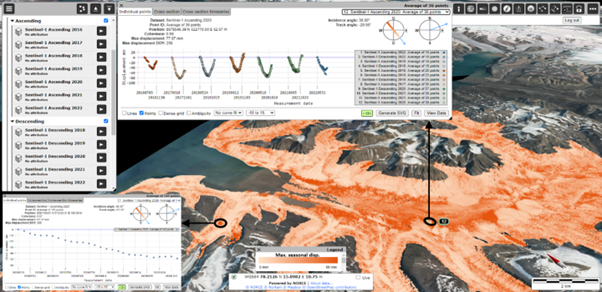
The local community of Longyearbyen, Svalbard, depends on drinking water from a nearby lake that is fed by rainwater, surface runoff, and groundwater. However, groundwater dynamics are changing due to climatic impacts on the hydro- and cryosphere. Recently, there have been challenges with deteriorating drinking water quality. The hypothesis is that reduced pH, increasing levels of metals (such as manganese), and organic content are being sourced from the groundwater component in lake recharge. While there is an ongoing initiative to adapt water cleansing systems and address immediate quality issues in tap water, research is needed to understand the underlying causes and effects of changes in groundwater quality to adapt to climate change in the long term.
Infiltration temperatures, recharge patterns, and timing are changing, affecting groundwater residence times, flow paths, and chemical signatures. The MSc candidate will investigate the controlling processes for groundwater chemistry in the aquifer systems connected to the lake and evaluate the quality evolution along flow paths above and below the permafrost in a changing climate. Will there be more severe impacts in the future? How can or should we adapt?
The prospective student will employ the following methods:
- Field mapping of the groundwater recharge and discharge areas
- Groundwater sampling and chemical analysis, including comparisons with existing data sets
- Consideration of natural tracers in groundwater
- Numerical modeling of geochemical processes (PHREEQC) and/or fluid flow (Modflow) – methods, tools, and focus can be adapted based on interest and findings
It is a prerequisite to have completed GEO4190 in 2025, GEO5900, and GEO4360 in 2026 (or equivalent courses from another institution). The candidate must hold a valid passport and be able to travel to Longyearbyen for 1-2 weeks sometime during June to September 2026 to conduct fieldwork.