Since the 1970s, the Norwegian Geotechnical Institute (NGI) has operated a research station (Fonnbu) to study the connection between weather and snowpack development, as well as the conditions leading to snow avalanches. Meteorological data (precipitation, air temperature, snow depth, radiation, and wind) have been recorded at Fonnbu since 1974. Records were initially limited to winter seasons, but hourly data have now been available year-round since 2006.
Recently, data have been used to explore aspects of the hydrological cycle, including flood events, snow/glacier melting, and changes in river flow within the context of a changing climate. A hydrological model (HBV model) of the catchment has been set up but still needs to be improved, especially regarding precipitation correction, snowpack and evapotranspiration, to well reproduce the snowpack and river flows observed at NVE's gauging station Grasdøla located down the valley.

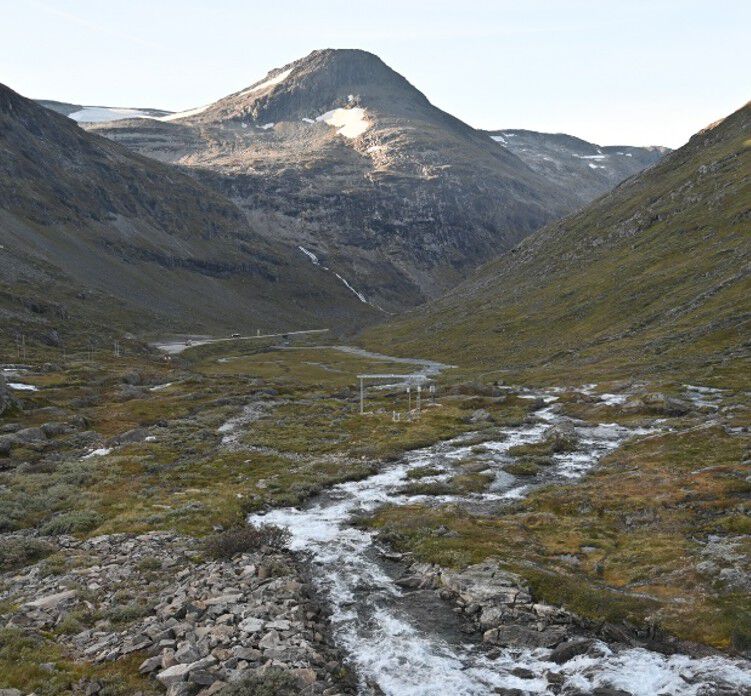
Proposed study:
The purpose of the Master's Thesis is (i) to set up and calibrate a hydrological model that can reproduce and predict the snowpack and the flows in the Grasdøla river. Some work was done using an HBV model, but it would be most welcome to use other hydrological models, such as a gridded model (Hec-HMS), or machine learning models (Recurrent Neural Networks), which are good for time-series prediction based on historical data. (ii) In addition, the recorded meteorological and hydrological time series should be analysed to identify the flood events, their intensity, and their main cause (rain on snow, snowmelt, flash floods, etc.) and to learn about the flood dynamics of the catchment. The work will also include field work in the catchment for instrumentation and measurements.
Requirements:
It is required that the student has a background in hydrology, statistics and data analysis, as well as programming (if using AI models). The candidate should have good communication skills and be able to work in a team as well as independently.