HISP Strategy
The HISP Centre's three-year strategy for 2026-2028 addresses rapidly shifting financial and technological contexts while continuing to pursue our vision of strong, sustainable, and effective information systems in low- and middle-income countries.
The HISP Centre at the University of Oslo leads the development and maintenance of the free and open-source DHIS2 software platform and supporting resources, and coordinates the global HISP network. Over our 30+ year history, we have been guided by a consistent vision and mission:
Vision: Low- and middle-income countries (LMICs) and country-level stakeholders have strong, sustainable information systems and architectures that support the achievement of national development goals.
Mission: Work in solidarity with countries to strengthen sustainable, locally governed information systems and digital infrastructure, empowering the public sector to make data-driven decisions that improve people’s lives.
Our strategies for achieving this vision have evolved over time as HISP has grown from a small action research project to a global network of 23 local groups (and counting) based in Africa, Asia, the Middle East, and the Americas, and our software has grown from a pilot in post-Apartheid South Africa to become the world’s largest Health Management Information System (HMIS) platform, and a leading example of a Digital Public Good (DPG).
In our HISP Centre 2026-2028 Strategy Update, we recommit ourselves to our vision, while also responding to current trends and challenges. In particular, we address the significant decline in global funding for information systems in LMICs and the increasing technological demands and data needs being placed on these systems. We also outline the opportunities for DHIS2 and HISP to continue to play key roles in LMICs in these times of rapid change and disruption.
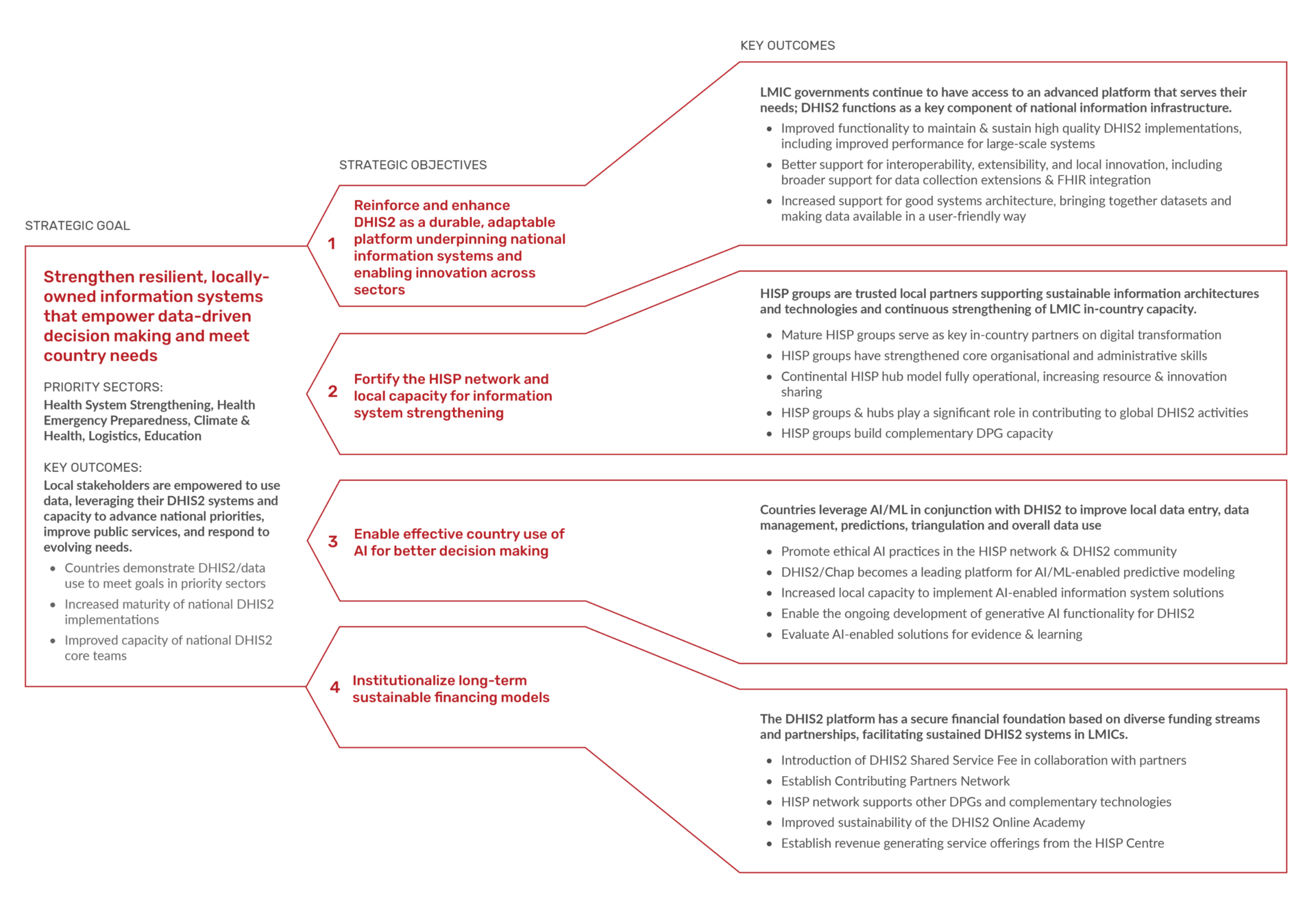
Our strategy is structured as one cross-cutting strategic goal supported by four strategic objectives:
Our strategy is structured as one cross-cutting strategic goal supported by four strategic objectives:
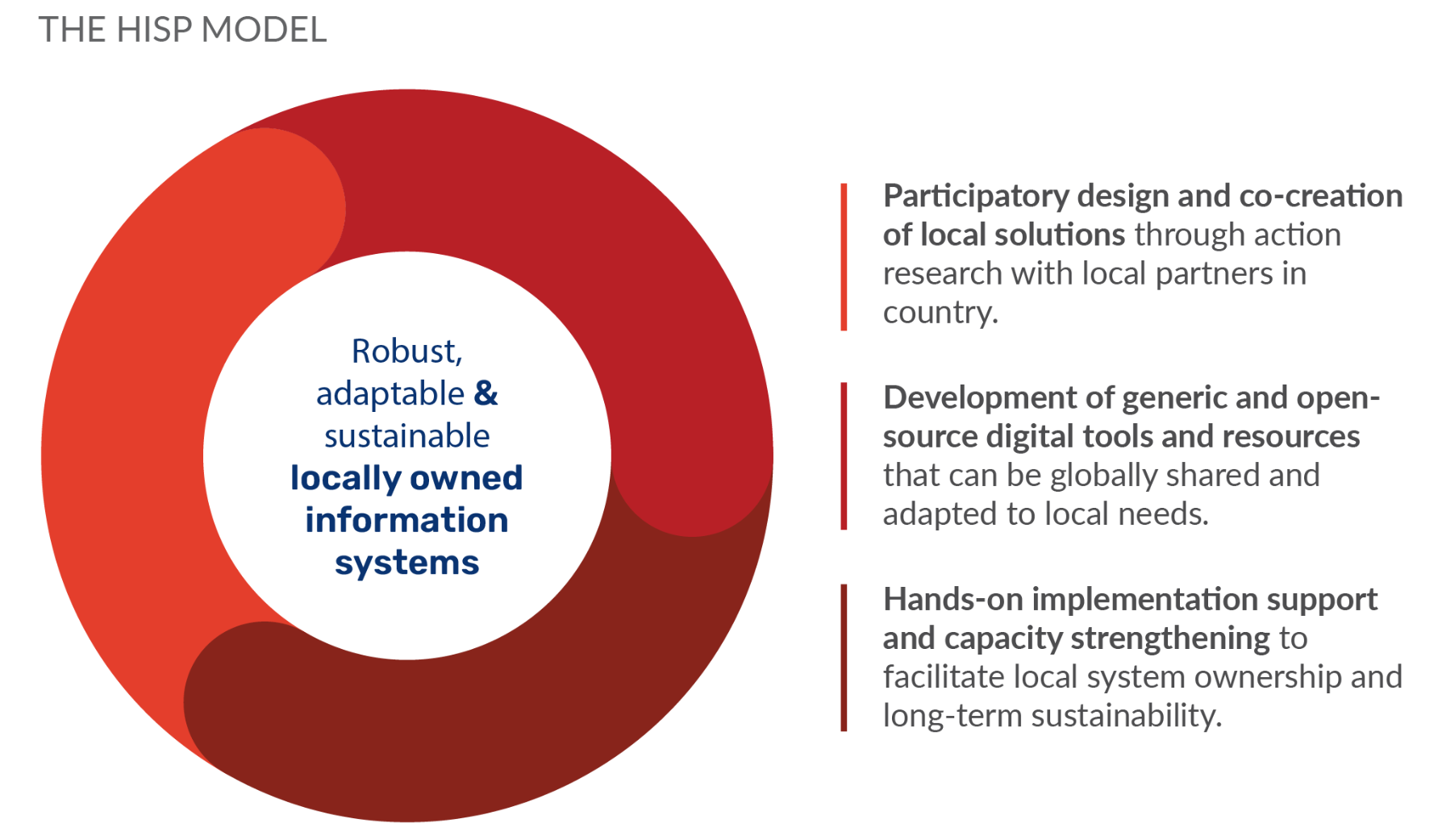
We will pursue these goals through the time-tested HISP approach, which rests on co-creation with local stakeholders, development and sharing of open-source solutions globally, and long-term capacity building in country. This approach has been the driving force of DHIS2’s success, and ensures that our work remains driven by local needs in LMICs.
This emphasis on collaboration is also reflected in the creation of our new strategy, which was shaped through a collaborative process involving HISP group and HISP hub representatives, DHIS2 donors, and DPG partners.
We are happy to invite you to read our full strategy, in which we lay out a vision for what we hope to achieve over the next three years as we continue to work in solidarity with our LMIC partners to ensure that they have robust, sustainable, and adaptable locally-owned information systems that help them achieve their development goals in the years to come.