Almost all materials used in our digital and energy-producing/storing technologies are mined and processed abroad before they become the products and technologies we use in Norway. Once we finish using them, most are transported to other countries for reuse, remanufacturing, or, most often, recycling. As a result, people in Norway have little knowledge of the materials that make up these technologies.
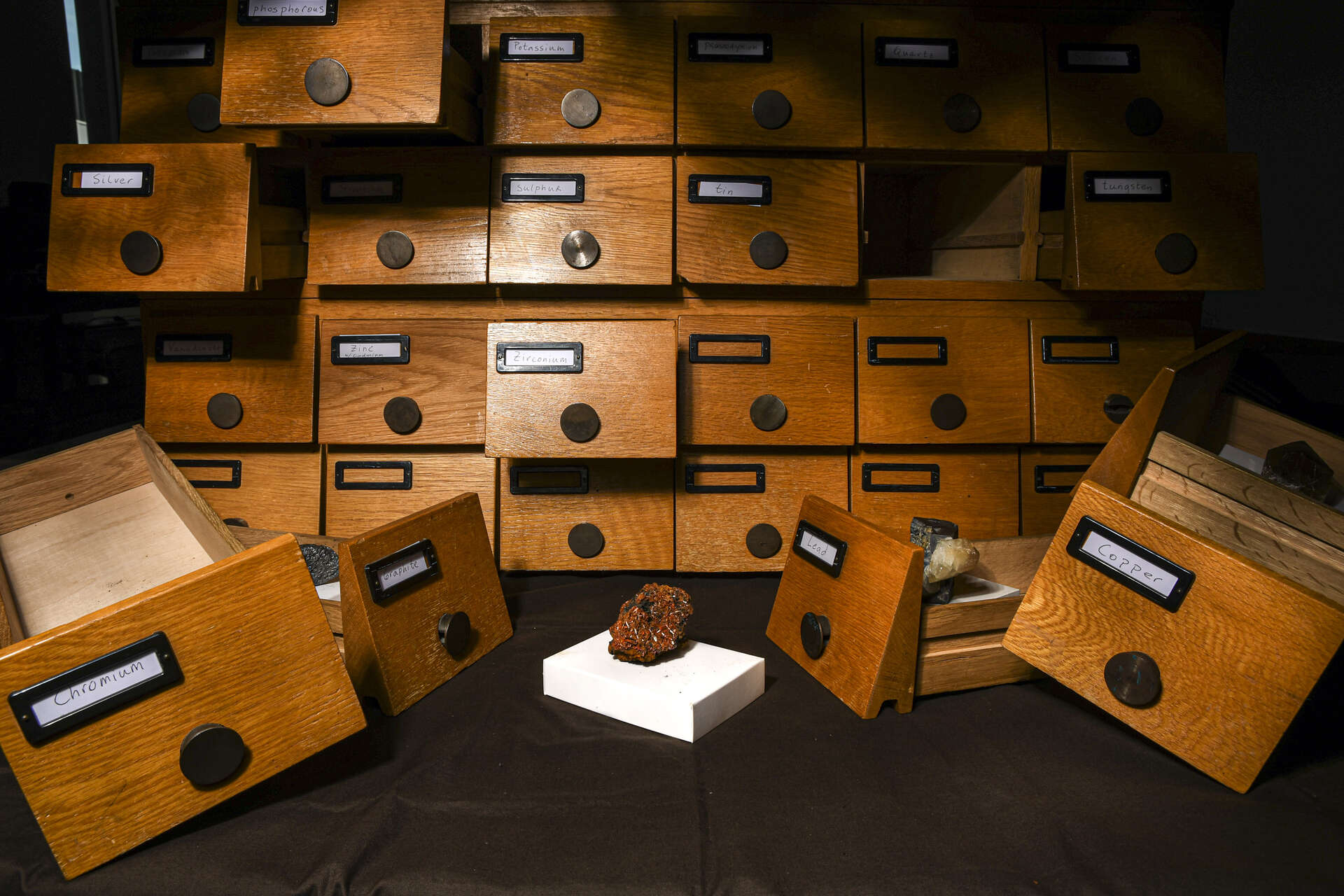
A few years ago, we started collecting stones that contain the minerals needed for digital and non-fossil energy technologies. The result is the Materials Library of Stones. Our goal with the Library is to make its visitors and users think-with stones - to reorganise their relationships with stones and their minerals. Inspired by Donna Haraway, we are interested in exploring the mutual becoming of humans and stones. This mutual becoming creates what Haraway calls a response-ability. Cultivating this response-ability of shared living-with and dying-with is the Materials Library of Stones' ultimate aim. Material literacy thus becomes more than knowing about the stones in your phone or how much neodymium is needed for the powerful magnets in a wind turbine. It is about understanding how humans and capital are damaging the foundations of all life, how the green transition is often a continuation of colonial exploitation, and how thousands of people die every year in mining-related accidents.
In this thesis project, you will design learning materials on stones and their minerals for students at an ungdomskole and/or vidergående skole. You can work with both physical stones and with the digital materials library and test your learning materials at a school. We will support you in reaching out and finding potential classes. It is also possible to test the final output of your project at a workshop in Klimahuset.
For this master's project, we are looking for a team of two master's students.
Supervision: We regard the social aspect of doing a master's thesis as important as the academic aspect. As supervisors, we will offer you an engaged and inspiring environment in the Sustainable Futures Lab as well as access to experts when needed.
Recommended courses:
- IN5010 Design, Technology & Society
- IN5190 Design for Sustainability
- You may also want to choose one of the following courses: IN5120 (Tangible Interaction), IN5530 (Research through Design) or IN5510 (Participatory Experimental Design)
- There are also interesting courses at SUM and at IFIKK; such as Design og økologi and Designkultur: Ti ting
Resources:
- Digital version of the Materials Lab of Stones
- Donna Haraway (2016): Staying with the Trouble. Duke University Press.
- Material Literacy: https://www.accessart.org.uk/material-literacy/
- Morwenna Peters: So you think you want a materials library - https://uwe-repository.worktribe.com/output/16137053/so-you-think-you-want-a-materials-library
