Project Background: The Nautilus project is developing a submersible drone (UAV) capable of operating seamlessly both in the air and underwater. The drone concept requires interdisciplinary, specialized expertise in cybernetics, robotics, marine engineering, and embedded systems. Nautilus 2.0 builds on lessons learned from the first generation to create a more compact, stable, and autonomous platform for maritime inspections.
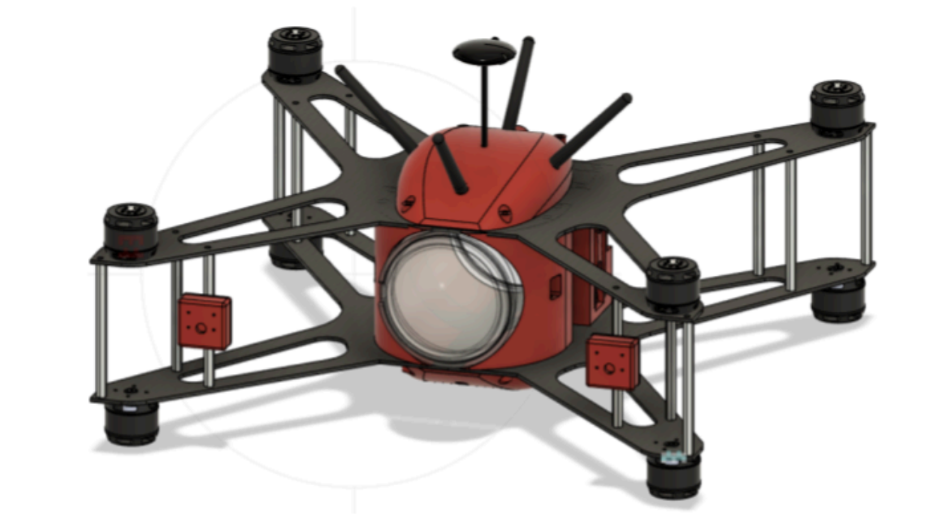
Proposed Master's Thesis Topics
We are seeking motivated master's students in robotics, cybernetics, or electronics to take the project further through the following proposed research questions:
1. Autonomous Control and Regulation in the Transition Phase (Air–Water)
Objective: Develop robust control algorithms for the transition between flight in air and maneuvering underwater (transition control), as well as precise depth-holding based on integrated barometers and pressure sensors (e.g., MS5837). Technologies: PX4 firmware, ROS2, MAVLink, Gazebo simulation.
2. Underwater Navigation, Sensor Modulation, and Machine Vision
Objective: Nautilus 2.0 uses three cameras (one in the dome and two on the front arms) for inspection and navigation. The task involves calibrating these for depth perception, as well as exploring sensor fusion with Sonar/USBL or DVL (e.g., Waterlinked DVL A50) for autonomous navigation in dark or murky waters. Technologies: OpenCV, Raspberry Pi processing, sensor fusion algorithms (Kalman filtering).
3. Hardware Optimization, Thermal Management, and Hydrodynamics
Objective: The ESCs are placed beneath the bottom plate and coated with a protective coating (Plastidip/epoxy). The task will focus on thermal analysis (preventing overheating), optimization of hydrodynamic drag based on hull geometry, and perfect balancing of the center of gravity (Cg) and center of buoyancy (Cb) using side pods for batteries and buoyancy foam.Technologies: CAD (Fusion 360), CFD analysis, thermal measurement, and experimental testing.
What We Offer
- A fully built physical prototype (Nautilus 2.0 frame with mechatronics) ready for testing in a pool/at sea.
- An established simulation environment in Gazebo for testing software before physical deployment.
- The opportunity for interdisciplinary collaboration and access to a strong academic and industrial network.
Are you interested in pushing the boundaries of maritime drones? Get in touch for a no-obligation chat about how we can tailor your master's thesis to you.