Background
Autonomous groups of robots are projected to be delivered to many markets in the coming years; including package delivery; autonomous cars; autonomous sensing for agriculture, factories, wildlife/ecological monitoring, and security. If these robotic systems are not designed with cybersecurity in mind, they have the potential to be hacked for nefarious purposes.
Objectives
- Develop guidance and cooperation techniques for multi-agent robotic systems
- Develop cybersecurity tools for autonomous coordination, eg. networking
- Develop new types of robotic systems
Experiments
ITS has a very well-stocked swarm robotics laboratory, with a sizeable budget for purchasing other robotics or components for constructing robots of your choice.
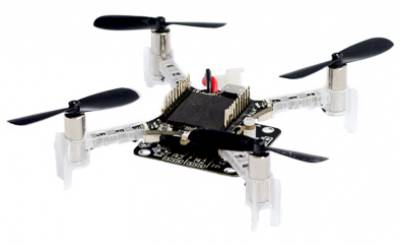
Crazyflie
- Approximately 30 Crazyflie drones
- 10 on-board AI systems
- Various radios sensors
Motion capture systems
- Indoor VICON system to act as an indoor GPS
- Outdoor motion capture cameras for flying swarms outdoors
Ground vehicles
- Approximately 15 turtlebots
- Arduinos and other microcontrollers
3D printers
- 3 Prusas
- 2-4 Bambu
- Lots of other brands
Projects
Distributed model-predictive control for quadcopter swarms
Data-driven control for quadcopter swarms
Timescale separation for coordination between slow ground vehicles and fast aerial vehicles
Complex autonomous maneuvers for swarms of aerial vehicles
Heterogenous swarm coordination
Background Needed
All of the projects will require knowledge of coding, either in Python or Matlab for simulation, and C/C++ for hardware. The projects will have a communal git repository, and students will be expected to adhere to sound coding practices, participate in peer coding reviews, etc.
Some familiarity with control theory is a plus, but a lot of it can be learned during the project. Knowledge of at least one of: physics, robotics, modeling is necessary for all of the projects.