Events - Page 14

QOMBINE seminar by Maximilian Mansky (LMU, Munich)
C*-seminar by Roberto Conti (Sapienza University of Rome)

Sylvia Frühwirth-Schnatter is a distinguished Austrian statistician and professor of applied statistics and econometrics at the Vienna University of Economics and Business. Renowned for her research in Bayesian analysis, she served as President of the International Society for Bayesian Analysis.
Professor Frühwirth-Schnatter has an impressive academic background, including a doctorate in engineering mathematics from TU Wien and previous positions at Johannes Kepler University Linz. Since 2011, she has been a full professor at the Vienna University of Economics and Business. She is also a Full Member of the Austrian Academy of Sciences.
Her research focuses on Bayesian econometrics, including Markov chain Monte Carlo methods and finite mixture models. She has received numerous accolades, including the WU Best Paper Award and the DeGroot Prize for her work on Markov switching models.
Welcome to the third Norwegian meeting on PDEs!

Doctoral candidate Martin Bråtelund at the Department of Mathematics will be defending the thesis Critical Configurations. A classification of all critical configurations for any number of projective views for the degree of Philosophiae Doctor.
This workshop is part of QOMBINE, a cross-disciplinary project between mathematics, chemistry, and physics focusing on the mathematics for quantum computation. In this spirit, we want to bring together researchers with different backgrounds including quantum error correction, the quantification of decoherence, quantum Shannon theory and operator algebras. We hope that this will allow for discussions across disciplines leading to interesting new perspectives and collaborations on these topics.

Doctoral candidate Dennis Christensen at the Department of Mathematics will be defending the thesis Zero or One, Up or Down. Statistical Inference for Binary Data with Applications in Sensitivity Analysis of Energetic Materials for the degree of Philosophiae Doctor.
C*-seminar by Gerardo Morsella.
C*-seminar by John Quigg (Arizona State University).
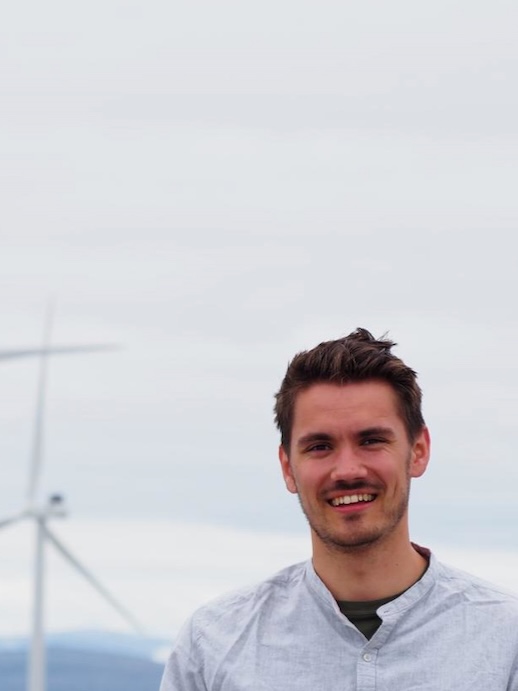
Doctoral candidate Aleksander Grochowicz at the Department of Mathematics will be defending the thesis Resilience and weather uncertainty in energy system models. Near-optimal spaces, weather variability and extremes for the degree of Philosophiae Doctor.

The 5th Scandinavian Gathering Around Remarkable Discrete Mathematics
I will talk about how one can relate intersection theories of Hilbert schemes of points and Fulton-MacPherson compactifications.

C*-algebra seminar by Eduard Vilalta (Chalmers University of Technology / University of Gothenburg)
QOMBINE seminar talk by Franz Fuchs (University of Oslo)
The purpose of this workshop is to bring together communities in dynamical systems, harmonic analysis and operator algebras whose research relates to point sets in Euclidean space and general locally compact groups.

Doctoral candidate Anders Sandnes at the Department of Mathematics will be defending the thesis Bayesian machine learning for virtual flow metering for the degree of Philosophiae Doctor.

Doctoral candidate Clara Bertinelli Salucci at the Department of Mathematics will be defending the thesis Advancing data-driven diagnostics and prognostics for lithium-ion batteries: A focus on model interpretability and accuracy for the degree of Philosophiae Doctor.
Abstract: Although tropical vector bundles have been introduced by Allermann ten years ago, very little has been said about their structure and their relationship to vector bundles on algebraic varieties. I will present recent work with Martin Ulirsch and Dmitry Zakharov that changes exactly this in the case of curves: we prove analogues of the Weil-Riemann-Roch theorem and the Narasimhan-Seshadri correspondence for tropical vector bundles on tropical curves. We also show that the non-Archimedean skeleton of the moduli space of semistable vector bundles on a Tate curve is isomorphic to a certain component of the moduli space of semistable tropical vector bundles on its dual metric graph. Time permitting I will also report on work with Inder Kaur, Martin Ulirsch, and Annette Werner and explain some of the difficulties that arise when generalizing beyond the case of curves to Abelian varieties of arbitrary dimension.
C*-algebra seminar by Emilie Elkiær.
We consider several situations where drops can be captured by fibrous materials, from sprays on textiles (where the droplets are much larger than the typical fiber size) to meshes placed in a flow of fog (where the droplets are smaller than the typical fiber size). This last system, often encountered in aerosol filtration, exhibits a wealth of phenomena coupling capillarity and aerodynamics. In particular, we characterize experimentally and theoretically the deposition of the mist droplets on the fibre and the flow through and around the porous mesh, that both strongly depend on the mesh porosity and fine structure (i.e. the arrangements of the fibers). We further consider the dynamics of large drops sitting on fibers when exposed to a cross-flow, in particular their interactions with their unsteady wakes.
A liquid droplet placed on a rigid, planar surface has a captivating simplicity: its surface is a spherical cap and remains in equilibrium. In this talk, I’ll show that the addition of a deformable boundary leads to a range of new phenomena: evaporating droplets with an elastic skin may develop flat tops, but even without a complex rheology, reaching equilibrium can happen slowly, with the droplet’s contact ageing. I will discuss two specific examples, presenting a combination of theory and experiment for each.