In July1965, NASA’s Mariner 4 flew past Mars providing the first close-up photographs of Mars. 10 years later, two Viking landers landed on the Red Planet, returning the first-ever detailed data on the planet’s surface, atmosphere, composition, and potential for life. and changing forever our view of Mars.
Since those early days, our knowledge of Mars has expanded dramatically. Each new mission has built on the legacy of Mariner and Viking, often chasing down questions that the first missions raised. One particularly fascinating breakthrough came from Viking's analysis of the martian atmosphere: its precise measurements helped scientists identify certain meteorites on Earth as martian in origin, since they contained trapped gas with the exact same composition as Mars' air. These meteorites remain the only tangible pieces of Mars available for study in Earth-based laboratories.
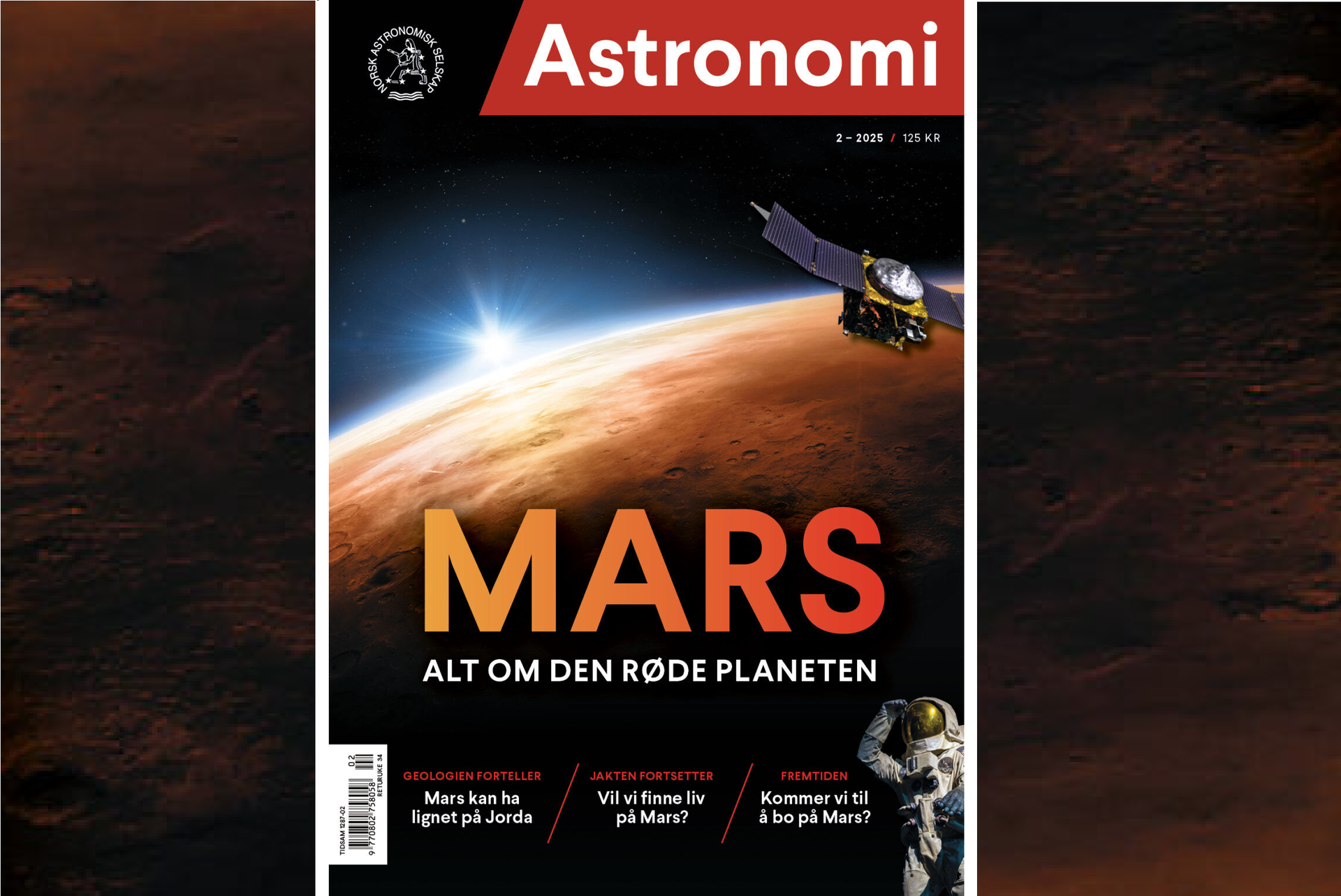
To honor six decades of Mars exploration, the Norsk Astronomisk Selskap has dedicated an entire issue of their journal Astronomi to the Red Planet. The volume features a wide range of contributions from PHAB researchers —Stephanie Werner, Agata Krzesińska, Marine Ciocco, Erik Asphaug, Inge Loes ten Kate, and Benjamin Bultel—covering everything from Mars' geology and potential habitability, to meteorites, analogue studies, and even its enigmatic moons, Phobos and Deimos.
More information of the special issue: