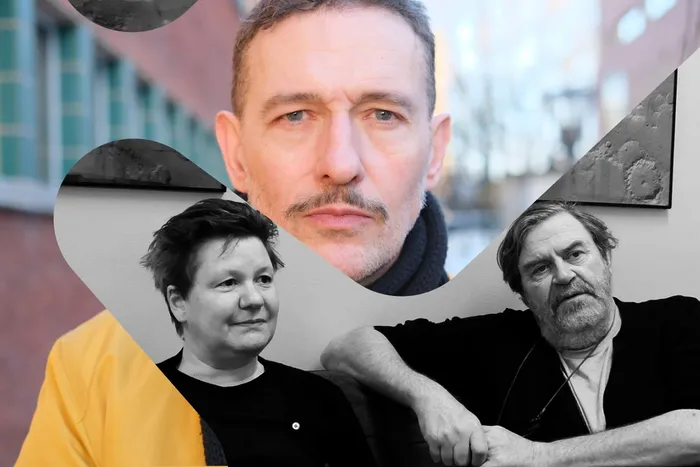
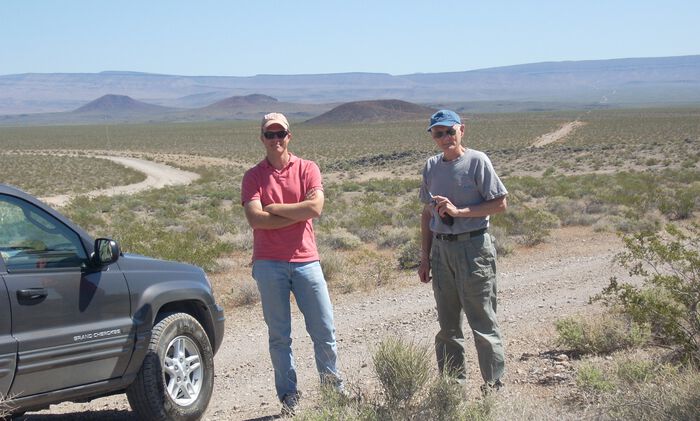
It is nearing the end of GoNorth’s research cruise in the Arctic Ocean. Recently, researchers Carmen Gaina and Alexander Minakov (University of Oslo) and Thomas Funck (GEUS) succeeded in collecting seismic data and ROV images from the Polarstern seamount in the deep sea.
2025
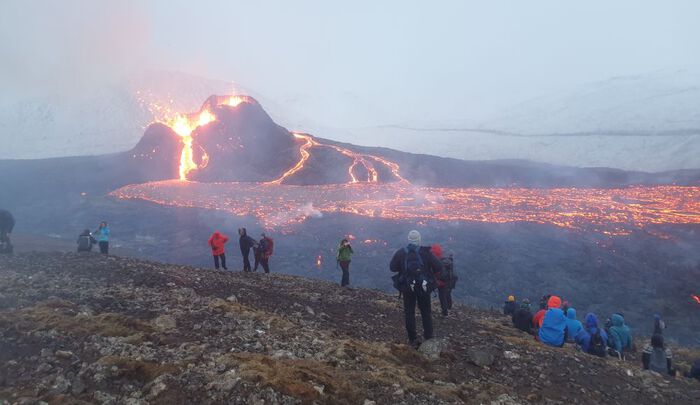
An article from Reidar Trønnes about Rifting and volcanism in Iceland and ongoing activity at the Reykjanes peninsula. Recently published in Naturen 4-2025, 193-205.
The fourth expedition to the Arctic Ocean in the GoNorth initiative takes place in November–December. UiO researchers Carmen Gaina and Alexander Minakov are participating with research on the processes that shaped the Arctic Basin from 55 million years ago and their impact on the climate.
PHAB Postdoctoral Fellow Jyotirmoy Paul was awarded the 2023-24 'Institute Medal' for his Ph.D thesis from the Indian Institute of Science.
Professor Stephanie Werner at the Department of Geosciences and PHAB, Uni of Oslo has been awarded 12 million NOK from the Research Council of Norway for the project 'Galactic Recipe for Exo-Planets.'
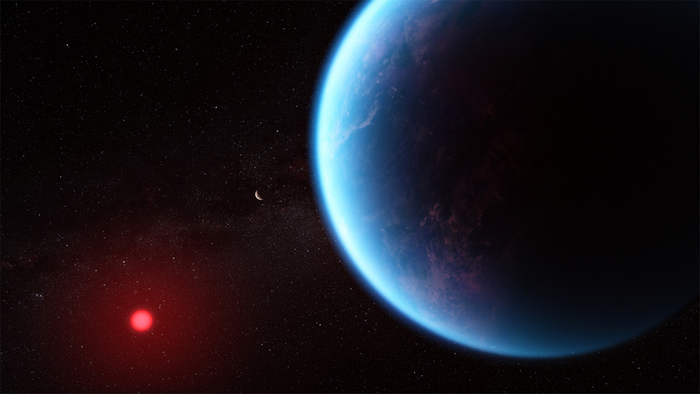
Den nye planeten L 98-59 f ligger i en beboelig sone. Det vil si at det kan være flytende vann der.
This comet is the third interstellar object to visit us in eight years, providing a unique opportunity to learn more about other planetary systems.
Norway sits on a very old part of the Earth's crust known as a craton. The cratons have survived geodynamic processes and plate tectonics, and have long been a mystery in geology. Interview with Trond H. Torsvik and Jyotirmoy Paul, Dept of Geosciences/PHAB in an article on sciencenorway.no.
PHAB has undergone changes in the management this summer. Professor Stephanie Werner took over as director and centre leader for the Centre for Planetary Habitability (PHAB) from July 1, 2025.
Kratoner er fortsatt et delvis mysterium for forskere - intervjukommentar fra Postdoktor Jyotirmoy Paul og Professor Trond H. Torsvik på forskning.no.
This summer marks the 60th anniversary of humanity's first successful mission to Mars. On July 14th 1965, NASA’s Mariner 4 flew past Mars providing the first close-up photographs of Mars.
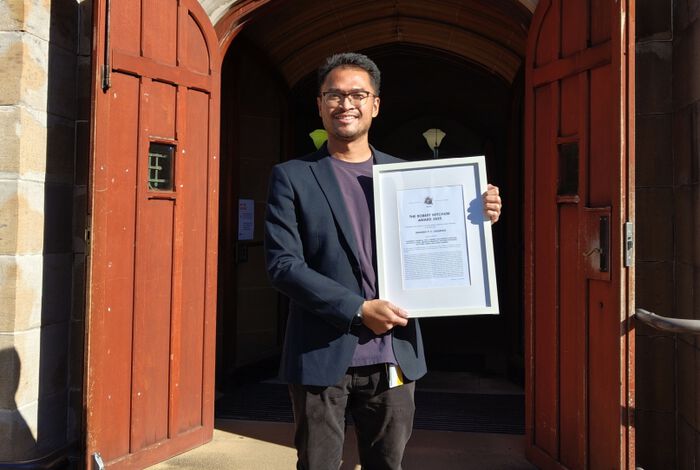
PHAB Postdoctoral Fellow Amando Lasabuda was awarded the 2025 Robert Mitchum Award from the European Association of Geoscientists and Engineers (EAGE).
PHAB Researcher Agata Krzesinska is a part of the Mars Sample Return campaign study team who receives the NASA Honor Award for group achievement.
The project, The Great Oxygenation Event and Planetary Habitability, aims to understand the environmental changes that enhanced planetary habitability during the early Proterozoic (2.5-2.0 billion years ago).
The Else-Ragnhild Neumann Award 2024 was presented by Trond Helge Torsvik, PHAB to the award winner Joanna Dziadkowiec, at a seminar the 15 of May in the Science Libary at University of Oslo.
Kristopher Schau møter Stephanie Werner og Trond H. Torsvik for å snakke om PHABs forskning.
The commercial lunar spacecraft Blue Ghost (on a mission from NASA) landed on the Moon early in March and has been working the lunar surface powered by solar panels. On March 16th, it lost power as the long lunar night began. It captured a final image of the sunset. Interview comment from Stephanie Werner on forskning.no.
PHAB researchers recently mapped regions of the mantle that hold extra water. They discovered that these hydrated regions often sit below continental volcanic fields. Their research was recently highlighted in AGU’s Eos newsletter.
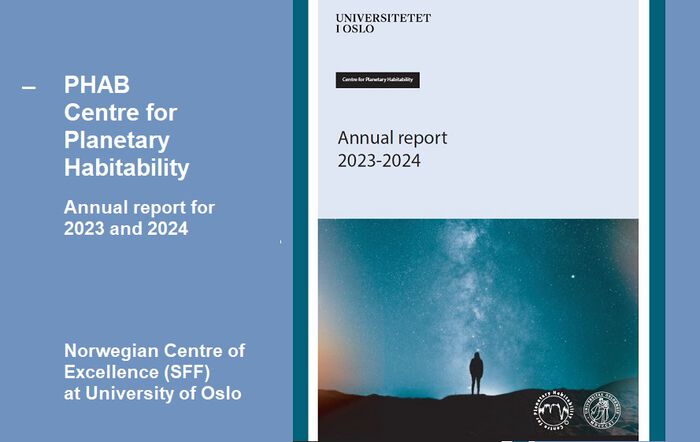
The primary research objective of the Centre for Planetary Habitability is to identify and characterize the essential conditions that render a planet habitable. The centre commenced operations in the summer of 2023. Here, you can access the annual reports for the years 2023 to 2024.
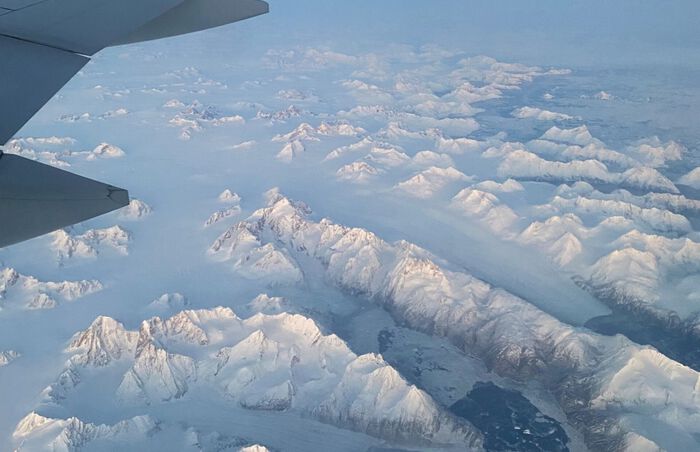
The coastline of Southeast Greenland is uplifting more rapidly than other parts of the island. This is caused by weak rocks beneath this part of Greenland, combined with the melting of the ice sheet, according to researchers.
Are you interested in our planet, the solar system, and the cosmos beyond? Welcome to the Kepler seminars! Organised by the Centre for Planetary Habitability, these lectures offer a fascinating opportunity to delve into the frontiers of human knowledge and scientific discovery.
The prize 'Else-Ragnhild Neumann Award for Women in Geosciences' is awarded awarded to women who have made significant contributions to the field of geosciences. This year it goes to Joanna Dziadkowiec from NJORD, University of Oslo.
The southeast coast of Greenland is currently uplifting rapidly. Former CEED PhD student Maaike Weerdesteijn and PHAB’s Clint Conrad showed that this rapid uplift is caused by recent deglaciation occurring above mantle rocks that were weakened by the Iceland Plume more than 40 million years ago. Their work was recently published in the Nature journal Communications Earth and Environment.