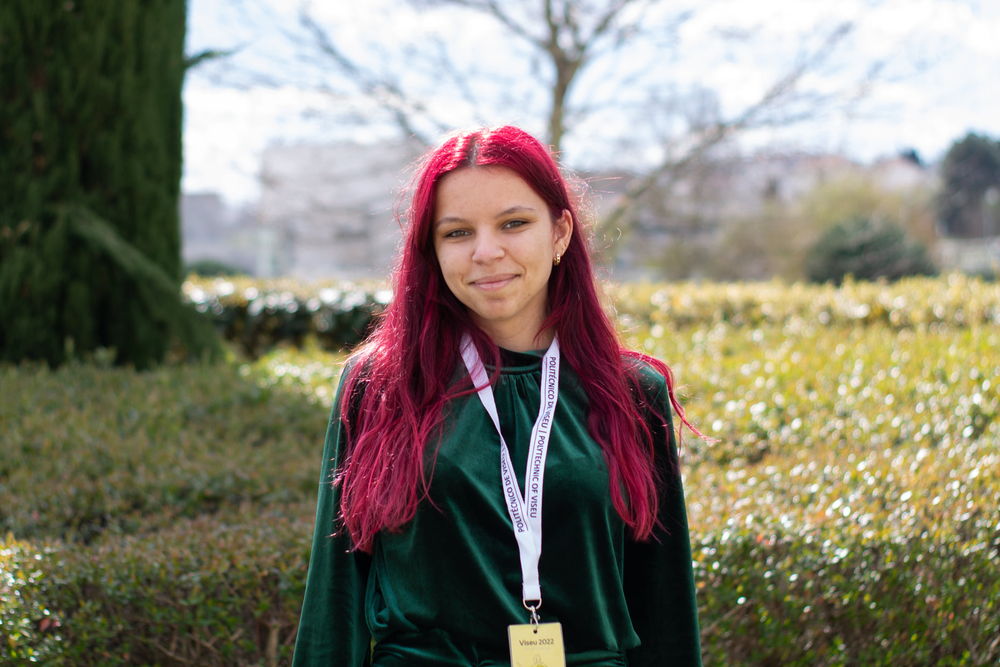
In this edition of our Researchers' Profile series, we’re excited to introduce Ana Isabel Silva Martins, a bright new talent in the realm of cosmology who has recently embarked on her PhD journey at the Institute for Theoretical Astrophysics (ITA) of University of Oslo.
A diverse educational background
Ana hails from Portugal, where she completed her Bachelor's degree in Engineering Physics at Instituto Superior Técnico, the engineering school linked to the University of Lisbon, Portugal.
– "My research there centered on designing a non-linear optical system for a fluorescence spectrometer aimed at microbe detection", explains Ana.
This foundational work provided her with essential skills that she later refined during her Master's studies in Experimental Physics at Utrecht University, The Netherlands.
– "For my Master’s project, I focused on developing a neural network-based early alert framework for detecting gravitational waves resulting from binary neutron star mergers, which I embedded into an FPGA", continues Ana.
This innovative approach offered a fast and sustainable alternative to existing detection pipelines.
A new chapter in Cosmology
Beginning her position as a PhD Research Fellow in August 2024, Ana is now fully integrated in the cosmology group at ITA. Although her current research topic in Cosmic Microwave Background (CMB) cosmology seems quite different from her previous studies, she finds connections that bridge her past and present.
– "I am working on data from the FIRAS experiment, which is distinct from typical CMB telescope data. My knowledge of optical systems and interferograms assists me in interpreting and understanding the data," she explains.
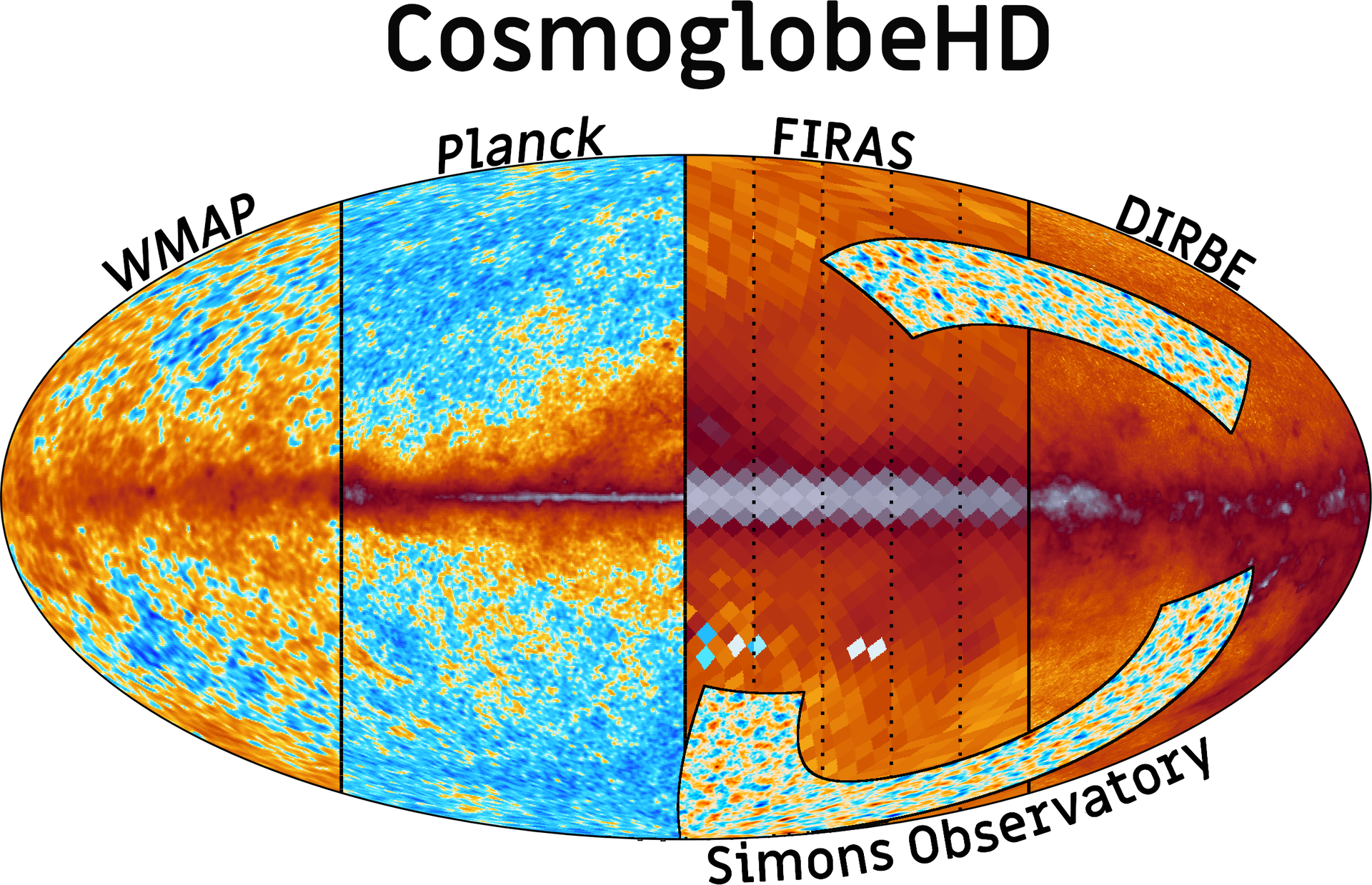
Ana's research centers around the CMB, which represents the afterglow of the Big Bang.
– "The CMB is a remnant radiation that we can observe today. While it appears as a perfect black body, the Standard Cosmological Model suggests small deviations known as spectral distortions, which we aim to constrain in our project," she shares enthusiastically.
Ana and her team are also on the lookout for primordial gravitational waves, theorized to have originated from cosmic inflation—a finding that could reveal crucial insights into the early universe.
Conducting sustainable science
For her research, Ana is working on the CosmoglobeHD project, which aims to enhance the Cosmoglobe framework by accessing high-definition data sets. The project will first use archival satellite data from the COBE-FIRAS experiment and later transition to new data from the Simons Observatory.
What captivates Ana the most about her research is the vastness and scale of astrophysics.
"Being involved with science is a fulfilling endeavor, and astrophysics takes it further by exploring phenomena in both space and time".
One particularly thrilling aspect of her work involves re-analyzing a dataset that has already contributed to a Nobel Prize-winning discovery:
– "We want to uncover new physics within it, which speaks to a more sustainable way of conducting science," she notes.
Life and aspirations in Oslo
Ana's move to Norway was driven by the country's renowned quality of life and its stunning natural landscape.
– "I love city life, so Oslo was an easy choice," she shares.
Additionally, she was drawn to ITA because of the influential CMB&CO group, which plays a vital role in the current cosmological landscape.
– How can you describe your experience at the institute?
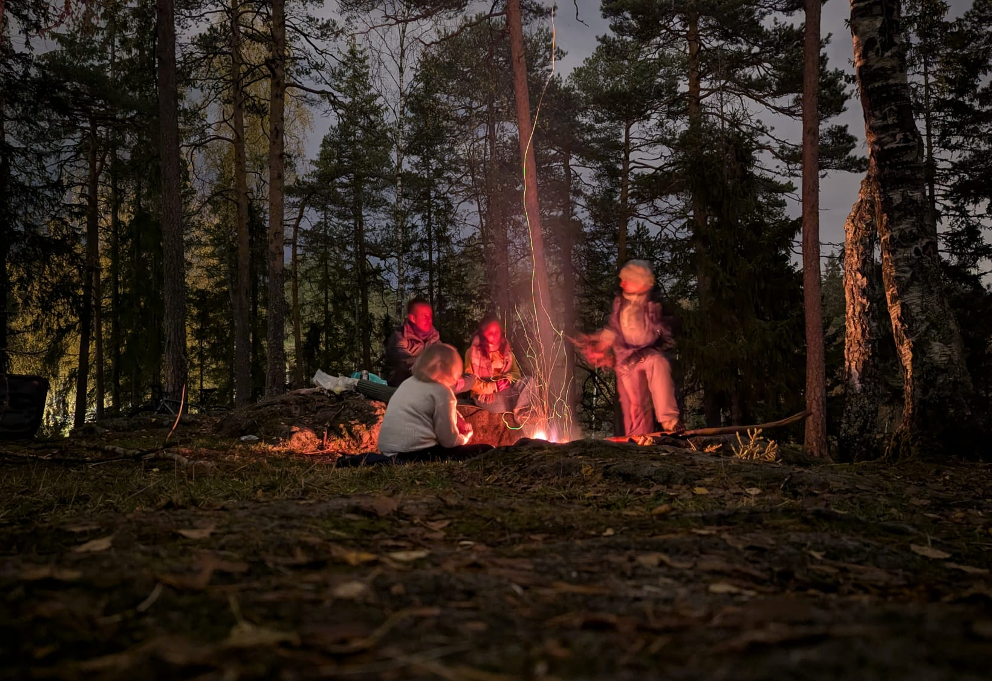
– "I feel very welcome by everyone here, and my research has already been incredibly fulfilling. I've also enjoyed social gatherings, like bonfires with other PhD students," she shares with a smile.
As she looks toward the future, Ana has high hopes for her experience at ITA and in Norway.
– "I aim to contribute to significant research and continue learning. As for Norway, I see plenty more hikes in my future!" she concludes.
More about
Visit Ana Isabel Silva Martins' profile page
Cosmology and Extragalactic Astrophysics research section
CosmoglobeHD research project