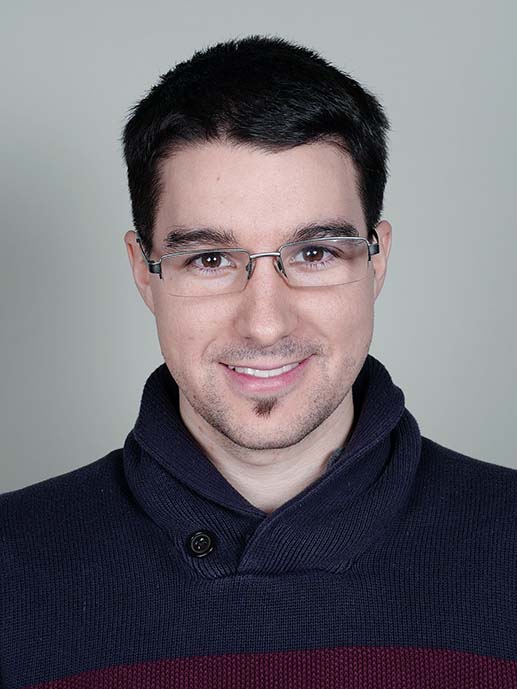
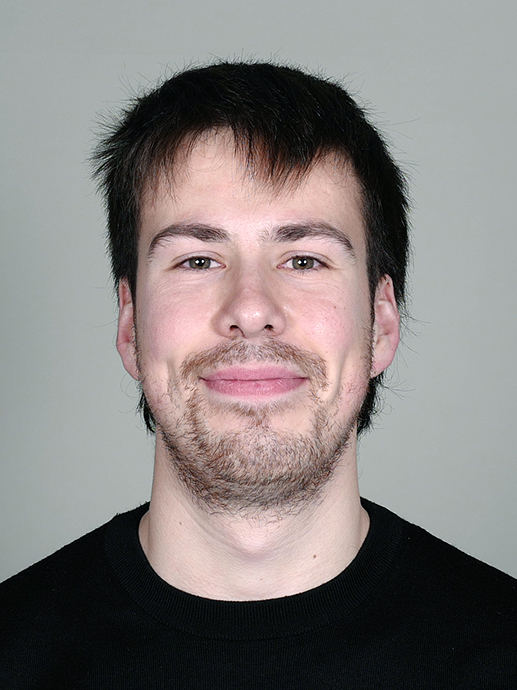
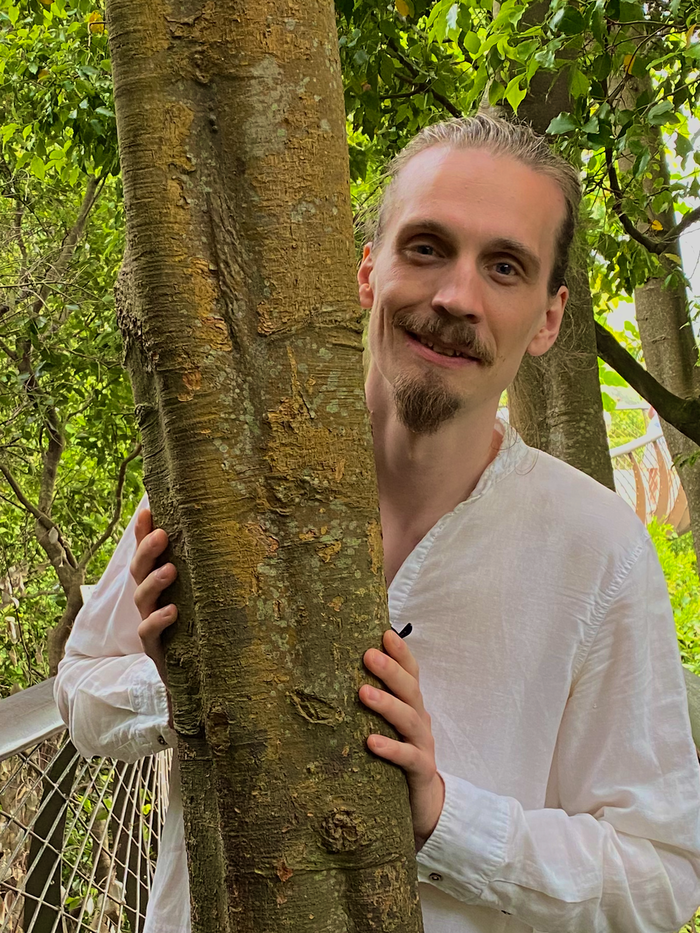
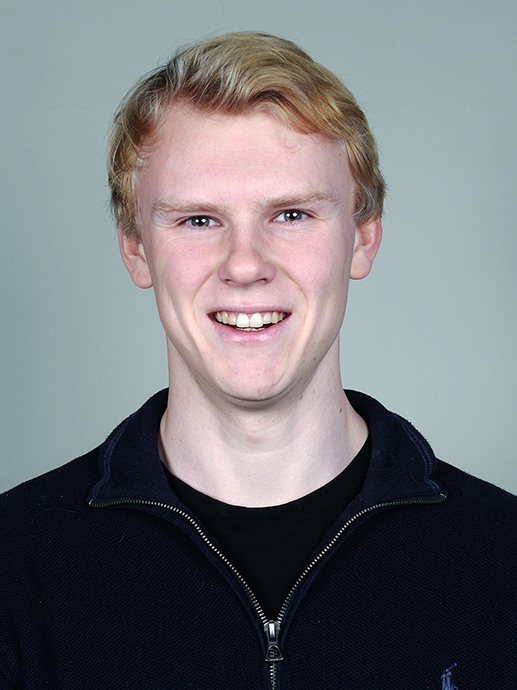
Coming from the sunny shores of Tenerife to the changing seasons of Norway, doctoral research fellow Oscar Soler is embarking on a new adventure—exploring the physics of our closest star at the Rosseland Centre for Solar Physics (RoCS).
Researchers' profile
José Ricardo Correia arrived in Oslo in September 2025 to become a postdoctoral researcher at ITA. A Portuguese physicist with a master’s (2016) and PhD (2022) from the University of Porto, he now works with the Cosmology group to model the violent phase transitions that may have rippled through the infant Universe.
The Sun’s invisible magnetic fields shape everything from solar flares to space weather at Earth. At RoCS, postdoctoral fellow Harsh Mathur is developing new tools to read these fields from the light we observe.
The SST’s exceptional spatial and temporal resolution is a key reason she chose to work at RoCS. Meet Pooja Devi, postdoctoral researcher.
With a diverse academic background across several countries, Yixiao Zhou primarily focuses on computational stellar physics.
"Being involved with science is a fulfilling endeavor, and astrophysics takes it further by exploring phenomena in both space and time" - Ana Isabel Silva Martins, new PhD student in cosmology.
With a rich academic background from esteemed institutions, Valeriia Liakh's work is driven by her passion for computational plasma astrophysics.
Meet Aline Rangøy Brunvoll: A doctoral research fellow at RoCS taking on solar mysteries.
– Astronomy is inherently fascinating, and I believe its intrigue deepens as you delve into the details, says Akhil Lasrado, new Ph.D. fellow at the Institute of Theoretical Astrophysics.
Semya Amouche Tønnessen joined RoCS with a strong foundation in computational science and practical experience in solar research.
- My name is Prasanta Gorai and my research focuses on the impact of evolved stars on galactic chemical enrichment.
- My name is Elisabeth, and I’m from Os. I am pursuing a joint PhD between RoCS and the University of St Andrews in Scotland.
His exposure to RoCS came through various courses, summer projects and supervision, creating a foundation that sparked his interest when RoCS announced openings for PhD positions.
He wants to advance his understanding of the workings of the energetic Sun. Meet Sascha Ornig from Austria, RoCS newest team member.
Meet Fan Zhang, our new RoCS Postdoctoral Fellow, who is striving to improve the modeling of the solar atmosphere.
– I am fascinated about the use of machine learning in different fields and its applications for society in the future, says Dennis Fremstad, new Ph.D. fellow at the Institute of Theoretical Astrophysics.
The frenchman Quentin Noraz has come to Oslo to work on the WholeSun ERC project; an European collaboration to better understand the functioning of the Sun.
- My name is Carlos José Díaz Baso, hailing from the beautiful island of Tenerife, Spain. Meet RoCS' new postdoctoral researcher.
Expectations and surprises, it all belongs to a new Doctoral Research Fellow's life at RoCS. Meet Ignasi Poquet from València, Spain.
– I find neutron stars to be some of the coolest and most fascinating objects in the universe, says Jakob Borg new Ph.D. fellow at the Institute of Theoretical Astrophysics.
- I started my PhD in august 2022, but I feel like I have been a part of RoCS since I started my master project in 2021, says Elias Roland Udnæs.
- There is a major expertise within the field that I am currently working on and everyone is more than happy to answer my academic questions. Jonas Thoen Faber enjoys being part of the RoCS team.
"I just think galaxies are really, really, cool! I mean have you seen pictures? Who wouldn’t want to know more about those things?", Bendix Hagedorn, new Ph.D. student at the Institute of Theoretical Astrophysics.
"It is really cool to quantitatively describe things in the sky using physical theories developed on earth" - Cheng-Zong Ruan, new postdoc at ITA.
He did his research at CERN, Geneva, within beam and accelerator physics. Now Sondre Vik Furuseth, Postdoctoral fellow at RoCS, will use his knowledge to attempt simulating the whole Sun.