Located in the Chilean Andes, the Atacama Cosmology Telescope (ACT) has scrutinized the sky, collecting faint light that has traveled for over 13 billion years, dating back to when the universe was only 380,000 years young. This process has resulted in the clearest images of the earliest cosmic times currently accessible to humans.
– The CMB is the light that lies behind everything else in the universe—behind the stars and galaxies, explains Sigurd Kirkevold Næss, a researcher at the Institute of Theoretical Astrophysics who is involved with ACT’s sixth and final data release (DR6).

A cosmic tapestry
The cosmic microwave background (CMB) radiation represents the earliest light signal we can observe—acting as a faint afterglow of the Big Bang. Due to the universe's expansion, this cosmic background radiation has lost so much of its energy that it now corresponds to the radiation emitted by an object at -270°C, merely 3 degrees above absolute zero. This radiation falls within the microwave portion of the electromagnetic spectrum.
– This light has longer wavelengths than what our eyes can perceive, which is why space appears black to us, explains Næss.
By studying the CMB, scientists gain insights into the conditions and structure of the universe shortly after the Big Bang. However, the sensitivity required to resolve the details in this cosmic tapestry has long been a challenge and a limiting factor.
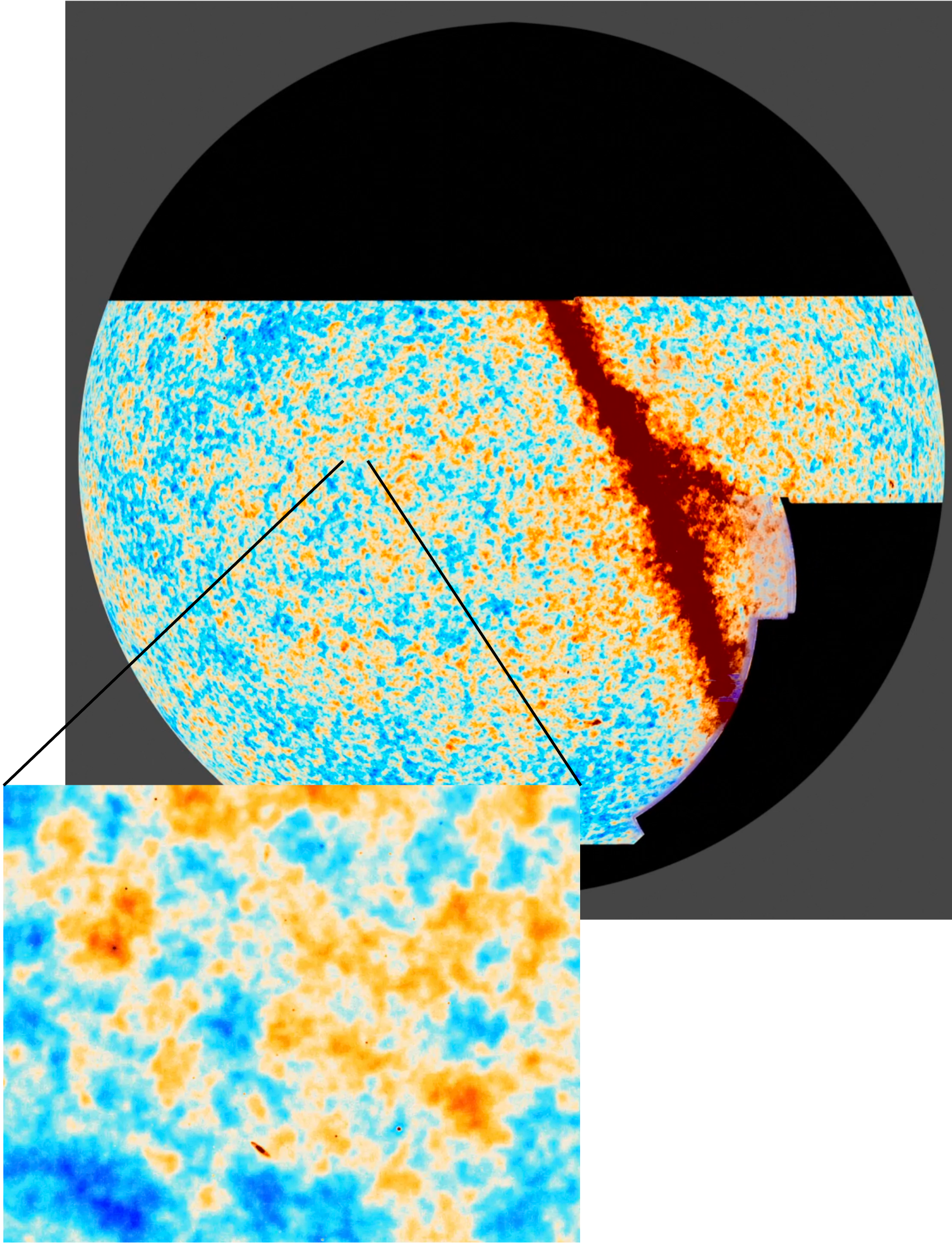
The new CMB images provide higher resolution compared to those captured over a decade ago by the Planck space-based telescope.
– ACT measures the intensity and polarization of light at five times the resolution of Planck and with greater sensitivity, affirms Næss.
While the CMB radiation is generally isotropic, meaning uniform in all directions, it is not perfectly uniform. It exhibits tiny temperature fluctuations and is slightly polarized, which means that the electric fields of the CMB photons have a preferred orientation rather than being randomly oriented.
– The faint polarization signal is now directly visible, he continues.
The polarization image reveals the intricate movements of hydrogen and helium gas in the cosmic soup. By analyzing the polarization patterns, scientists can explore the distribution of matter, the formation of structures, and even detect the presence of gravitational waves from the inflationary epoch.
– There are other contemporary telescopes measuring polarization with low noise, but none of them cover as much of the sky as ACT does, adds Næss.
The theory of inflation suggests that the universe underwent rapid expansion in its early stages, leading to the formation of large-scale structures. The polarization of the CMB serves as a potential tool to test the theory of inflation and to search for signatures of gravitational waves produced during this epoch.
The polarization of the CMB was first detected by the Degree Angular Scale Interferometer (DASI) in 2002. However, due to the signal's faintness, DASI's measurement was nearly unusable, Næss explains.
– Since then, the background radiation has been measured with increasing precision by progressively modern telescopes, such as the BICEP Experiment and the Planck satellite. Our measurement is the best made so far, concludes Næss.
More accurate answers to longstanding questions
These detailed images of the early universe are revealing answers to longstanding questions about its origins.
– By looking back to that time—when things were much simpler—we can piece together the story of how our universe evolved to the rich and complex place we find ourselves in today, says Jo Dunkley, the Joseph Henry Professor of Physics and Astrophysical Sciences at Princeton and the leader of the ACT analysis.
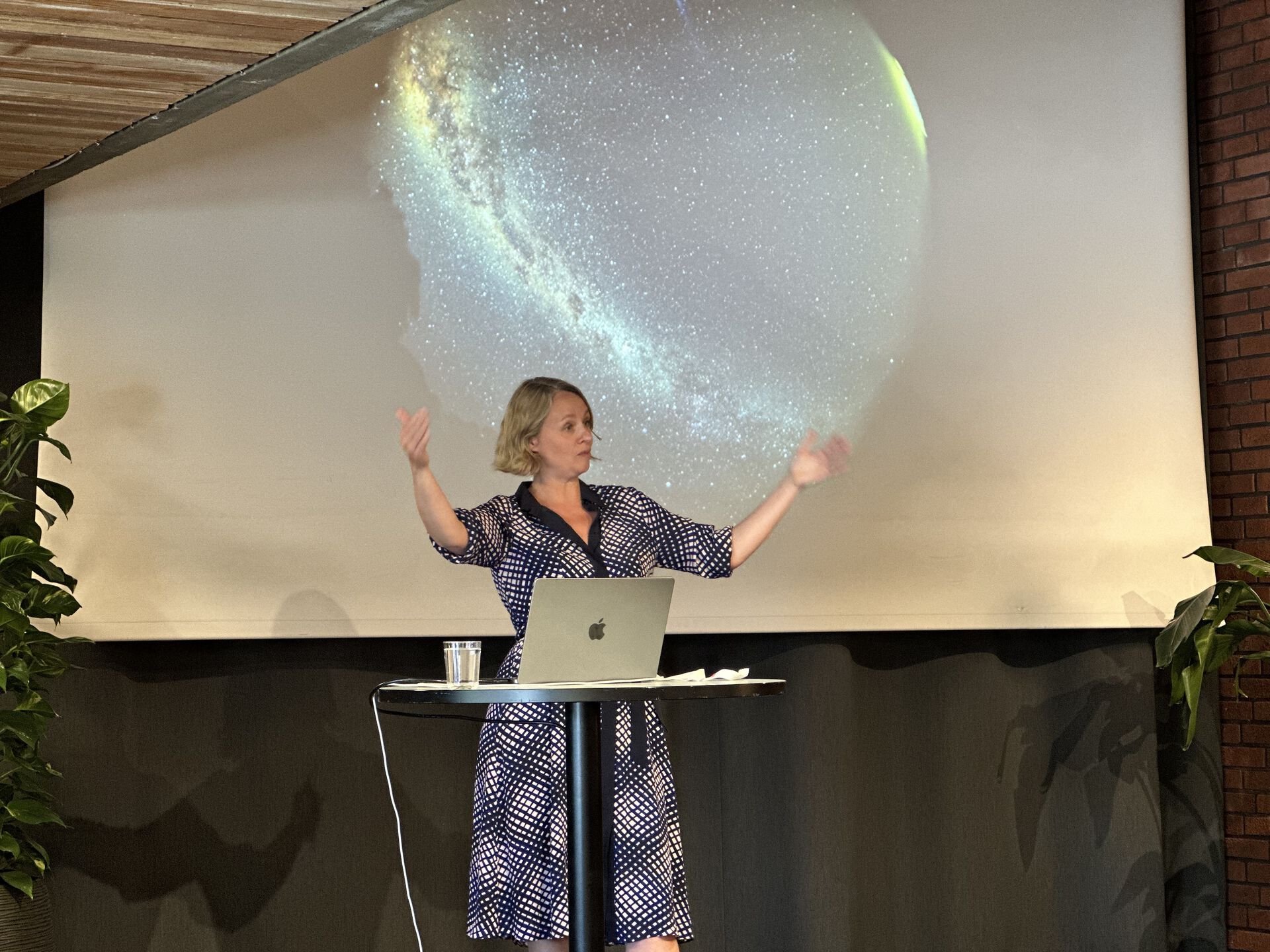
The new ACT data, now publicly available on NASA's LAMBDA archive, provide vital insights into longstanding questions about the structure and evolution of the universe:
- ACT’s new measurements have refined estimates for the universe's age current expansion rate. In the early universe, the infall of matter generated sound waves that spread through space like ripples on a pond. The new data confirm that the universe is 13.8 billion years old, with an uncertainty of only 0.1%.
-
Astronomers have measured that the observable universe extends nearly 50 billion light years in all directions and contains a mass equivalent to 1,900 'zetta-Suns,' or almost 2 trillion trillion Suns. Of this mass, only about 100 zetta-Suns are composed of normal matter—mostly hydrogen with a bit of helium that we can see and measure. An additional 500 zetta-Suns consist of invisible dark matter whose nature remains unknown, while the equivalent of 1,300 zetta-Suns corresponds to the dominating vacuum energy, also known as dark energy, of empty space.
- The new data confirm a lower value for the Hubble constant, the rate at which space is expanding today, —approximately 67-68 km/s/Mpc—aligning with measurements from the Cosmic Microwave Background (CMB). This result supports the standard model of the universe and rules out many competing theories, adding precision to the ongoing debate about the universe's expansion rate.
– We can see right back through cosmic history, says Dunkley in a press release from the University of Pennsylvania,
– From our own Milky Way, out past distant galaxies hosting vast black holes and huge galaxy clusters, all the way to that time of infancy, she concludes.
What's next?
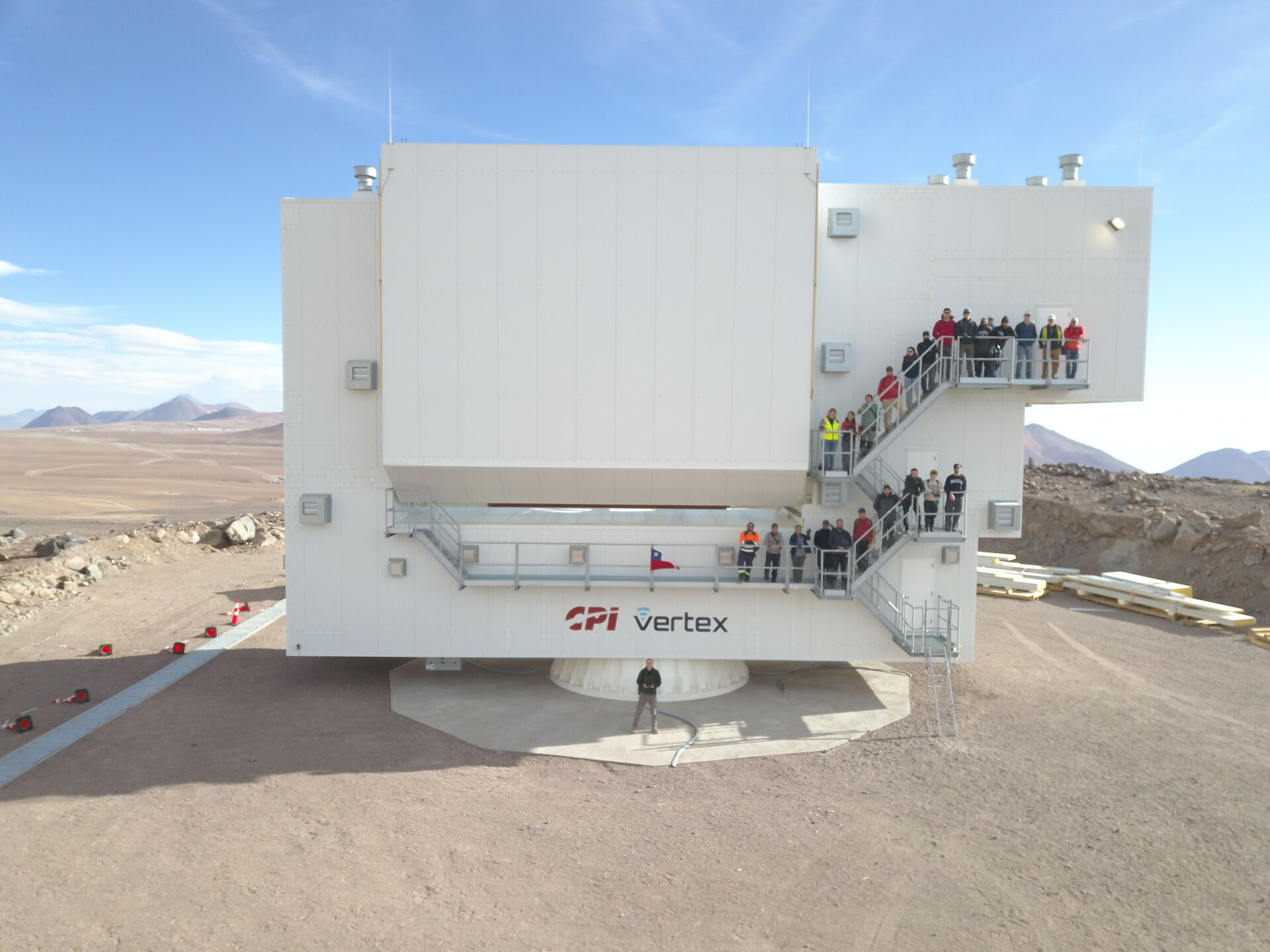
ACT completed its observations in 2022, and the team’s focus has now shifted to a new, more advanced telescope located at the same site in Chile: the Simons Observatory.
Situated near the summit of Cerro Toco—a leading location globally for studying the CMB and collecting experimental cosmology data—the Simons Observatory will map the sky at millimeter wavelengths with unprecedented sensitivity. In these maps, astronomers will search for unique signals from the initial expansion of space and measure how cosmic structures have evolved over billions of years.
More about
- New high-definition pictures of the early universe, press release University of Pennsylvania (external link)
- The Atacama Cosmology Telescope (external link)
- The Simons Observatory (external link)
- Cosmology and Extragalactic Astronomy group