Saturn
Welcome to the ring planet Saturn, 143 meters from the Sun.
The Planetfield is a unique light model of our solar system, at the correct relative scale, where both distances and planet sizes are reduced by a factor of ten billion. Read more about the model.
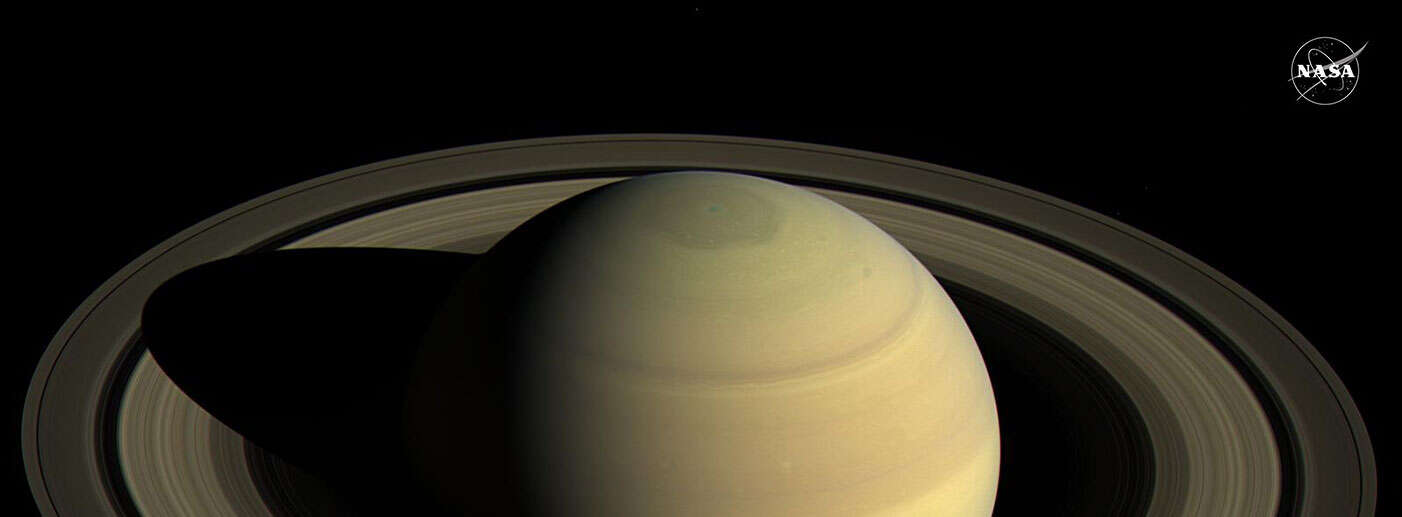
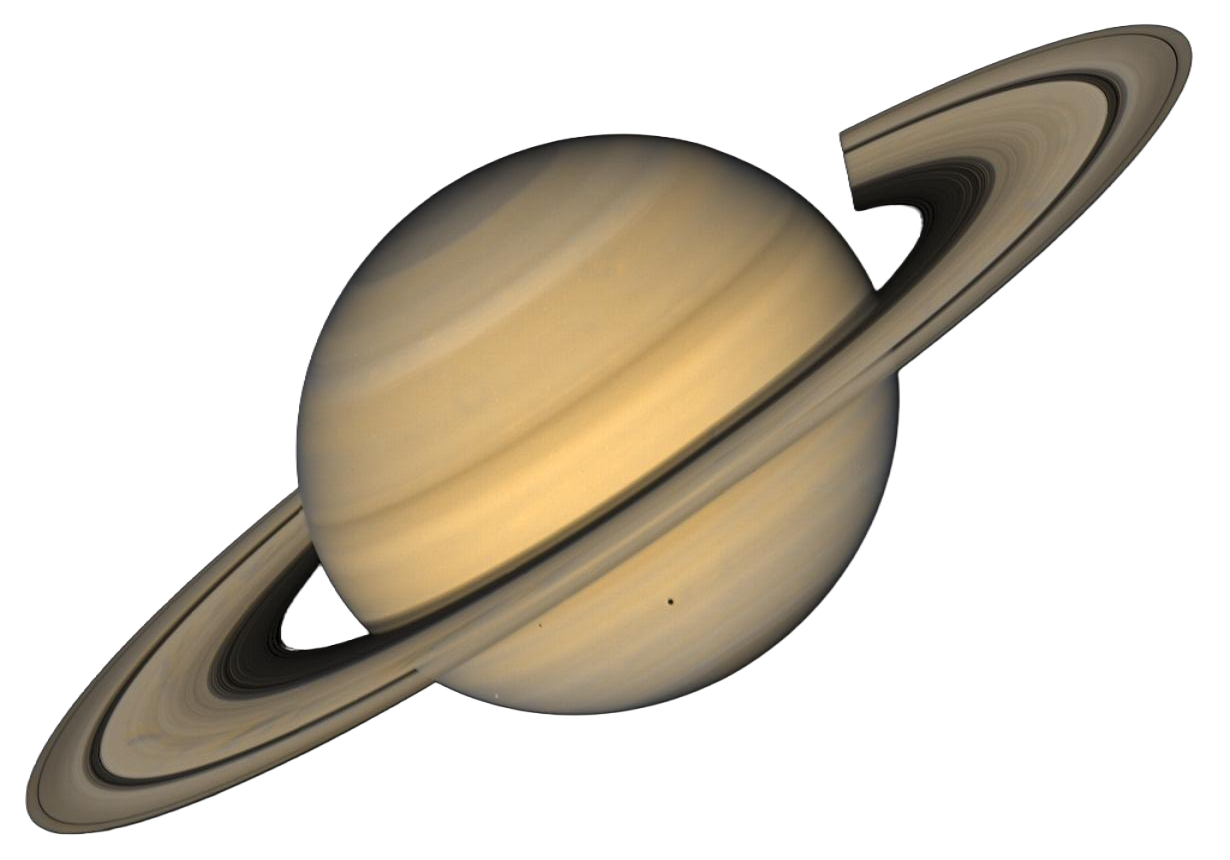
Sunlight takes a full 80 minutes to travel out here. In the model, Saturn has a diameter of 12 mm, while its spectacular ring system extends 27 mm across—equivalent in reality to 270,000 kilometres, or slightly less than the distance between Earth and the Moon. The rings consist of countless small particles of ice. These particles range from tiny dust grains to boulders as large as houses or mountains, although most measure between 1 centimetre and 1 metre across. The ring system is made up of many separate rings, and remarkably, their average thickness is only about 10 metres. The rings are so bright that they reflect sunlight onto the planet’s night side, preventing it from becoming completely dark.
This giant planet spins extremely rapidly. A day lasts only 10.7 hours, but Saturn takes almost 29.4 years to complete one orbit around the Sun. Like Jupiter, Saturn is a gas giant composed mainly of hydrogen and helium, but it is less compact. Saturn’s average density is only 700 kg/m3, which is lower than the density of water, 1,000 kg/m3. Saturn could therefore float if it were placed in a hypothetical ocean—or an enormous cosmic bathtub. Powerful storms rage in its atmosphere, with extreme winds reaching up to 1,800 km/h. The most peculiar phenomenon is found at the north pole, where a unique hexagonal jet stream surrounds a gigantic storm at its center.
Saturn currently has an astonishing 293 confirmed moons in orbit around it. The largest and best-known is Titan, which is actually larger than the planet Mercury. Titan is shrouded in an atmosphere slightly denser than Earth’s, composed of nitrogen mixed with a few per cent methane. It is the only moon in the entire Solar System with a substantial cloud cover.
In 2005, Huygens, a lander carried by the Cassini spacecraft, was released through the clouds and down to Titan’s surface. On its descent, Huygens photographed features resembling riverbeds and lakes, and it landed in terrain that looked like a dried-up riverbed. Scientists think Titan may have a type of weather in which a mixture of methane snow and methane rain falls over mountains and methane lakes. Several such large lakes have been detected and imaged by radar on the moon’s surface, where the temperature is a frigid −180° C.
Facts about Saturn
| Diameter | 120 500 km |
|---|---|
| Distance from the Sun | About 1.4 billions of kms |
| Rotation period | 10 h 42 min |
| Orbital period around the Sun | 29.4 Earth years |
| Surface temperature | About -140 ºC |