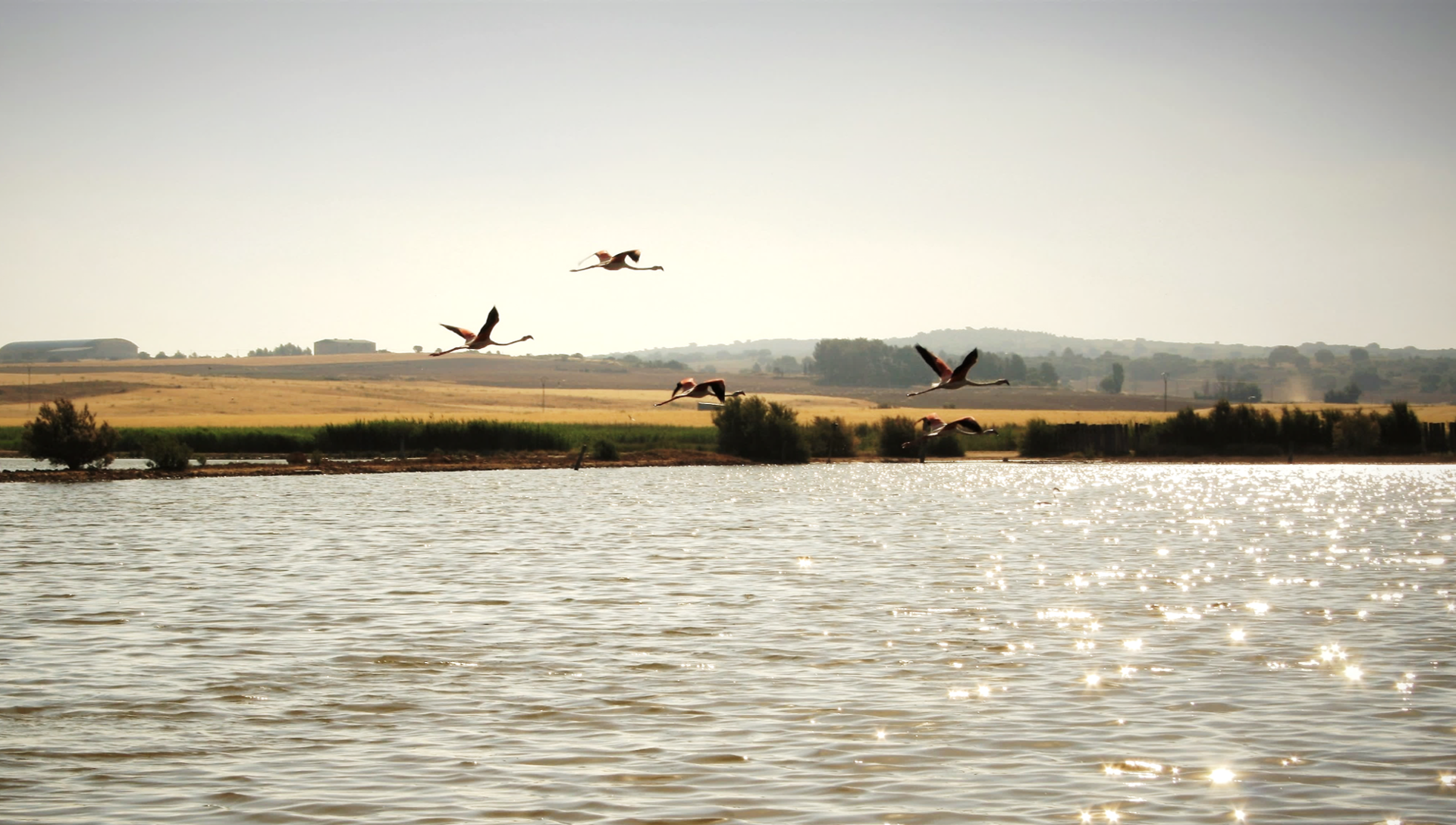
The study involved incubations of water and sediment from the highly saline Pétrola Lake in Spain. This waterbody is eutrophic as a result of the continuous supply of inorganic nitrogen (N) from synthetic fertilizers. Using the 15N-isotope pairing technique, Valiente and his collaborators were able to determine NO3- sink processes. They demonstrate for the first time the coexistence of denitrification, DNRA (dissimilatory nitrate reduction to ammonium) and anammox (anaerobic ammonium oxidation) processes in a highly saline lake.
In addition, the contribution of each pathway was determined by oxygen and light conditions. Denitrification was the dominant N removal process when oxygen and/or light were present. As a result, unexpected high N2O emission rates were found in those treatments. In contrast, anoxia and darkness promoted NO3- reduction by DNRA combined with N loss by anammox.
These results highlight the role of coupled DNRA-anammox in N cycling in lake ecosystems, and how they can compete with denitrification and, therefore, restrict N2O emissions to the atmosphere.
The paper can be read here