
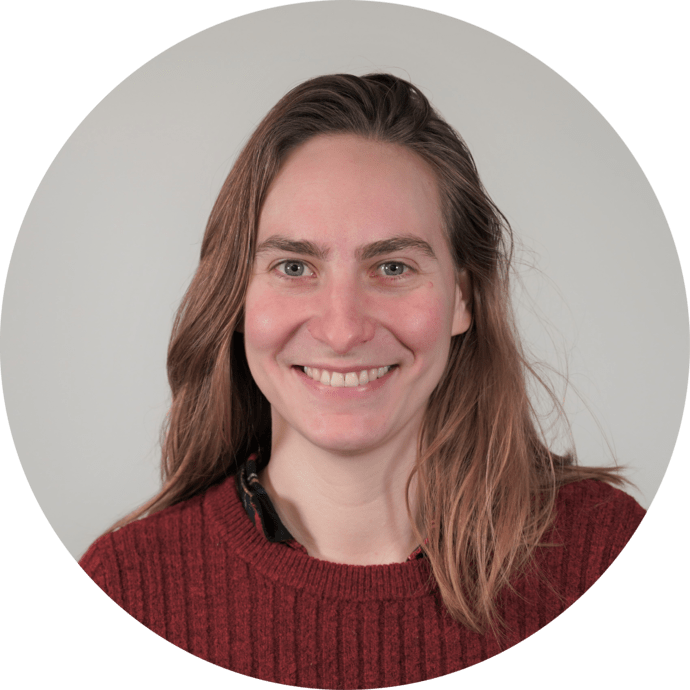
Franziska Jessica Schöb is a PhD Candidate at Condensed Matter Physics, (Njord & Hybrid Technology Hub), Department of Physics, UiO. She is also part of the CompSci doctoral program. She will now be defending her thesis for the degree of PhD which was submitted for evaluation on the 11th March 2026.
From the CompSci team we wish you good luck and all the best in your future endeavors!
→ Read more about the disputation in the website of the Department of Physics
Programme
10:15 – Trial lecture: "The potential and limitations of label-free imaging for studying biological systems", Lille fysiske auditorium (V232) - Fysikkbygningen
13:15 – Disputation: "From Pixels to Phenotypes: Deep Learning on Label-Free Microscopy Data for Cell Fate Prediction; How Algorithms Help Us See More"
The PhD defence and trial lecture will be streamed. The chair of the defence will moderate the disputation.
Ex auditorio questions: the chair of the defence will invite the audience physically present in the auditorium to ask ex auditorio questions.
→ Live streaming of trial lecture and disputation (will be available)
→ Request for thesis copy (available until the disputation starts)
PhD candidate
Research group | Condensed Matter Physics (Njord & Hybrid Technology Hub)
Main supervisor | Dag Kristian Dysthe, Department of Physics/ The Njord Center, University of Oslo, Norway
Co-supervisors |
Professor Hanne Scholz, Department of Basic Medical Sciences, University of Oslo/ Oslo University Hospital, Norway
Professor Anders Malthe-Sørenssen, Department of Physics, University of Oslo and Norwegian University of Life Sciences (NBMU)
Professor Alexander Binder, Multimodal Machine Learning/ ScaDS.AI, Leipzig University, Germany
Affiliation | Department of Physics, UiO
Contact | Email: franscho@uio.no
LinkedIn: Franziska Jessica Schöb
Adjudication committee
Associate Professor Guillaume Jacquemet, Åbo Akademi University, Finland
Associate Professor Caroline Beck Adiels, The University of Gothenburg, Sweden
Dr. Marcel Moura, Department of Physics; University of Oslo, Norway
Chair of defense
Head of Department Susanne Friederike Viefers, Department of Physics, University of Oslo, Norway
Main research findings
Deep learning-based analysis of stem cell differentiation pathways
To study living cells, scientists usually stain them with fluorescent dyes that light up specific structures. However, these dyes are toxic and disturb the cells. This makes it impossible to observe the same cells over several days. This thesis shows that artificial intelligence can extract much of this information from plain microscope images instead, with no staining at all.
Computer models were trained to recognize subtle patterns in the shape and texture of unstained cells. They could tell early on which stem cells were likely to grow into high-quality cells for cell therapy, identify which type of tissue developing cells were turning into, and spot cancer cells as they died during immune attacks.
Even though the models performed well, they also showed clear limits: a cell's shape at a single moment cannot always predict what will happen next. Despite this, the work marks a key step toward gentle, automated monitoring of living cells. This shift could make stem cell therapies safer and cheaper, while helping researchers better understand how the body fights cancer.
