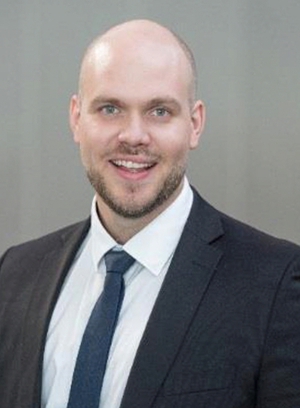
I am a theoretical physicist turned educator and researcher in physics education. My main interests, besides the unanswered questions about the cosmos, are related to my work in Research Section for Physics Education:
- Motivation for learning physics
- Active learning in physics education
- Equity in physics education
Teaching:
FYS1120 - Electromagnetism
FYS3120 - Classical mechanics and electrodynamics
HON1000 – Cross-Disciplinary Thematic Focus for Honours Students
Background:
2016-2018: Teach First Candidate, Teach First Norway
2014-2016: M.Sc. Theoretical Particle Physics, University Of Oslo
Tags:
Physics,
Physics education,
physics teacher education
Publications
-
Bøe, Maria Vetleseter; Lauvland, Anders & Henriksen, Ellen Karoline
(2024).
How Motivation for Undergraduate Physics Interacts With Learning Activities in a System With Built-In Autonomy.
Science Education.
ISSN 0036-8326.
doi:
10.1002/sce.21912.
Full text in Research Archive
Show summary
Supporting student participation and learning in STEM involves motivating students to engage in the most effective learning activities. In this article, we study how student motivation interacts with learning activities, and we pay special attention to active learning and the Scandinavian context where participation in learning activities is largely voluntary. Twenty-one undergraduate physics students at a large, research-intensive university in Norway participated in nine focus group interviews at the beginning and end of the spring term of 2020. With self-determination theory as a lens, our thematic analysis resulted in three themes: First, students' autonomous motivation came from mastery experiences and perceived learning, such as the joy of solving a problem. Second, active learning activities enabled students' autonomous motivation when these activities supported competence, for example through optimal challenge or with evident learning gains. In contrast, students experienced low or controlled motivation when excessive challenge and lack of mastery threatened their sense of competence. Third, students' sense of competence was strengthened by being part of a community of learners. The community ensured that help and mastery experiences were available, and interactions with the community made evident that other students struggle too. The emphasis on mastery and competence for these students is discussed considering how physics is associated with difficulty and extraordinary cleverness. We argue that the main threat for students who do not feel competent enough in physics is the threat of not belonging in physics due to this perceived lack of competence. Implications for teaching and research are discussed.
-
Odden, Tor Ole Bigton; Lauvland, Anders; Bøe, Maria Vetleseter & Henriksen, Ellen Karoline
(2023).
Implementing the learning assistant model in European higher education.
European Journal of Physics.
ISSN 0143-0807.
44(3).
doi:
10.1088/1361-6404/acb39e.
Full text in Research Archive
Show summary
Abstract The Learning Assistant (LA) Model is a widely used and researched model for institutional and course transformation towards research-based instructional strategies. The LA model leverages learning assistants, pedagogically trained students, to facilitate student learning in active learning environments. However, although the LA model has shown significant results when implemented in university contexts in the United States, there has as yet been little documentation of similar implementation or results in European higher education. In this study, we present the results of a three-semester design-based research project to implement the LA Model in a Scandinavian physics department. The three core elements of the LA model (pedagogical training, course content meetings, and teaching in active learning environments) were implemented and iteratively refined, with necessary adjustments due to the specific institutional and cultural contexts documented. Throughout all three semesters, data was collected on how participation in the LA model affected LAs’ buy-in to research-based instructional strategies using focus groups, pre/post surveys, and teaching observations. A thematic analysis of these data showed that participation in the LA model helped ensure LA buy-in to both the interactive engagement methods and goal of cultivating conceptual understanding that underlie most research-based instructional strategies, and that the combination of teaching practice and pedagogical training seminars were key to this buy-in. We argue that these results demonstrate the potential usefulness of the LA model for creating institutional and cultural change in European higher education.
View all works in NVA
-
Bøe, Maria Vetleseter; Lauvland, Anders Shilla & Henriksen, Ellen Karoline
(2025).
How motivation for undergraduate physics interacts with learning activities.
Full text in Research Archive
-
Lauvland, Anders; Bøe, Maria Vetleseter & Henriksen, Ellen Karoline
(2021).
Motivation Profiles Among First-Year Physics Students.
Full text in Research Archive
Show summary
Students with different degrees and types of motivation have different needs to become and stay engaged in
physics learning. In this study, we conducted a survey among N=318 first-year university students
measuring their motivations for learning physics. Expectancy-Value Theory was used to operationalize
motivation and determine a five factor model for students’ motivation to learn physics. Three motivational
profiles were identified based on factor scores. The highly motivated students were associated with high
interest, utility and attainment value to learn physics. This group also had low scores on the costs associated
with learning physics, and high expectation of success. The moderately motivated students had mean scores
of interest, utility, attainment, cost and expectation for success close to the mean of the entire group. And
lastly, the less motivated students showed a lower degree of motivation across all factors, in addition to
associating higher costs with learning physics. Students from three study program categories (Physics
bachelor, Engineering, and Other) and from both genders were represented in each cluster, though not
evenly distributed. In the highly motivated cluster, male students and physics bachelor students were
overrepresented, whereas female students and engineering students were overrepresented in the less
motivated cluster. The moderately motivated cluster had a more balanced distribution of study programs
and genders. The results suggest that physics teaching needs to support and develop different motivations,
paying special attention to less motivated students who require more support to stay engaged. We call for
more research into how different learning activities interact with motivation for a broad range of students,
and how teaching can better support their engagement
-
Lauvland, Anders; Odden, Tor Ole; Bøe, Maria Vetleseter & Henriksen, Ellen Karoline
(2019).
Learning assistants' transformed views on teaching and the teacher role after a training program.
Full text in Research Archive
View all works in NVA
Published
Aug. 19, 2019 2:50 PM
- Last modified
Jan. 28, 2021 11:48 AM