1 Can vinyl records sound better than digital audio?

In recent years vinyl records have made a comeback and many even say that they sound better than digital audio. This is a fascinating topic that spans from technology for sound recording to psychoacoustics, or how sound affects humans. It even points beyond science, as Einstein famously said that “It would be possible to describe everything scientifically, but it would make no sense; it would be without meaning, as if you described a Beethoven symphony as a variation of wave pressure”.
To understand how a symphony is reproduced and, in the end, influences us, the two recording technologies must be considered. On the one hand, in a vinyl record the groove is a physical representation of the signal, and this has its limitations. On the other hand, digital audio is based around sampling in time and quantization of the level. Streaming services like Spotify may also employ audio coding, where some of the subtle nuances of the audio signal are thrown out. The ‘loudness war’ is a phenomenon which for decades has characterized digital audio, where the average level has increased and approached the clipping level. This compression of the dynamic range takes place as audio is mastered in the studio. Vinyl sound on the other hand, distorts in a softer way. This leads to the conclusion that digital audio, although it has the potential for better sound reproduction than vinyl, often in practice does not achieve it.
2 Localization with sight and sound: From Greek astronomy to human hearing
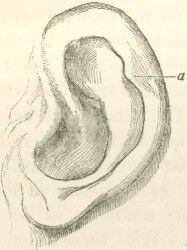

Human senses are usually inferior to those of animals, but one notable exception is our ability to locate the exact direction of a sound source. We can pinpoint a sound with an accuracy of 1–2 degrees while cows and horses only achieve an accuracy of 25–30 degrees. In medical ultrasound imaging, comparable accuracy to humans is common, but this requires activating nearly one hundred sensors, whereas humans accomplish the same task with just our two ears. There are clearly limitations to human-designed systems like medical ultrasound and radar that biological hearing overcomes. Explanations are found in the triplex theory of hearing, the internally coupled ears of many small animals, and the asymmetrical placement of ears in some owls.
These limitations to accuracy apply to all kinds of systems based on wave phenomena including optics. Here is also the key to understanding why Greek science more than 2000 years ago, despite many impressive results, had concluded that the stars were much closer than they are in reality and as a consequence that the Earth is the center of the universe. The background for the science of the Galileo affair in the 17th century lies here and it explains why the now forgotten geoheliocentric system of Tycho Brahe, neglected by Galileo, was considered the most scientific one for several decades after Galileo’s death.
A full understanding of optics and acoustics had to wait until the 19th and 20th centuries and gives us good reason to be amazed at the wonder of sight and hearing both in humans and animals.
3 Spooky action at a distance: from Newton to Einstein
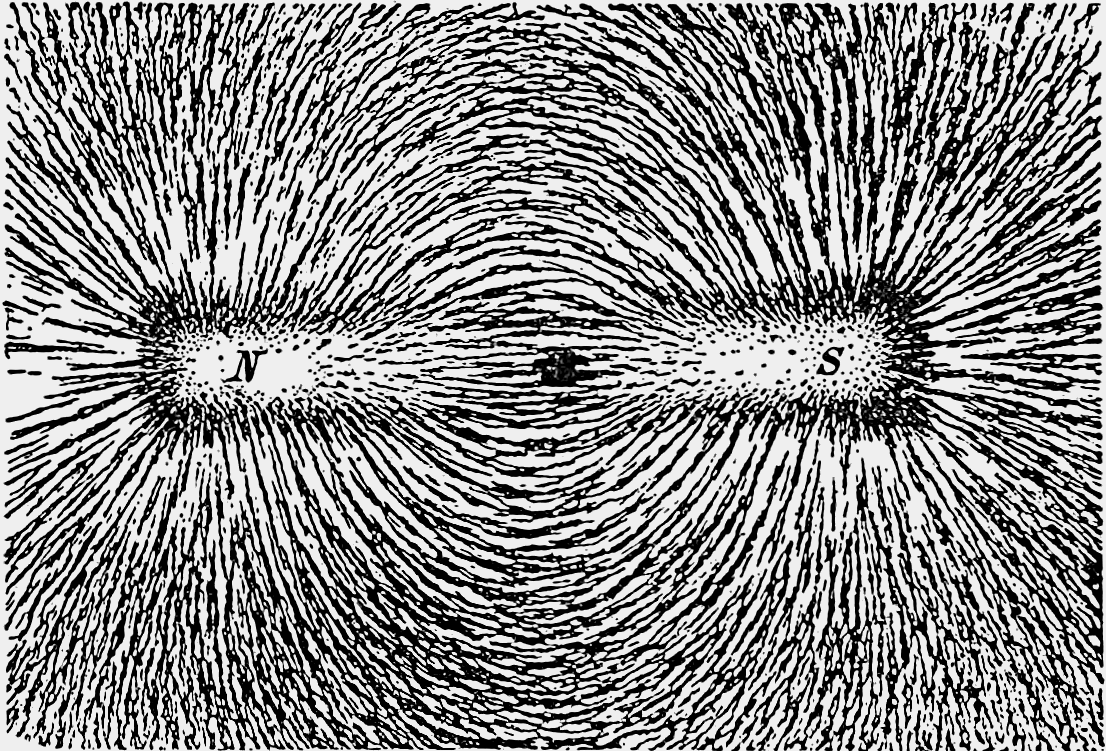
Here we explore the occult origins of forces in the 17th century, and the mysteries still looming over modern science. The journey will take us from Newton’s Philosophiæ Naturalis Principia Mathematica, via Gottfried Leibniz and Roger Boscovich (Ruđer Bošković) to Michael Faraday and James Maxwell.
Albert Einstein used the term ‘spooky action at a distance’ to describe quantum entanglement where influences seemingly travel faster than light. The history of ‘spooky action at a distance’ goes much further back and starts with how Newton’s work was received. It was hard to understand action at a distance, that is without any objects touching each other, in descriptions of forces like gravity, magnetism and electrostatics.
The view that came out of the 19th century is that the world has two layers, a fundamental one consisting of fields which are hidden from our view and a second layer consisting of mechanical stress, energy, and force which can be sensed, touched, and measured.
This gives rise to the wonder that cosmologist Allan Sandage (1926-2010) expressed as follows in 2002: "Why does mathematics so effectively describe the world? Why does Newtonian gravity, which depends upon the mysterious, even absurd notion of action at a distance, enable us to send satellites to the moon? The curvature of space as an explanation of gravity is even more mysterious. ... The miracle of Maxwell’s equations from which come electromagnetism, light, radio waves, and communication over large distances with no contact “forces,” is an even greater mystery."
To our loss many have forgotten how how hard it was to get to this insight and how counterintuitive it is, and we have stopped wondering about it, partly because it was overshadowed by the development of physics in the 20th century.
4 A scientist evaluates the Galileo affair: Galileo was right, but so were his adversaries
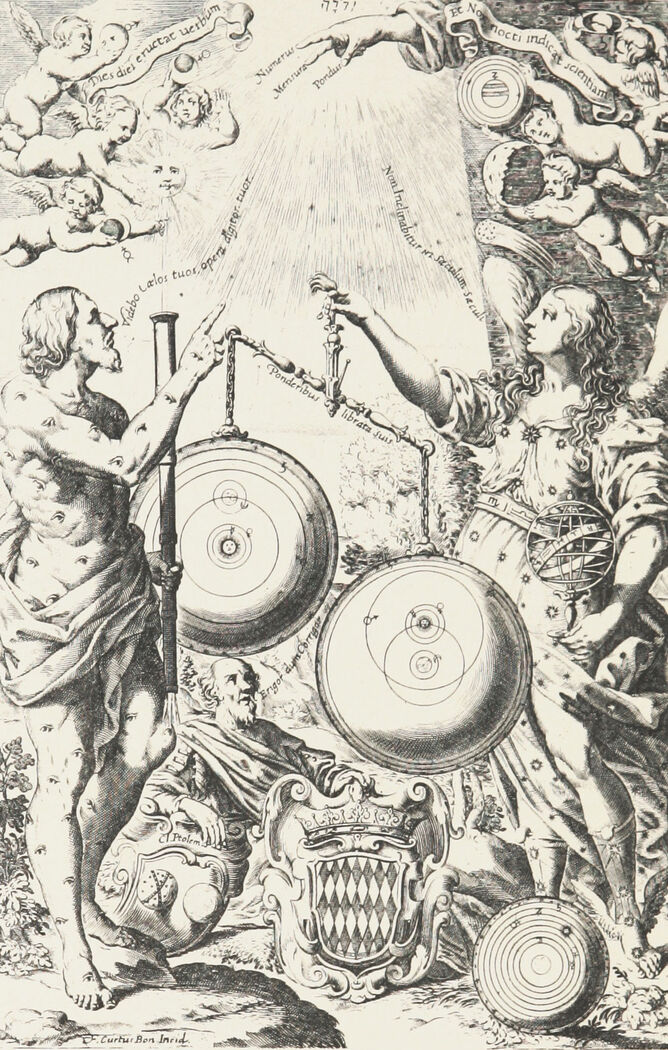

Many like either to attack or to excuse the church for the Galileo affair, believing the myth that this was about science versus religion. However, Galileo (1564-1642) knew very well that he did not have a very good case scientifically for the hypothesis that the Earth revolves around the sun. It took several decades after his death before scientists in general started to favor the Copernican model. In Galileo's lifetime, the geo-heliocentric model of Tycho Brahe, ignored by Galileo, had better scientific support.
This is hard to understand with a presentist view of history, where the past is understood in light of present knowledge, as many scientists unconsciously do. Upon investigating how scientists at the time reasoned, how severly they underestimated the distance to the stars, and the limited understanding at the time of the phenomenon of diffraction, one finds instead that it is impossible to comprehend the Galileo affair without understanding the importance of Brahe's model.
5 Half order derivatives: from Niels Henrik Abel to physics
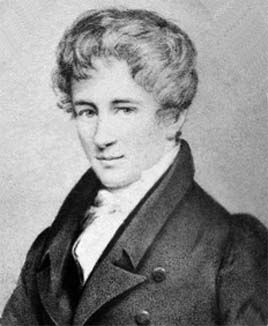
Just as there are many numbers that fill the gap between the integers 0 and 1, there are also derivatives of any order between 0 and 1 and beyond. Gottfried Leibniz and others were aware that non-integer or fractional derivatives could be meaningful, but it was Niels Henrik Abel (1802-1829) who first gave a general definition. This was in one of his first papers, published in Norwegian in 1823, but forgotten when his collected work was made available in French for a wider audience in 1839.
Niels Henrik Abel found the half order derivative through his work with the cycloid curve. The cycloid was a much-studied curve in the 17th century as it was the basis for the ideal pendulum clock. The half-order derivative is therefore indirectly linked to our quest for better timekeeping.
While ordinary derivatives describe change, non-integer derivatives may describe complexity as they involve a memory of the history of the function. Power-law descriptions in time and frequency are central. Fractional derivatives occur naturally in physics and can be used to describe for instance how electromagnetic waves travel in the earth in georadar, or to create models for acoustic waves in human tissue for medical imaging. Fractional derivatives are therefore yet another example of The Unreasonable Effectiveness of Mathematics in the Natural Sciences, as Nobel laureate Eugene Wigner called his article in 1960 as he wondered about the mystery, the miracle, and the wonderful gift of the language of mathematics to science.
(This lecture contains formulas and requires a background in mathematics/physics)