
Collaboration with students, researchers and lecturers from Italy, France and Germany was possible, showing the students the benefits of international collaboration. This was an important experience as this was the first chance for some students to participate in an international experiment due to the Covid-19 pandemic.
About the course:
The course was arranged as a two week hands-on course from the 21st of March to the 1st of April 2022 in Orsay, France with a written report done by the students detailing the experiment and what they learnt. This course, (with 5 ECTS at UiO) builds on the knowledge of FYS4505, offered at UiO, and allows for students to gain vital experience working in a lab and working with equipment that is commonly used in nuclear physics experiments.
During the stay in Orsay, the students were allowed to participate in the actual commissioning of Nu-Ball2 which involved powering on detectors and ensuring they were working correctly. Other tasks performed by students ranged from opening germanium detectors for diagnosis to soldering and making cables. A manual was made by some of the students for the liquid nitrogen cooling in order to ease the cooling of the detector array.
One of the highlights for the students was being able to go inside the Tandem accelerator. This was due to a problem with the accelerator, demonstrating a valuable lesson that not everything runs smoothly when running an experiment. During both weeks the students took evening and night shifts at the lab to ensure the filling was done.
The two week course gives a thorough introduction to experimental methods as well as good experimental experience.
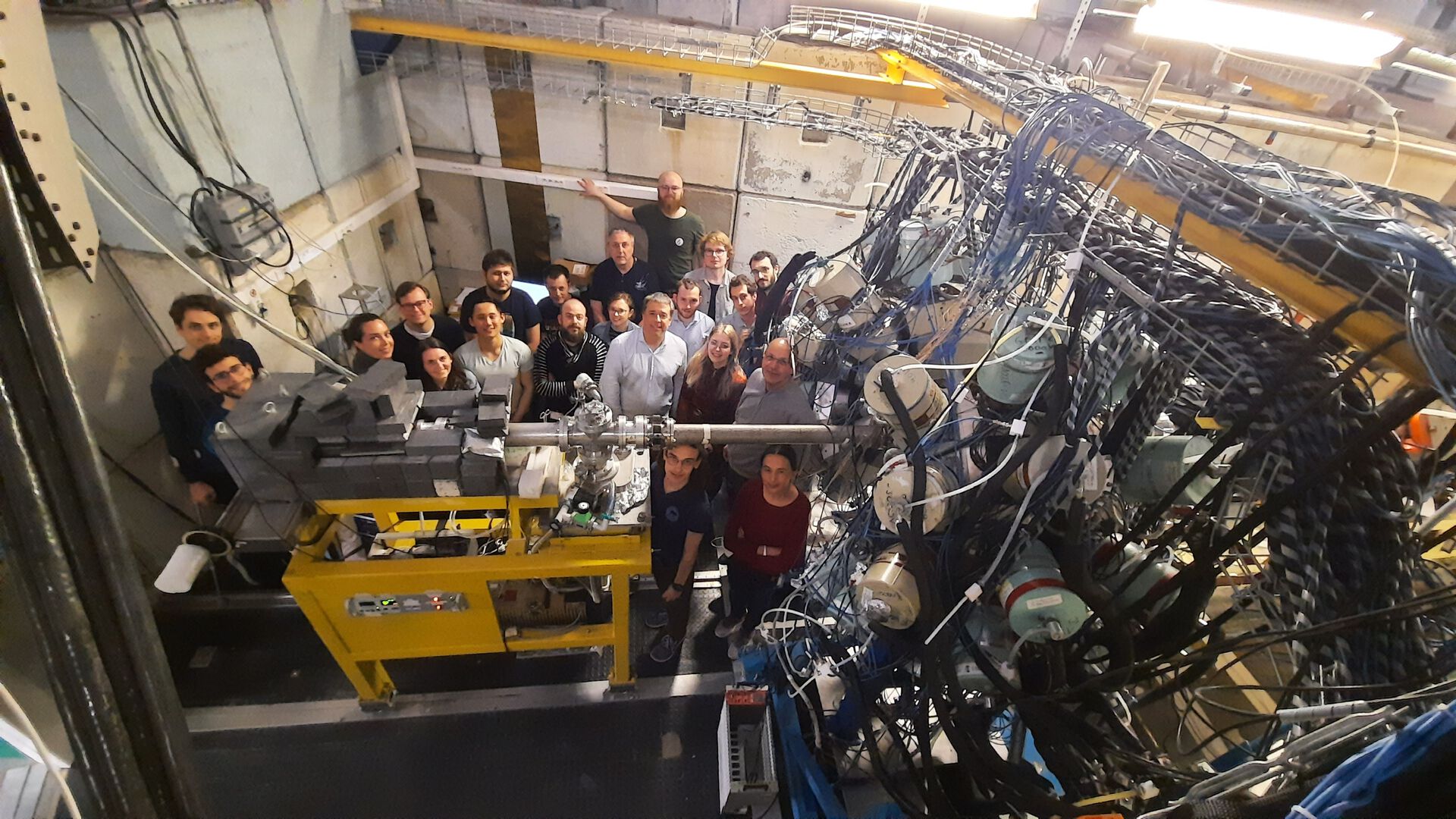
Teachers
- Jonathan Wilson
- Joa Ljungvall
- Gabriel Charles
- Martha Liliana Cortes
- Vetle Wegner Ingeberg
What was learnt:
Advanced instrumentation techniques, in particular the recoil distance doppler shift method (RDDS).
Helping with the commissioning of the Nu-Ball2 array. Specifically working on the Germanium (Clover and BGO) detectors.
Hands on electronics work- powering of detectors, testing detector output, checking if pre-amplifiers were working and changing malfunctioning components.
Learning and experiencing the day-to-day running of an experiment.
Operating and maintaining the liquid nitrogen cooling system used for the detectors.
Diagnostics of detectors and electronics, and the repair of these devices
Soldering and production of cables that were to be used in the experiment.
Participating in shifts, both during the evening and morning, during the whole two week stay.
Testimonies:
“We were truly active participants in the commissioning of Nuball2. We worked on a variety of tasks, with researchers from several institutions around Europe, and gained insight into experimental collaboration. Experiencing first hand the challenges of experimentation has given me a new appreciation for the data I work with every day.”- J. S. Heines.
“Going to an experiment for the first time was very interesting and exciting. Being lucky enough to go inside the accelerator was an amazing experience, especially since it’s not something that happens often. Getting to know people from all across the world was also great. Trips like this have been put on hold for a long time due to covid, and we think it’s an important aspect of our education to really get some hands-on experience. It also allowed us to form new friendships or to strengthen old ones.”- L. T. Bell and T. K. Olafsen