Abstract
Most of the Earth's crust has never been measured directly. What we know comes from a patchwork of boreholes, seismic surveys, satellite fields and handwritten drilling reports, each in a different format and rarely covering the same place. This talk is about turning that patchwork into something a model can learn from.
I will start with a borehole in Oman, where we built a pipeline that fuses core images, drilling reports and physical measurements, and where our first hypothesis failed. Then I will show a model trained on around 300 boreholes worldwide that predicts 52 rock properties it was never trained on, and why adding lithology labels did not help. That result pushed us away from reconstruction-based autoencoders toward joint embedding predictive architectures (JEPA), the basis for JENNIFER, a subsurface foundation model now being built at Veles Labs, a startup currently spinning out of this research.
Along the way: what a physics PhD does at an AI startup, and why you can just do things.
Speaker
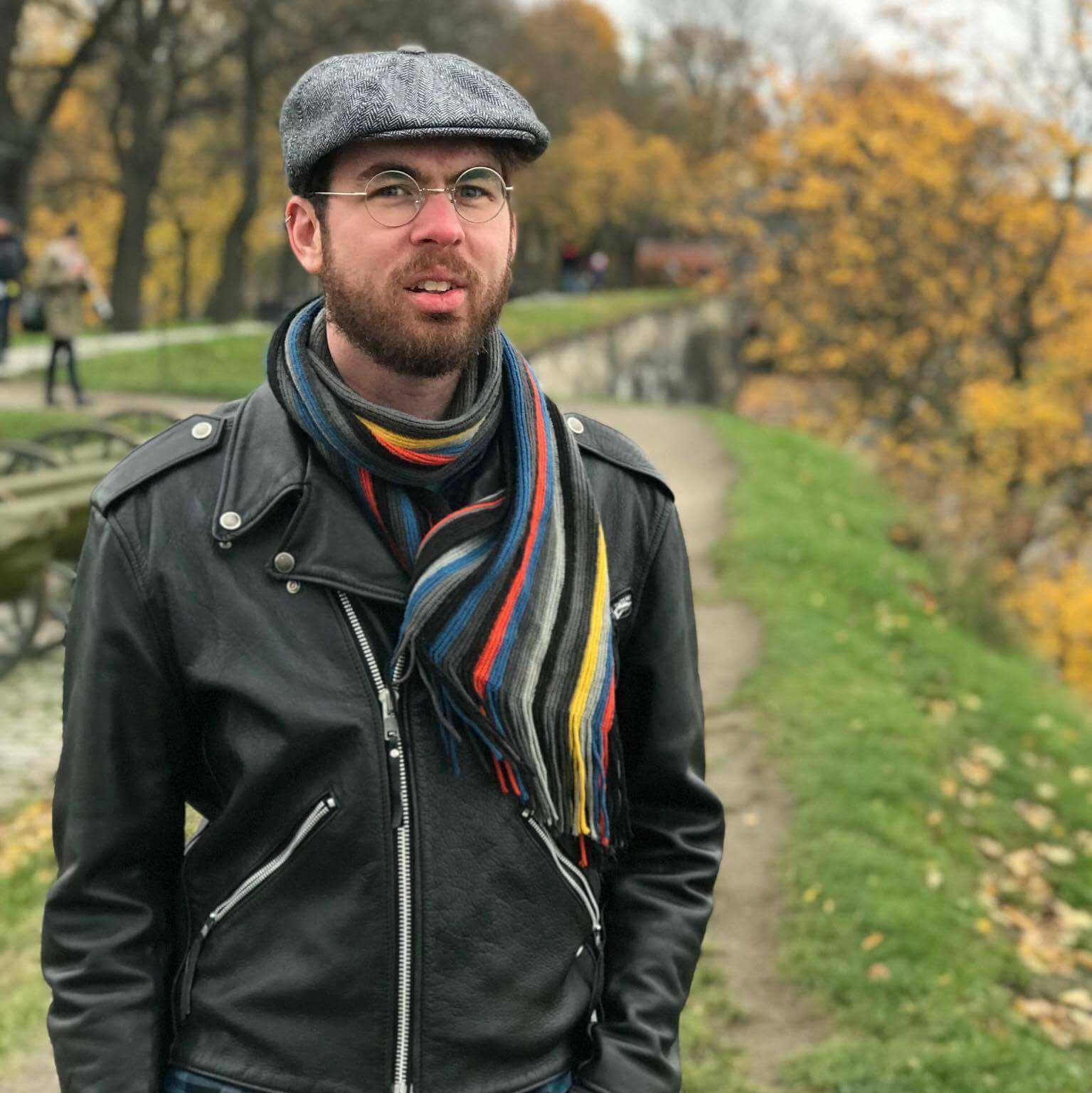
John Mark Aiken, Researcher - NJORD Centre for Studies of the Physics of the Earth.
Speaker bio
John Mark Aiken works at Expert Analytics and the University of Oslo Njord Centre. His research focuses on applying computational science methods to geophysical data. Lately, that research has come to include developing new AI methods and frameworks for ingesting geophysical data, as well as organizing research efforts to understand the connection between AI/ML and geophysical systems.