Published
Mar. 24, 2022 9:29 AM
Professor Emeritus Olav Eldholm died on March 18, 80 years old.
Professor Emeritus Olav Eldholm died on March 18, 80 years old.
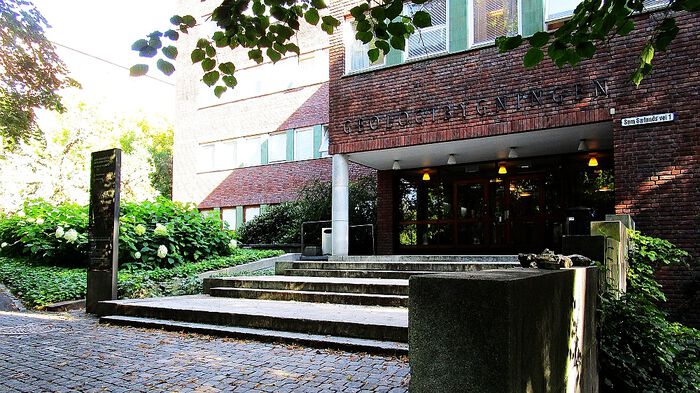
The Department of Geosciences receives funding for five new projects from the Research Council of Norway (NFR) in the 2021 call. A total of three research projects as well as two projects in the "Young Research Talents" category are funded.
Fleire og fleire kjøper elektriske kjøyretøy, og etterspørselen etter elbilar er forventa å auka i tida framover ettersom teknologien vert betre og prisen på slike kjøyretøy går ned. Elektriske kjøyretøy krever mykje metall i kretsløp og batterier. I eit debattinnlegg skriv fire professorar (em) frå UiO at dei fryktar at elbil-boomen kan føra til global metallmangel på sikt.
Norge har i alt 47 nasjonalparkar, av dei ligg 40 på fastlandet, mens sju er å finna på Svalbard. Dette er store, samanhengande og urørte områder som er opne for fri ferdsel. I ein kronikk skriv professor emeritus Knut Bjørlykke om geoformidling i nasjonalparkane, og kvifor det er viktig. På trykk i september utgåva av magasinet GEO/GEO365.no.
The two most recent Norwegian meteorites, “Oslo” and “Valle”, are now officially classified and registered in the international meteoritical database. Only now, the scientific community consider it real although it fall felt for some Oslo citizens real since quite a while.
Mjølnirkrateret ligg på botnen av Barentshavet, og er forårsaka av ein stor meteoritt som slo ned i havet for 142 millionar år sidan. Den var 1,6 kilometer brei og laga eit 40 kilometer stort krater på havbotnen: og forskarane ved UiO kalla den opp etter hammaren til den norrøne guden Tor. Henning Dypvik er intervjua om meteornedslaget og kva det medførtt på forskning.no, NRK med fleire.
Researchers in Earth & Environmental Sciences at the Faculty of Mathematics and Natural Sciences, University of Oslo achieve a high score on the Nature Index for 2020. Their research is now ranked 8th in Europe, and 3rd in Europe outside the UK.
It's not about the Black Death or the dinosaurs dying out. "The Great Dying" is an event in the geological perspective. The largest of all mass extinctions on Earth. We are at the end of the Permian Period, 252 million years ago.
The 34. Nordic Geological Winter Meeting (NGWM20) was held 8-10. January 2020 at University of Oslo. For the first time this big meeting had a session dedicated for "Geoeducation" on the programme. With over 50 participants the session was well visited. Here are some photos.
The 34th Nordic Geological Winter Meeting (NGWM20) was opened Wednesday 8th January. The Geological Society of Norway is organizer with Dept. of Geosciences, NHM and The Science Library as contributors. Venue is University of Oslo, Blindern. The conference is fully-packed.