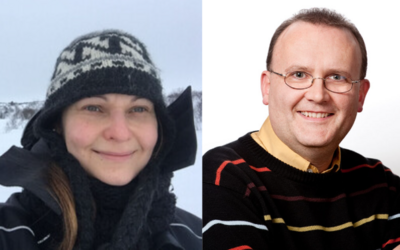
Saija Saarni's abstract:
More than 10 000 million metric tons of plastic has been created since the beginning of the industrial mass production. Due to poor waste management, persistent plastic materials are leaking into environment and break down into microplastics (particle size < 5 mm), which are shown to be harmful for ecosystems and human health. Microplastics are acknowledged as emerging pollutants and considered to be ubiquitous, pervasive and irreversible, being found everywhere on the planet.
Microplastics are enriched in the water bodies, however, the rate of change is not known. How fast are concentrations increasing in natural aquatic environments? When sustainable thresholds of microplastic concentrations will be exceeded? How much do we need to reduce our plastic use to mitigate ecological disruption and stay within sustainable limits?
To asses these questions, we need temporally resolved observations. Flux calculations (the number of microplastics per area per time unit) from historical to seasonal scale rising from advanced geological methods and high-resolution sedimentary archives, combined with state-of-the-art microplastic analyses are powerful tool kit to evaluate how fast is our environmental microplastic concentrations about to change and which processes are driving their accumulation. Geological methods can quantify past historical as well as modern input rates of microplastics into lake systems but also shed light on how sedimentary environment or climate conditions dictate their accumulation. Such knowledge has great societal importance in understanding future risks and providing working values for decision making processes.
What is the Joint Oslo Seminar (JOS):
- Atmospheric and climate sciences have a stronghold in Oslo among the four institutions University of Oslo, the Meteorological Institute, CICERO and NILU.
- This joint seminar invites renowned international experts to contribute to an informal series of lectures, meant to create interaction with the Oslo atmospheric and climate science community on recent highlights and analysis in the field.
- Normally seminars will be held on Thursdays (12:15 pm -1pm).