The PhD defence and trial lecture will be held in Auditorium 1 in The Geology Building. In some cases, it will be possible to attend the trial lecture and dissertation digitally, in that case a link to Zoom will be posted.
Trial lecture
Friday 31 October, 10:15-11:00, Aud 1, The Geology Building:
Magnetic field from core to crust
Conferral summary (in Norwegian)
The Eurasia Basin is the youngest and active passive margin of the Arctic Ocean. It was formed after the continental breakup of the Lomonosov Ridge from the northern Barents Shelf in the start of the Cenozoic (66 million years ago). In this doctoral work, Juan Camilo Meza Cala provides new insights into the Cenozoic continental breakup processes in the Eurasia Basin by using geophysical data modelling and interpretations. Structural inheritance guided oblique rifting and magmatic segmentation during early seafloor spreading between this basin and the northern Svalbard margin.
Main research findings
Popular scientific article about Meza Cala’s dissertation:
Tectonic and geodynamic evolution of the southwestern Eurasia Basin
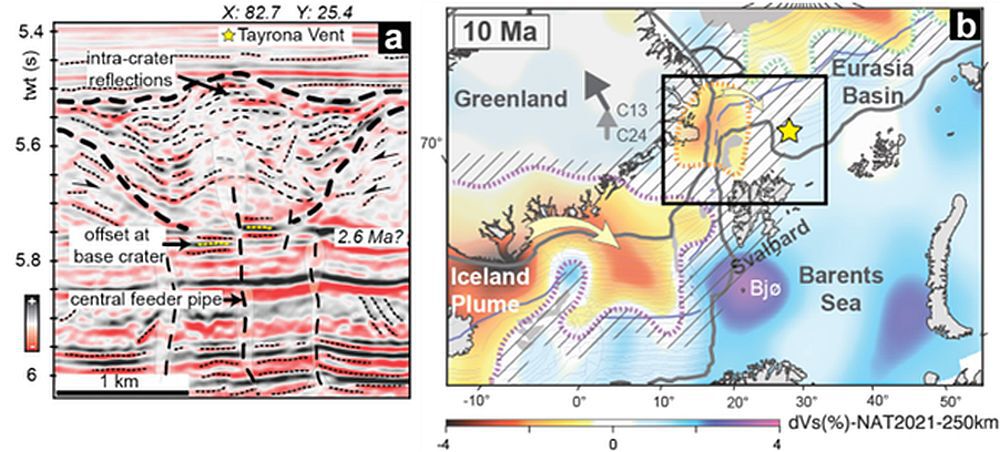
The sediments and basement structure of the southwestern Eurasia Basin indicate a distinct plate tectonic evolution for this region. In this doctoral work, Juan Camilo Meza Cala found that recent (no older than 2.6 million years ago) hydrothermal vent systems (The Tayrona Vent) are present and are linked to the present-day thermal anomaly within the mantle of northern Svalbard.
These features occur in the vicinity of a major lithospheric boundary that exists since the continental breakup time (56-53 million years ago). This boundary, named as the West Eurasia Basin Transform Fault System (WEBT), created together with the Gakkel mid-ocean Ridge a ridge-transform configuration during the Paleogene. The WEBT controlled the early opening of the Eurasia Basin, the magmatic segmentation, and the formation of an oceanic core complex.

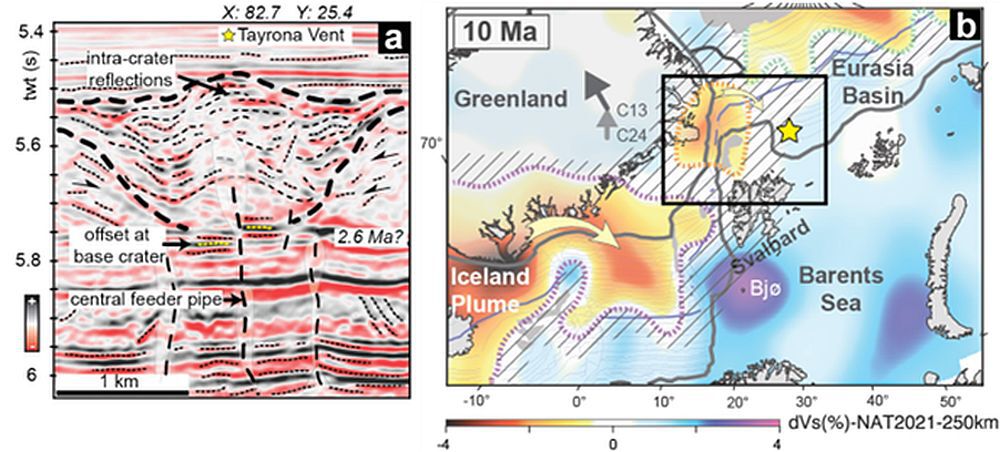
Reference: Meza-Cala, J. C., Minakov, A., Faleide, J. I., Abdelmalak, M. M., Shephard, G. E., Mattingsdal, R., Geissler, W. H. & Gaina, C. (2024). Late Cenozoic intraplate volcanism as a trigger for hydrothermal venting in the Arctic southwestern Eurasia Basin. Communications Earth & Environment, 5, 654.
Photo and other information:
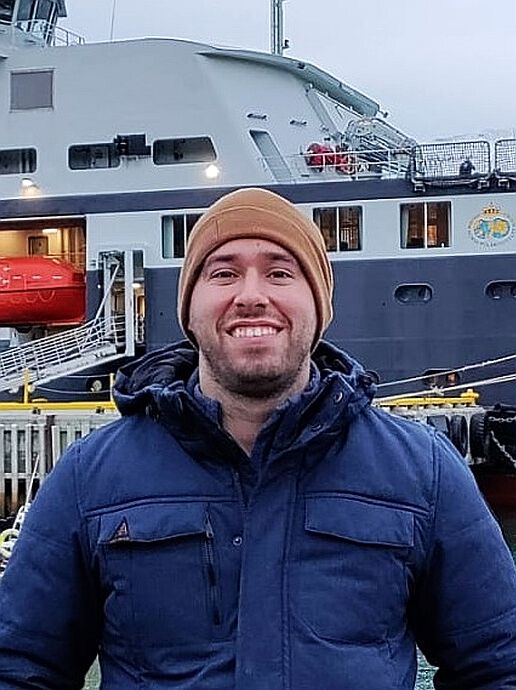
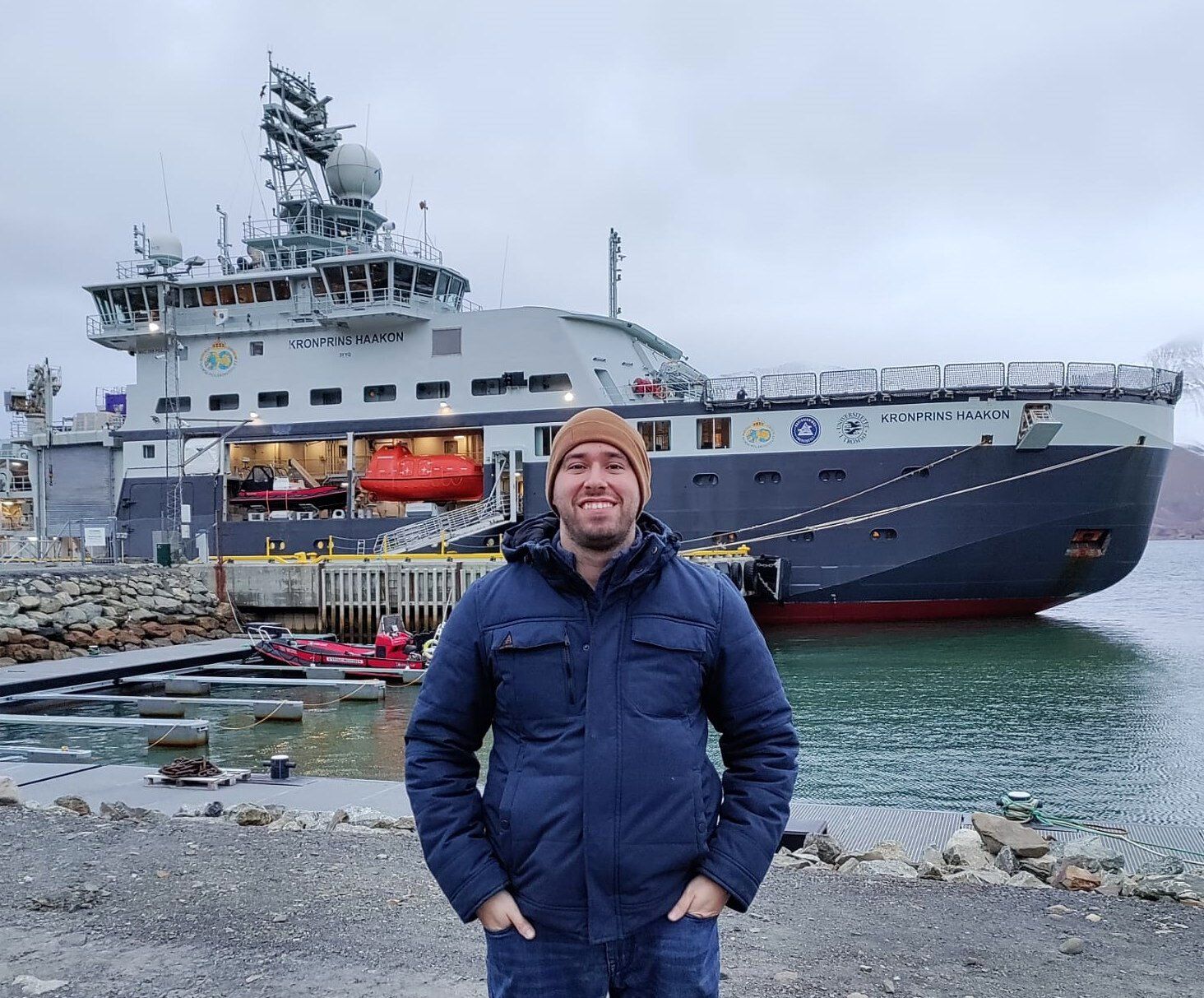
Press photo: Juan Camilo Meza Cala, portrait; 1500px. Photo: Private
Other photo material: Figures with description and credit as specified in the article above, size 1000px.