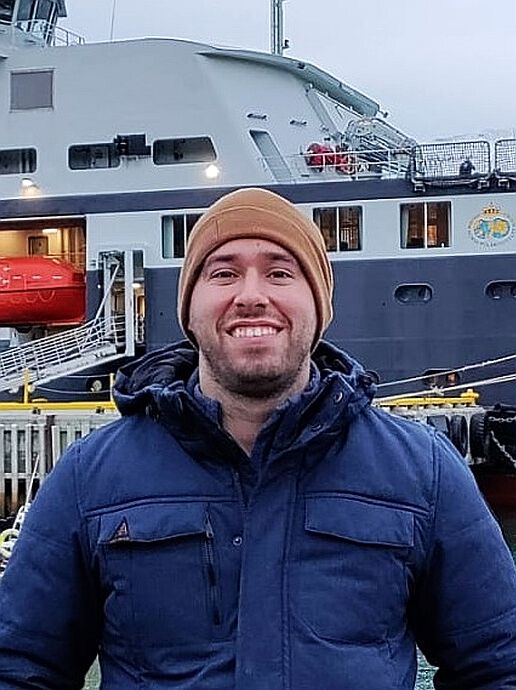
Disputas og prøveforelesning er i Auditorium 1 i Geologibygningen. I noen tilfeller vil prøveforelesning og disputas være mulig å delta på digitalt, i så fall blir det lagt ut en lenke til Zoom.
Prøveforelesning
Fredag 31 oktober, 10:15-11:00, Aud 1, Geologibygningen:
Magnetic field from core to crust
Kreeringssammendrag
Eurasiabassenget er den yngste og aktive passive kontinentalmarginen i Polhavet. Bassenget ble dannet etter kontinentaloppsprekkingen mellom Lomonosov-ryggen fra nordlige Barentssokkel ved starten av kenozoikum (66 mill år siden). I denne doktorgradsavhandlingen gir Juan Camilo Meza Cala ny innsikt i de kenozoiske kontinentale oppsprekkingprosessene i Eurasiabassenget ved hjelp av modellering og tolkning av geofysiske data. Strukturell arv styrte skrå rifting og magmatisk segmentering under den tidlige havbunnsspredningen mellom bassenget og den nordlige Svalbardmarginen.
Hovedfunn
Populærvitenskapelig artikkel om Meza Calas avhandling:
Tectonic and geodynamic evolution of the southwestern Eurasia Basin
The sediments and basement structure of the southwestern Eurasia Basin indicate a distinct plate tectonic evolution for this region. In this doctoral work, Juan Camilo Meza Cala found that recent (no older than 2.6 million years ago) hydrothermal vent systems (The Tayrona Vent) are present and are linked to the present-day thermal anomaly within the mantle of northern Svalbard.
These features occur in the vicinity of a major lithospheric boundary that exists since the continental breakup time (56-53 million years ago). This boundary, named as the West Eurasia Basin Transform Fault System (WEBT), created together with the Gakkel mid-ocean Ridge a ridge-transform configuration during the Paleogene. The WEBT controlled the early opening of the Eurasia Basin, the magmatic segmentation, and the formation of an oceanic core complex.
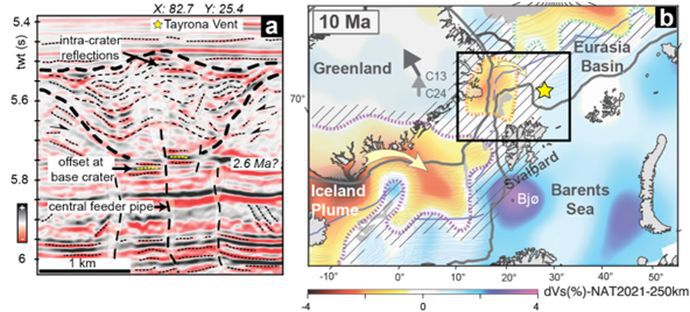
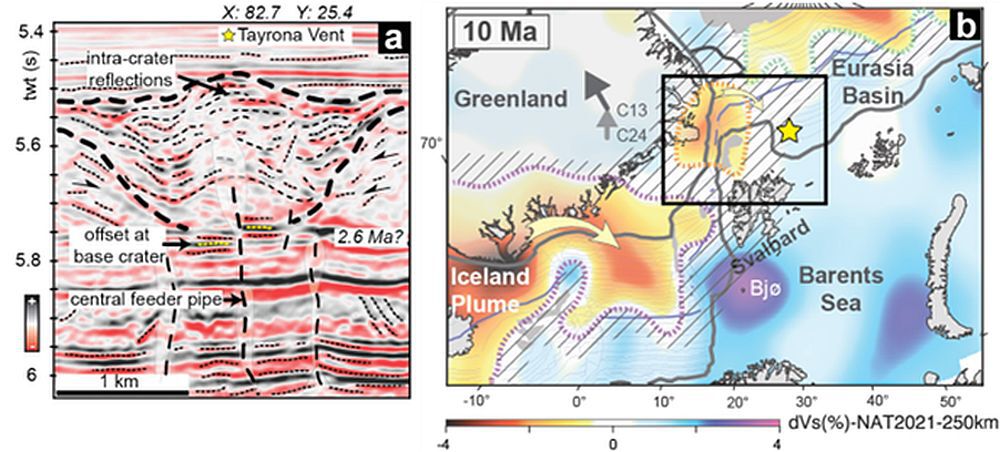
Reference: Meza-Cala, J. C., Minakov, A., Faleide, J. I., Abdelmalak, M. M., Shephard, G. E., Mattingsdal, R., Geissler, W. H. & Gaina, C. (2024). Late Cenozoic intraplate volcanism as a trigger for hydrothermal venting in the Arctic southwestern Eurasia Basin. Communications Earth & Environment, 5, 654.
Foto og annen informasjon:
Pressefoto: Juan Camilo Meza Cala, portrett; 1500px. Foto: Privat
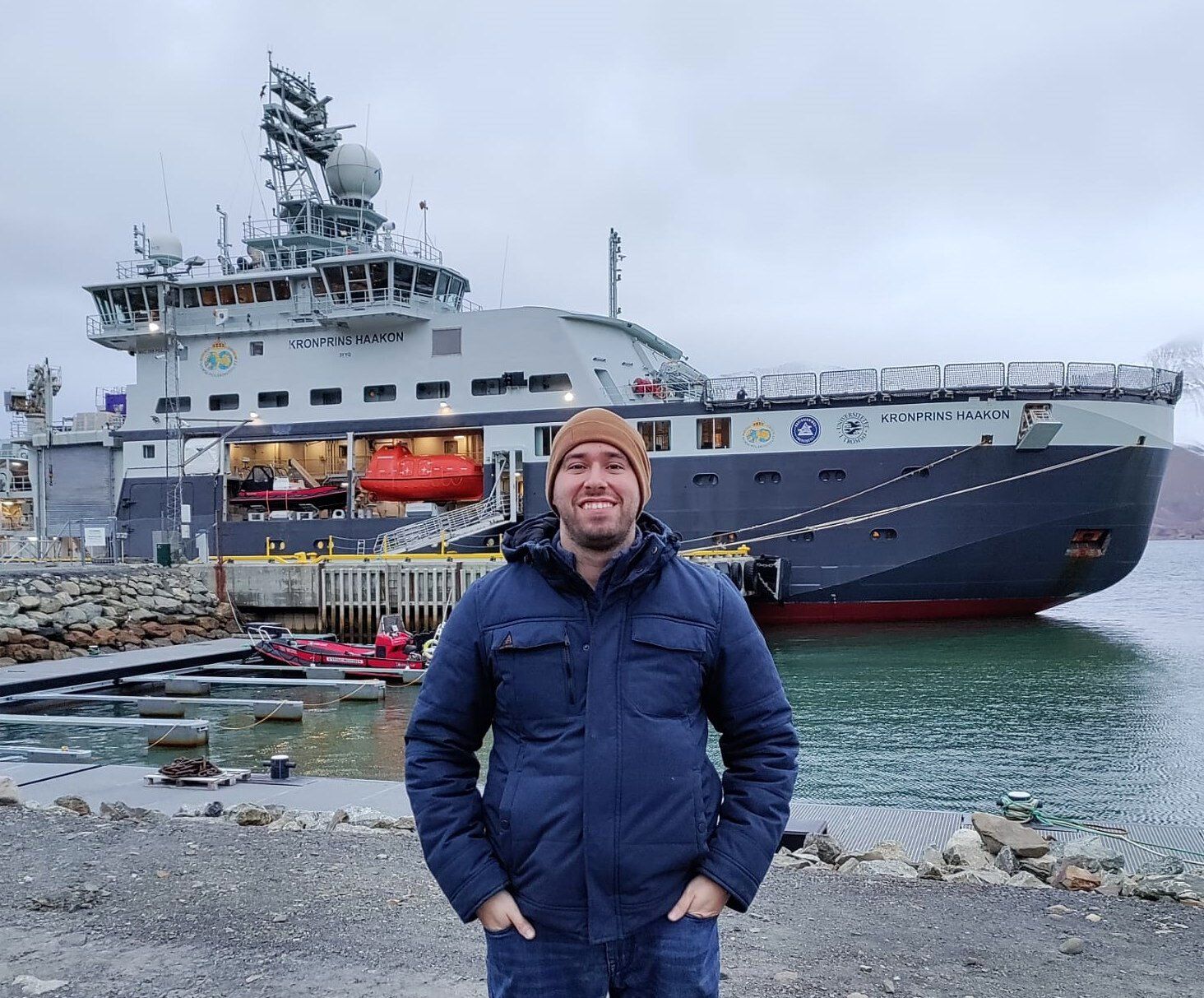
Annet bildemateriale: Figurer med beskrivelse og kreditering som spesifisert i artikkelen over, størrelse 1000px.
