

Short about the project
The main goal of the project is to obtain an understanding of the interplay between the various tectonic, magmatic, and sedimentary processes that have shaped the northern Barents Sea-Svalbard margin, caused continental breakup and variation in spatial and temporal oceanic accretion in the Eurasia Basin. Moreover, we aim to establish links between the tectono-magmatic history of the Cenozoic Arctic and oceanographic and climatic changes.
Three time intervals are particularly important in the development of the Eurasia Basin and adjacent regions in the Arctic: 1) Late Paleocene continental breakup and continental margin formation; 2) Early Eocene and Oligocene changes in seafloor spreading and Oligocene volcanic plateau emplacement; and 3) Neogene gateway opening, margin uplift and establishment of an icehouse Arctic.
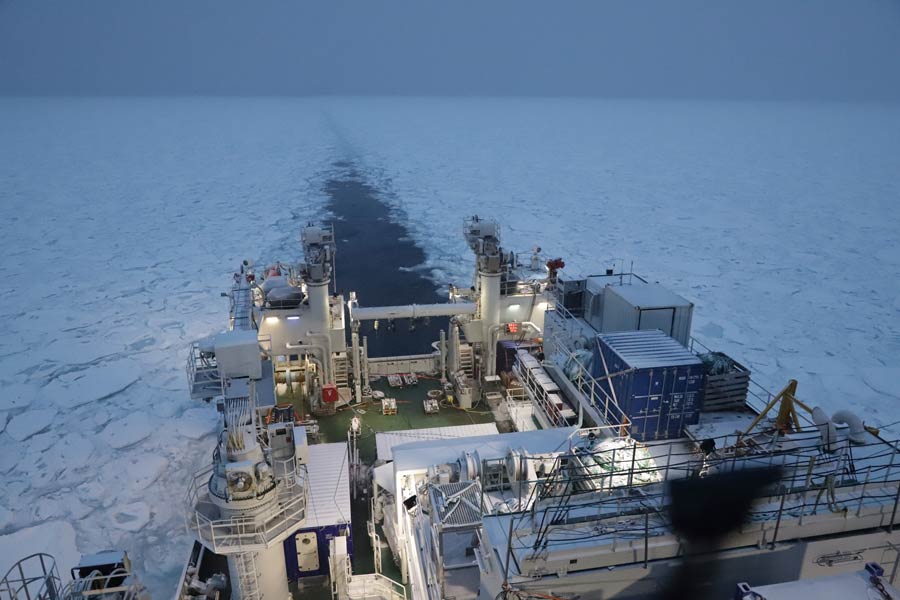
Notably, these tectonic events seem to coincide with distinct climatic events that punctuated the Cenozoic greenhouse-icehouse transition, from surface-water temperatures of up to 25 °C during the Paleocene-Eocene, to icehouse conditions with extensive land and sea-ice cover from Miocene onward.
Each of the primary objectives will be addressed in a dedicated scientific work package (WP), but considerable amount of data, theoretical approach and methodology will be shared among the WPs: WP1: Breakup and crustal architecture; WP2: Eocene-Miocene crustal evolution of the Eurasia Basin; WP3: Greenhouse - Icehouse fluctuations in the Arctic: onset and origin. The project results will be integrated and synthesised in a separate WP4.
We will combine a broad range of data and methods, and will employ a novel approach where the crustal, sedimentary and oceanographic data will be jointly presented and analysed. We will study in a multi-disciplinary and holistic way the formation of an enclosed oceanic basin in the polar region and the implications for ocean and climate dynamics.