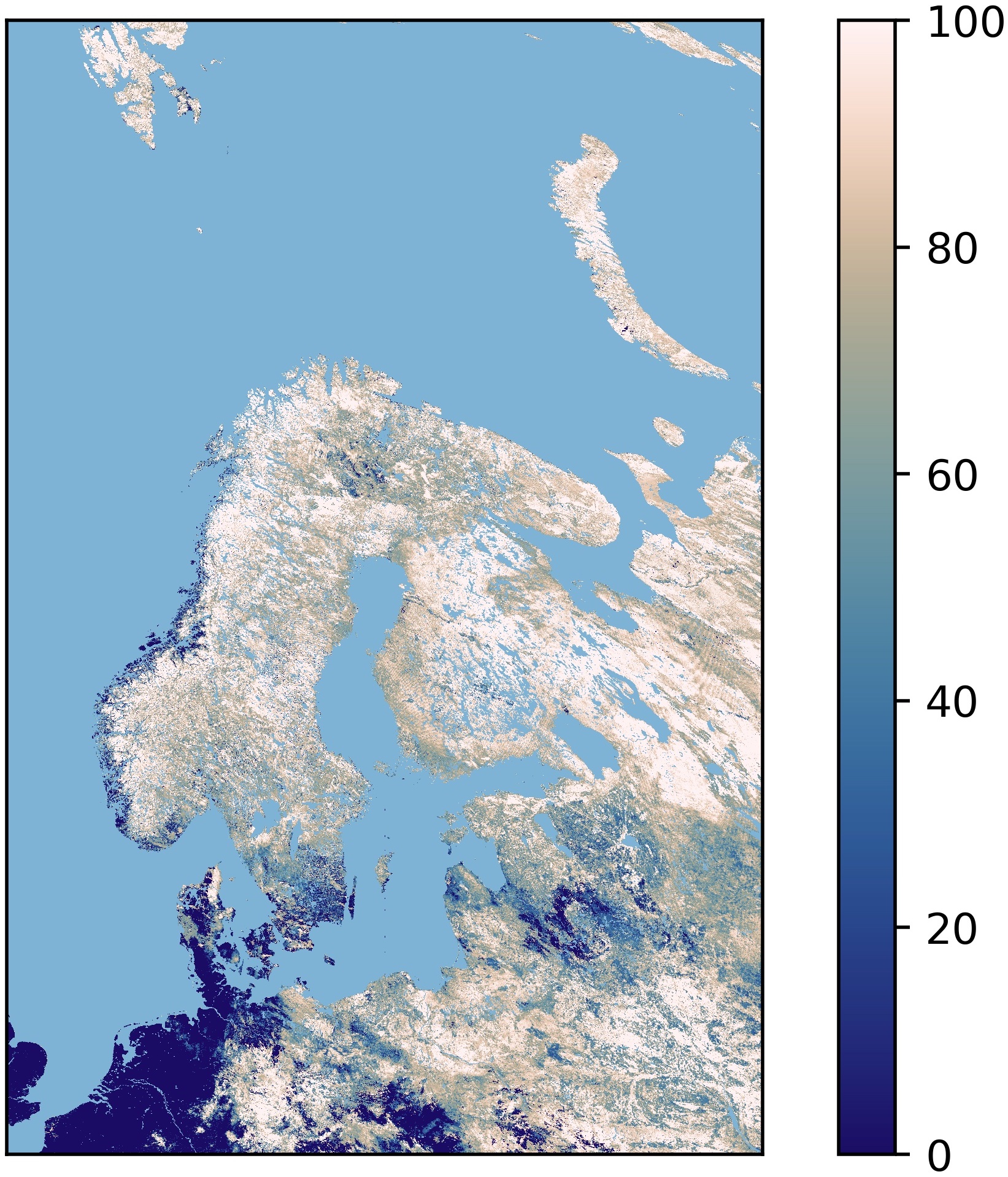
Satellites monitor the Earth's surface and collect invaluable data about our changing world. The increasing frequency of extreme events, such as droughts and floods, has critical societal implications. It is very important to understand the full potential of these emerging datasets by using them in our studies. We can increase our confidence in their use for future research by learning more about their strengths and limitations.
Hydroclimatology is a field that investigates water interactions between land and atmosphere at local, regional, and global scales. In this thesis, we can work on several topics in the field of hydroclimatology by combining satellite-based observations with climate modeling. The main aim would be to deepen our understanding of the complex interactions between Earth's water resources and the changing climate.
Potential research topics:
- Assessment of available satellite-based surface variables: This study will focus on evaluating the accuracy and representativeness of satellite-derived variables, such as snow cover, water storage, temperature, soil moisture, evaporation, discharge, and precipitation, in capturing hydroclimatic processes.
- Representation of snow cover in land surface models: Snow plays a crucial role in the terrestrial water cycle, and accurately representing its dynamics in land surface models is essential for many other biogeophysical and biogeochemical processes.
- Snow-vegetation interactions in climate models: Vegetation has a significant influence on snow processes. By exploring the complex interactions between snow and vegetation in climate models, this research will contribute to a more accurate assessment of regional water resources and the impacts of climate change.
- Assimilating satellite data in snow models: This study aims to constrain model simulations and future projections of the snow models in the Multiple Snow Data Assimilation System (MuSA).
- Effects of land cover and land use on water and energy budget: Our planet’s surface has been going through a rapid change such as agriculture, deforestation, land restoration etc. Investigating how land cover and land use changes affect the water and energy budget is crucial for understanding their potential effects on society.
The final thesis title and study domain can be tailored according to your interests and the skills that you want to gain. Since the thesis would involve data-intensive analysis and/or potentially a modeling study (using CTSM, NorESM, WRF, or MuSA), at least some programming skills (basic Linux commands, Python, R, or similar) are expected.