Some of the most catastrophic events to human life and infrastructure, such as large-magnitude earthquakes and rockfalls, are a result of sudden failure and fracture of the rocks we live on. Prior to this sudden failure on regional scales, previous processes occurring in these rocks on an atomistic microscale, such as creep and chemical weathering reactions, contribute to the intrinsic weakening of the rock’s constituent minerals. However, the role of pre-existing strain on fracture initiation for these smaller scales, particularly for rocks and minerals specifically, is still not well understood.
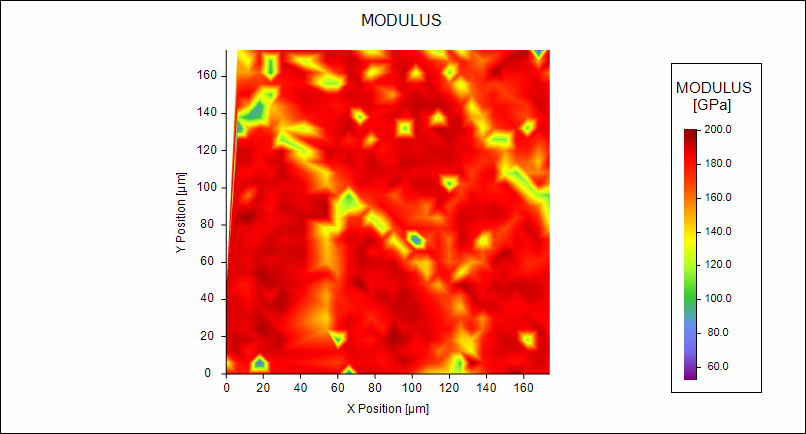
The main objective of this project will be to determine the relative changes in mechanical properties, such as hardness, elastic modulus, and fracture toughness, before and after applying initial deformation in: 1) common rock-forming minerals, such as quartz; 2) pristine and weathered shales. Shales are not only common zones of mechanical weakness due to their layered structure but also may create further strain/stress partitioning from initial deformation based on their varied mineral composition.
The project will rely on correlating micromechanical, mineral composition, and microstructural maps using paired nanoindentation and scanning electron microscope (SEM), both available at the Department of Geosciences.
There will also be opportunities for local fieldwork to collect and characterize shales that are of structural importance in the Oslo region (i.e., Alum Shales).