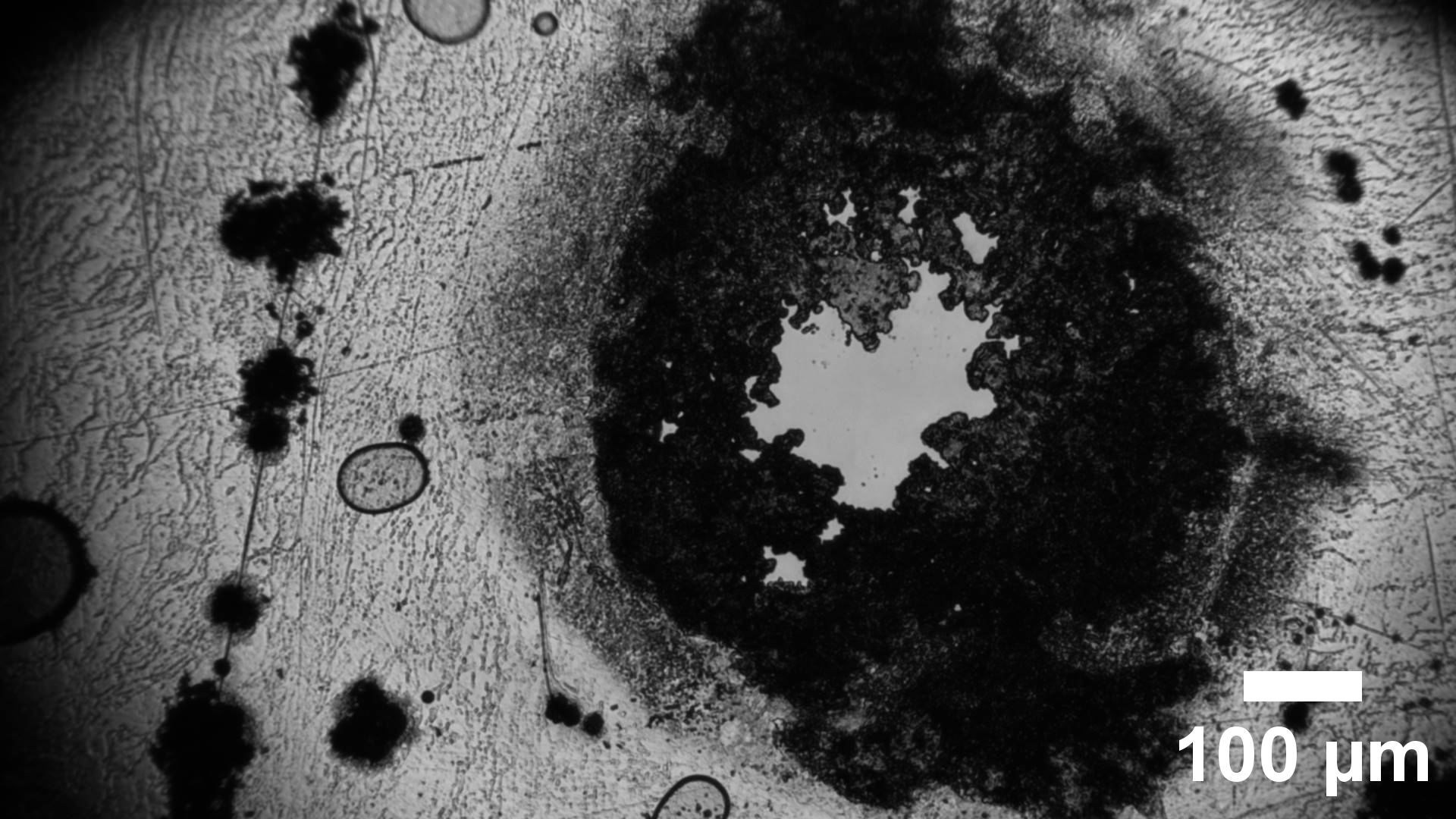
In the Earth's upper crust, aqueous fluids circulate freely through porous and fractured rocks, driving mineral replacement reactions. These transformations are influenced by the simultaneous dissolution and precipitation processes occurring at fluid-mineral interfaces. Consequently, this weathering process not only facilitates the release of elements from the dissolving minerals but also serves as a sink for some elements present in both the dissolving minerals and the reactive fluids.
To gain a deeper understanding of these interface-coupled mineral replacement processes, real-time microscale imaging techniques can be employed for in-situ monitoring, providing detailed insights into the evolving interactions. The goal of this experimental project is to investigate the microstructural changes involved in mineral replacement reactions across various scales, utilizing techniques such as White Light Interferometry and Atomic Force Microscopy, particularly under geometric confinement conditions using a Surface Force Apparatus.