INPs or ice-nucleating particles are tiny particles that reshape our climate. They act as the seeds for ice crystals to form on, which subsequently grow into snow and rain, control cloud lifetime and influence how clouds interact with sunlight. Yet, their sources, abundance and lifetime in the atmosphere remain poorly constrained. This leaves a major gap in our ability to understand the climate system and predict its future.
How you will find the hidden seeds of ice: To address this long-standing issue
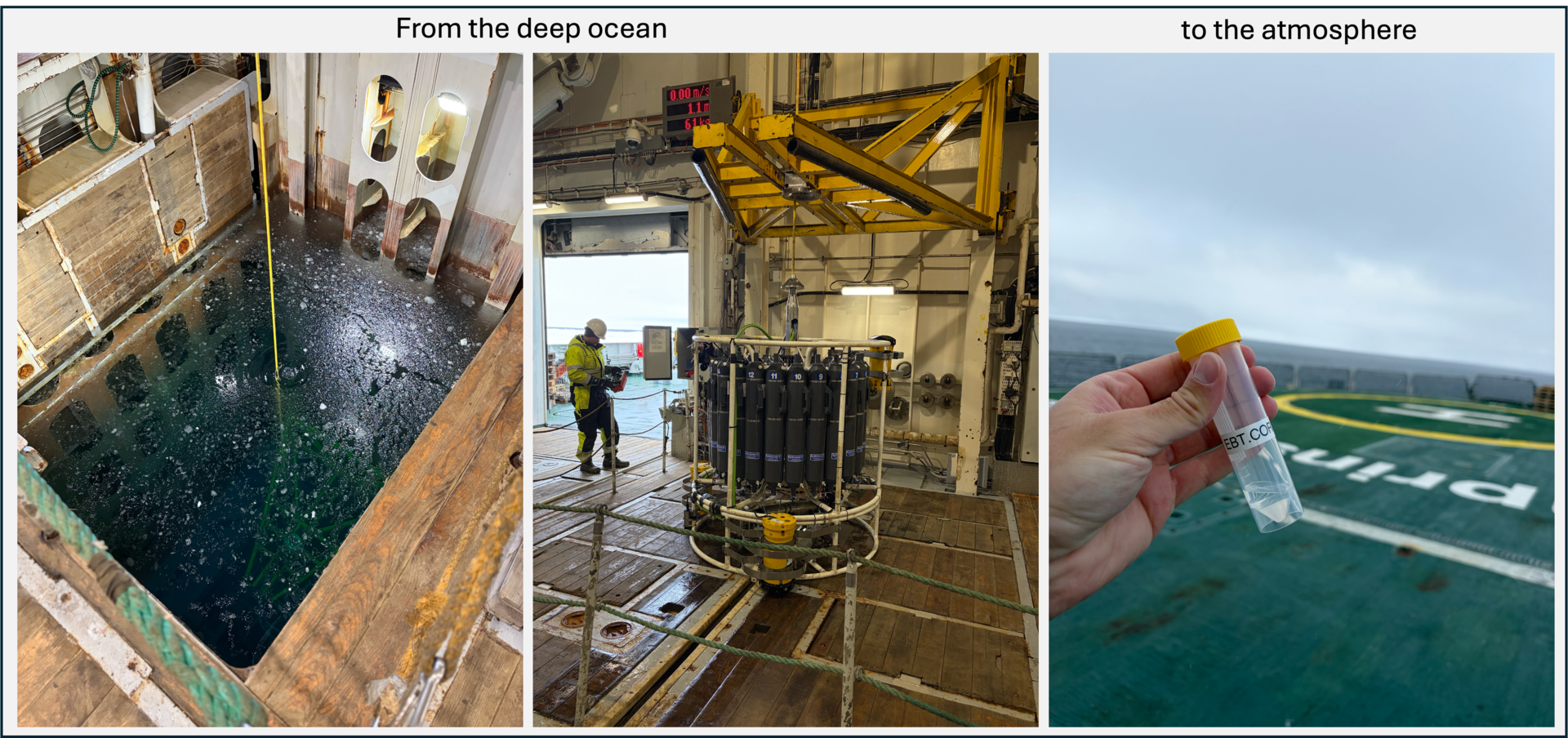
This project will use recent samples collected during the Polhavet 2050 research expedition to the North Pole and analyze them for INPs. In addition to analyzing the INP concentration in air samples, you will analyze water samples from varying ocean depths with different ages since contact with the atmosphere. The hope is that the deep-water samples will preserve the historic INP concentration, allowing for you to reconstruct the INP record. Ultimately, the project will bridge the atmospheric and ocean sciences, furthering the understanding of the distribution and concentrations of INPs and how they have changed with time.
What’s in it for you? Hands-on laboratory work, advanced statistical methods for developing the timeseries and trend analysis, skills in data analysis and visualization, advanced computing, and become an expert in ice formation.
You? Basic programming skills (MATLAB or Python is preferred), and interest in laboratory-based measurements and data analysis.