(NOTE: In order to interview and observe students, being able to understand and speak Norwegian is important. The master's thesis may still be written in English, however.)
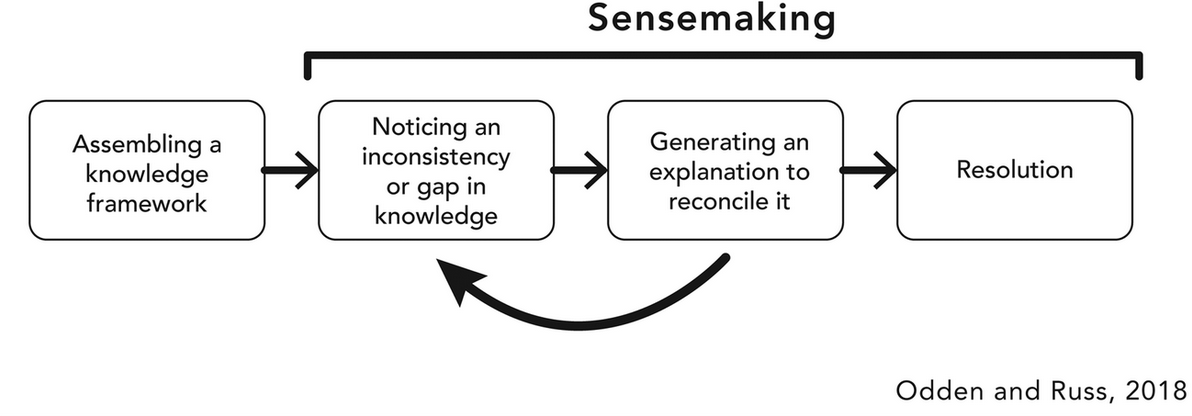
Sensemaking is a way in which students construct understanding: They realise there is something they do not understand, try out an explanation to make sense of it, and finally check that this explanation makes sense in itself and in light of what else they know or believe to be true. This process can be repeated several times before arriving at a way of thinking about the situation that makes sense to the student.
In contrast, answer-making is a process that has producing the "right" answer as its goal. The "rightness" of such an answer is often determined by a figure of authority, such as a teacher or a textbook. While students may use reasoning to figure out an answer (if they cannot remember it outright) or justify an answer they have found, this reasoning is not the end-goal of an answer-making activity.
Often, from an instructor point of view, an exaggerated focus on answer-making by students comes into conflict with the stated learning goals. It is rare that teachers care about one particular answer in itself; the important thing is that students construct robust conceptual understandings that make them flexible and skilled programmers.
Therefore, we are interested in investigating when and how students engage in sensemaking and answer-making, respectively. This project aims to collect interview data from either upper secondary (videregående) schools in Norway or first-year university students. Videotaping these students as they work with tasks that aim for conceptual understanding will provide insight into how sensemaking and answer-making manifest themselves in the context of learning programming.
Possible research questions for this project are:
- Which factors determine whether students engage in sensemaking or answer-making?
- How do students transition from one of these two modes to the other, and what triggers such transitions?
- How do sensemaking/answer-making affect students' conceptual understanding of the topic the task is about?
In addition to the research itself (the thesis), a desirable outcome of the project is a learning activity design that promotes student sensemaking in a programming context.