Seminarer - Side 2

Anders Kvellestad is a Researcher in theoretical physics at the Department of Physics and head of the GAMBIT Collaboration. His research focuses on how to test new theories against results from the Large Hadron Collider and other experiments, using both frequentist and Bayesian approaches, and the computational challenges related to this work. Anders completed his PhD at the University of Oslo in 2015 and has since held postdoctoral positions at Nordita (Stockholm), Imperial College London and UiO.
Since 2021 he has lead the GAMBIT Collaboration, an international collaboration of physicists working on global fit analyses. He is also part of the PLUMBIN’ project at UiO, which aims to develop new computational and statistical tools for particle physics and beyond.

Gunnar Taraldsen is professor at Department of Mathematical Sciences, NTNU. His current research interest focusses on the foundational principles of statistical inference including quantum probability, artificial intelligence, and machine learning. The aim is to bridge foundations for statistical inferences, to facilitate objective and replicable scientific learning, and to develop analytic and computing methodologies for data analysis.
Earlier research includes quantum mechanics, mathematical physics, measure theory, probability, medical ultrasound, non-linear wave propagation, numerical acoustics, medical statistics, outdoors sound propagation, community noise annoyance, acoustic noise mapping, underwater localization, underwater wave propagation, and spherical microphone arrays.

Emil Aas Stoltenberg is assistant professor at BI Norwegian Business School, and associate professor (20%) at the University of Oslo (UiO). He holds a PhD in statistics from UiO (2020). From the first of June this year, he will be full-time at UiO.

Clara Bertinelli Salucci is a Postdoctoral Fellow at the Department of Mathematics, affiliated with the PLUMBIN' (Physics Learning Using Machines and Bayesian INference) project at the University of Oslo. She completed her PhD in Statistics and Machine Learning at the University of Oslo in April 2024, where she developed statistical and machine learning methods for diagnostics and prognostics of lithium-ion batteries for maritime applications. Currently, she is investigating the role of likelihood ratio test statistics for hypotheses tests in experimental and theoretical particle physics, focusing on deviations from Wilks' theorem in the search for new particles. Her postdoctoral research combines her expertise in statistics with her background in high-energy physics.

Dr Kevin Burke is an Associate Professor of Statistics at the University of Limerick (UL) with research interests in flexible statistical modelling, penalised regression, neural networks, random effects, survival/reliability analysis, and industrial modelling. See https://kevinburke.ie/ for more details. Previously he was Director of UL's Industrial Mathematics Unit (from 2016 - 2020), and a Science Foundation Ireland Public Service Fellow with the Food Safety Authority of Ireland (2020 - 2021). He is the Vice President of the Irish Statistical Association, and the Chair of the International Workshop on Statistical Modelling (IWSM) 2025. IWSM 2025 will be hosted in Limerick City, Ireland, from Sunday 13th July to Friday 18th July 2025; the call for papers is currently open (https://iwsm2025.ie/call-for-papers).

Leiv Rønneberg is a DSTrain Postdoctoral Fellow at the Department of Mathematics and affiliated with The Norwegian Centre for Knowledge-driven Machine Learning (INTEGREAT) at the University of Oslo. Prior to this he was a Research Associate at the MRC Biostatistics Unit at the University of Cambridge, and completed his PhD in Biostatistics at the University of Oslo in 2022. His interests are broadly within the realms of probabilistic machine learning, and connections to Bayesian nonparametrics.

Thomas Nagler is a Professor of Computational Statistics \& Data Science at the Department of Statistics, LMU Munich, and a principal investigator at the Munich Center for Machine Learning (MCML).
Previously, he held positions as an assistant professor at TU Delft and Leiden University, following a PhD in Mathematical Statistics from TU Munich.
His research lies at the intersection of mathematical and computational statistics. His group develops statistical methods, establishes theoretical guarantees, and designs scalable algorithms, which are packaged into user-friendly software. He also regularly collaborates with domain experts to tackle challenges in diverse application areas.

Håkon Hoel got his PhD in Numerical Analysis from KTH Stockholm in 2012. He is currently an Associate Professor in Computational Mathematics at the University of Oslo. His main research interests are Monte Carlo methods and numerical methods for stochastic differential equations and data assimilation.

Mikko has been working at Natural Resources Institute Finland (Luke) since 2017.
He finished his PhD on spatial point processes in 2022 (University of Jyväskylä).
Since then Mikko has been working on many kinds of remote sensing, forest inventory and forest planning projects.
Also, during 2015-2016 Mikko was working at the National Institute of Health and Welfare as a data manager.

Camilla got her PhD in Biostatistics from the University of Cambridge in 2023, where she worked on the development of Bayesian methodology for joint network modelling of high-dimensional data, with applications in autoimmune disease and cancer omics. She is currently a DSTrain Postdoctoral Fellow at The Norwegian Centre for Knowledge-driven Machine Learning Integreat, at the University of Oslo.

Sylvia Frühwirth-Schnatter is a distinguished Austrian statistician and professor of applied statistics and econometrics at the Vienna University of Economics and Business. Renowned for her research in Bayesian analysis, she served as President of the International Society for Bayesian Analysis.
Professor Frühwirth-Schnatter has an impressive academic background, including a doctorate in engineering mathematics from TU Wien and previous positions at Johannes Kepler University Linz. Since 2011, she has been a full professor at the Vienna University of Economics and Business. She is also a Full Member of the Austrian Academy of Sciences.
Her research focuses on Bayesian econometrics, including Markov chain Monte Carlo methods and finite mixture models. She has received numerous accolades, including the WU Best Paper Award and the DeGroot Prize for her work on Markov switching models.

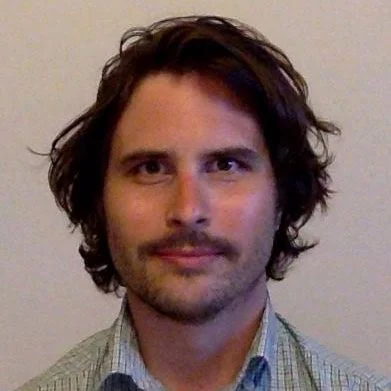
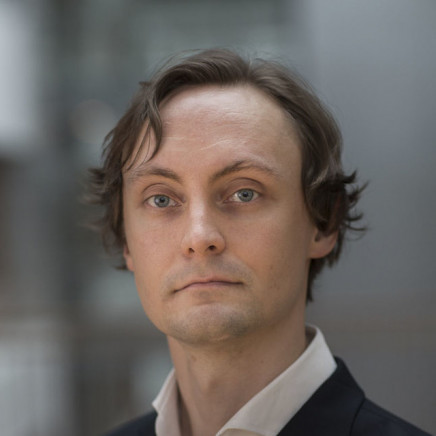
Structural equation models are simultaneous equation regression models, whose variables are latent, and measured via a confirmatory factor model (that is, with measurement error and repeated measurements). When the functional form of the simultaneous equation system is unknown, it has previously been observed in simulations that factor scores inputted into non-parametric regression methods approximate the true functional form. Factor scores estimate the latent variables (per person), and several types exist. We provide a theoretical (though population-based) analysis of this procedure, and provide assumptions under which it is theoretically justified in using Bartlett factor scores, which are simple linear transformations of the data. In simulations, we compare this suggestion to an already available though understudied non-linear and computationally heavy procedure, and observe that the simple Bartlett approach appears to work better.
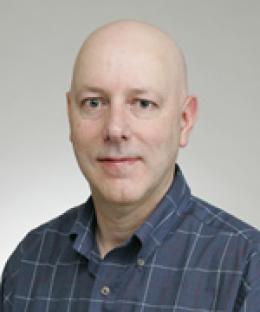
his talk discusses a nonparametric inference framework for occupation time curves derived from wearable device data. Such curves provide the total time a subject maintains activity above a given level as a function of that level. Taking advantage of the monotonicity and smoothness properties of these curves, we develop a likelihood ratio approach to construct confidence bands for mean occupation time curves. An extension to fitting concurrent functional regression models is also developed. Application to wearable device data from an ongoing study of an experimental gene therapy for mitochondrial DNA depletion syndrome will be discussed. Based on joint work with Hsin-Wen Chang (Academia Sinica).

The climatic ocean wave spectrum serves as a pivotal tool in comprehending the long-term characteristics and variations of wave patterns across different regions of the world's oceans. The presentation explores the methodologies employed to derive wave spectra from observational data. Basically, consists of a statistical approach that provides a quantitative understanding of the variability and extremes of wave conditions. In essence, an ocean wave spectrum is a representation of the distribution of energy among different wave frequencies and wavelengths. So, engineers rely on this valuable information to mitigate risks and design solutions that can withstand the dynamic forces of ocean waves. However, it is necessary to present such information in a robust and practical mode to better comprehend the variations. In this way, a robust and resistant approach will be presented to define such variabilities, thus reducing uncertainties and representing the climatic wave spectrum in a compact and informative way.
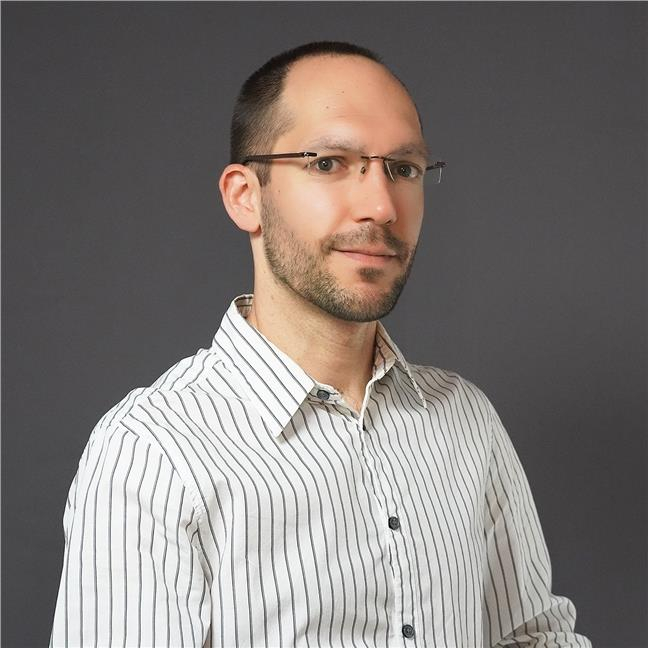
Our project partner Statkraft owns and operates several hydropower plants in Brazil and requires information about the future potential for hydropower production in this region. To provide inflow projections for the next several decades, we use climate model output in combination with a regression model that links meteorological variables such as precipitation and temperature to inflow over various catchments in the region. The relatively short time period for which observation data are available raises concerns about overfitting. We therefore explore an alternative model fitting approach that retains the original, easily interpretable regression model but estimates the regression coefficients within an artificial neural network (ANN) framework which permits spatial and temporal regularization and thus prevents overfitting. We show some examples of the inflow projections obtained with that methodology and discuss some caveats and limitations.


Traditional quantile estimators are not well-suited for data streams because the memory and computational time increase with the volume of data received from the stream. Incremental quantile estimators refer to a class of methods designed to maintain quantile estimates for data streams. These methods operate by making small updates to the estimate every time a new observation is received from the stream. In this presentation, I will introduce some of the incremental quantile estimators we have developed.

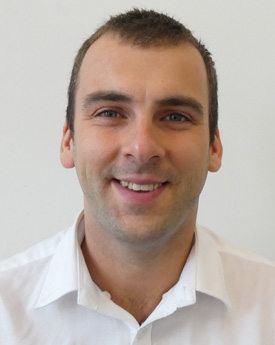
This talk will focus on recent work about the sequential detection of anomalies within partially observed functional data, motivated by a problem encountered by an industrial collaborator. Classical sequential changepoint detection approaches look for changes in the parameters, or structure, of a data sequence and are not equipped to handle the complex non-stationarity and dependency structure of functional data. Conversely, existing functional data approaches require the full observation of the curve before anomaly detection can take place. We propose a new method, FAST, that performs sequential detection of anomalies in partially observed functional data. This talk will introduce the approach, and some associated theoretical results, and highlight its application on telecommunications data.
This is joint work with Idris Eckley and Lawrence Bardwell.

A flexible predictive density combination is introduced for large financial data sets which allows for model set incompleteness. Dimension reduction procedures that include learning allocate the large sets of predictive densities and combination weights to relatively small subsets. Given the representation of the probability model in extended nonlinear state-space form, efficient simulation-based Bayesian inference is proposed using parallel dynamic clustering as well as nonlinear filtering, implemented on graphics processing units. The approach is applied to combine predictive densities based on a large number of individual US stock returns of daily observations over a period that includes the Covid-19 crisis period. Evidence on dynamic cluster composition, weight patterns and model set incompleteness gives valuable signals for improved modelling. This enables higher predictive accuracy and better assessment of uncertainty and risk for investment fund management.
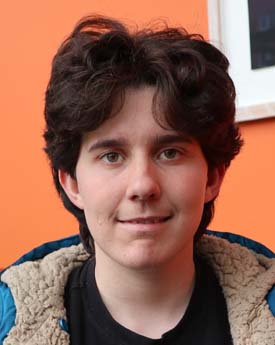
Online changepoint detection algorithms based on likelihood-ratio tests have excellent statistical properties. However, a simple exact online implementation is computationally infeasible as, at time T, it involves considering O(T) possible locations for the change. To improve on this, we use functional pruning ideas to reduce the set of changepoint locations that need to be stored at time T to approximately log T. Furthermore, we show how we need only maximise the likelihood-ratio test statistic over a small subset of these possible locations. Empirical results show that the resulting exact online algorithm, which can detect changes under a wide range of models, has a constant-per-iteration cost on average. We consider applications of this algorithm in the context of detecting increases in radiation count that represent astronomical or nuclear events of interest.
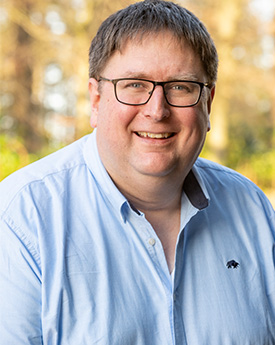
This talk will introduce a recent suite of research focussed on the statistical detection of anomalous structure in online data settings. The challenge of efficiently identifying anomalies in data sequences is an important statistical problem that now arises in many applications. Whilst there has been substantial work aimed at making statistical analyses robust to outliers, or point anomalies, there has been much less work on detecting anomalous segments, or collective anomalies, particularly in those settings where point anomalies might also occur. This is the challenge we seek to address, demonstrating theoretical results in both the offline and online settings as well as introducing some applied case studies.
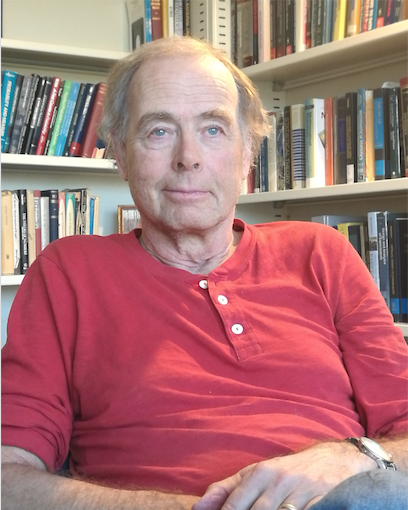
Douglas Wiens (Department of Mathematics and Statistical Sciences, University of Alberta, CAN) will give a talk on Wednesday April 19th at 14:15 in the Erling Sverdrups plass, Niels Henrik Abels hus, 8th floor.